Categories
acoustic guitar Arts & Entertainment country music love profiles relationships songwriting

Inspired by Emmylou Harris: ‘Heaven Only Knows’


Here’s another song, written by Paul Kennerly and made famous by Emmylou Harris, called “Heaven Only Knows.” The song was released on Emmylou’s 1989 album, “Bluebird.” The song reached #16 on the Hot Country Music Chart.

Since I’m a newcomer to the Country Music Scene, I’d never heard of Paul Kennerly before. He’s an Englishman who has written 30 published Country Music songs. (I guess there are stranger things that abound in our world). I don’t recall Kennerly’s name being mentioned in connection with any of the songs I’ve covered here. Be that as it may, he has written two powerful songs that Emmylou Harris has brought to my attention. I covered the other song, “Born to Run,” in my previous blog.

“Heaven Only Knows,” as performed by Emmylou and her band, features a driving beat, compelling lyrics, and the recording artist’s beautiful, singular voice.

Here’s my cover.

AI Image of Paul Kennerly Performing Live

Categories
acoustic guitar Arts & Entertainment Folk Song Covers inspiration profiles

The Magic of Moonshadow: Embracing Life’s Moments


In a 2009 interview, Cat Stevens (by then Yusuf Islam) is quoted as saying: “I was on holiday in Spain. I was a kid from the West End [of London]- bright lights, etc. I never got to see the moon on its own. In the dark, there were always streetlamps. So there I was on the edge of the water on a beautiful night with the moon glowing, and suddenly I looked down and saw my shadow. I thought that was so cool; I’d never seen it before.”

The song is about finding hope in any situation, of being present and joyful. With the simplicity and joy of a child, Stevens writes about seeing life as it is in the moment and not comparing it to others’ lives or other times in an individual’s life.

Moonshaw is a beautiful song expressing the idea that every moment in life is rich and unique. Whether we are aware of it or not, Stevens is saying, we are always “leaping and hopping on a Moonshadow” every second of our existence. He cautions against being too wrapped up in our worries and concerns about what could be or what has been, and consequently missing the richness of life as it is.

Here’s my cover played in the artist’s style.

Categories
acoustic guitar artists Arts & Entertainment folk guitar folk music profiles

John Prine Encore: Day Is Done


“Day Is Done” is a simple song about a clandestine relationship. Since very little has been written about the song, it is difficult to pinpoint its exact meaning. It could be about two married adults having an illicit affair. The lyrics and tone, however, indicate a relationship between two adolescents forbidden by parents or society.

The drawings on the album cover of “Lost Dogs and Mixed Blessings,” where the song is one of the tracks, tend to support the theory of a prohibited young love.

In “Day is Done,” Prine has written a charming little song with universal implications. Many of his songs deal with the intricacies of human relationships and are laced with Prine’s subtle sense of humor. Lost Dogs and Mixed Blessings was John’s fourteenth album. Released in 1995, it is another example of the artist’s exploration of the human condition.

From humble beginnings, John Prine came a long way in his fifty-year career. He won Grammy Awards and was posthumously inducted into the Country and Folk Music Hall of Fame. What struck me, however, is this early recollection of his career. It is taken directly from Prine’s official website:

“Prine still remembers the first three songs he performed on any stage: Sam Stone, Hello in There, and Paradise. With humility, he recalls, “I sang those three songs and people just sat there and looked at me. I thought, ‘Wow, those are really bad.’ They wouldn’t even applaud.”

Things changed dramatically when a young journalist named Roger Ebert dropped into a Chicago folk club for a beer while John was on stage. Ebert wrote a glowing review of Prine’s performance in the Chicago Sun-Times which essentially launched John’s career.

Here’s my cover of “Day Is Done.”

Categories
artists Arts & Entertainment music profiles

Van Morrison: Brown-Eyed Girl


“Brown-eyed Girl” was originally called “Brown-Skinned Girl.” The song is about an interracial relationship. Morrison changed the name to make it more acceptable to radio stations at the time (1967). Some stations banned it anyway for the line, “Making love in the green grass.” Why some gatekeepers took issue with the line in the free-loving sixties is beyond me. I guess there is no accounting for taste.

From his roots in Northern Ireland, Van Morrison began his musical career at the age of thirteen. He played the saxophone, harmonica, and guitar in several bands until he formed his own group called “Them.”

“Brown-Eyed Girl” launched Morrison’s solo career due to the song’s overwhelming popularity. Ironically, Morrison never truly cared for the song. He considered it “too commercial.” And the psychedelic cover of Morrison’s first solo album appalled him. I think it’s safe to say Van Morrison never came anywhere near the mainstream of music and pop culture.

Most of Morrison’s work consists of rhythm and blues and occasional jazz pieces. The man may be unpredictable, but his songwriting has certainly been prolific. He has written over three hundred songs in his fifty-year career.

Commercial or not, this is a fun song to play. Here’s my cover.

Categories
acoustic guitar Arts & Entertainment music profiles

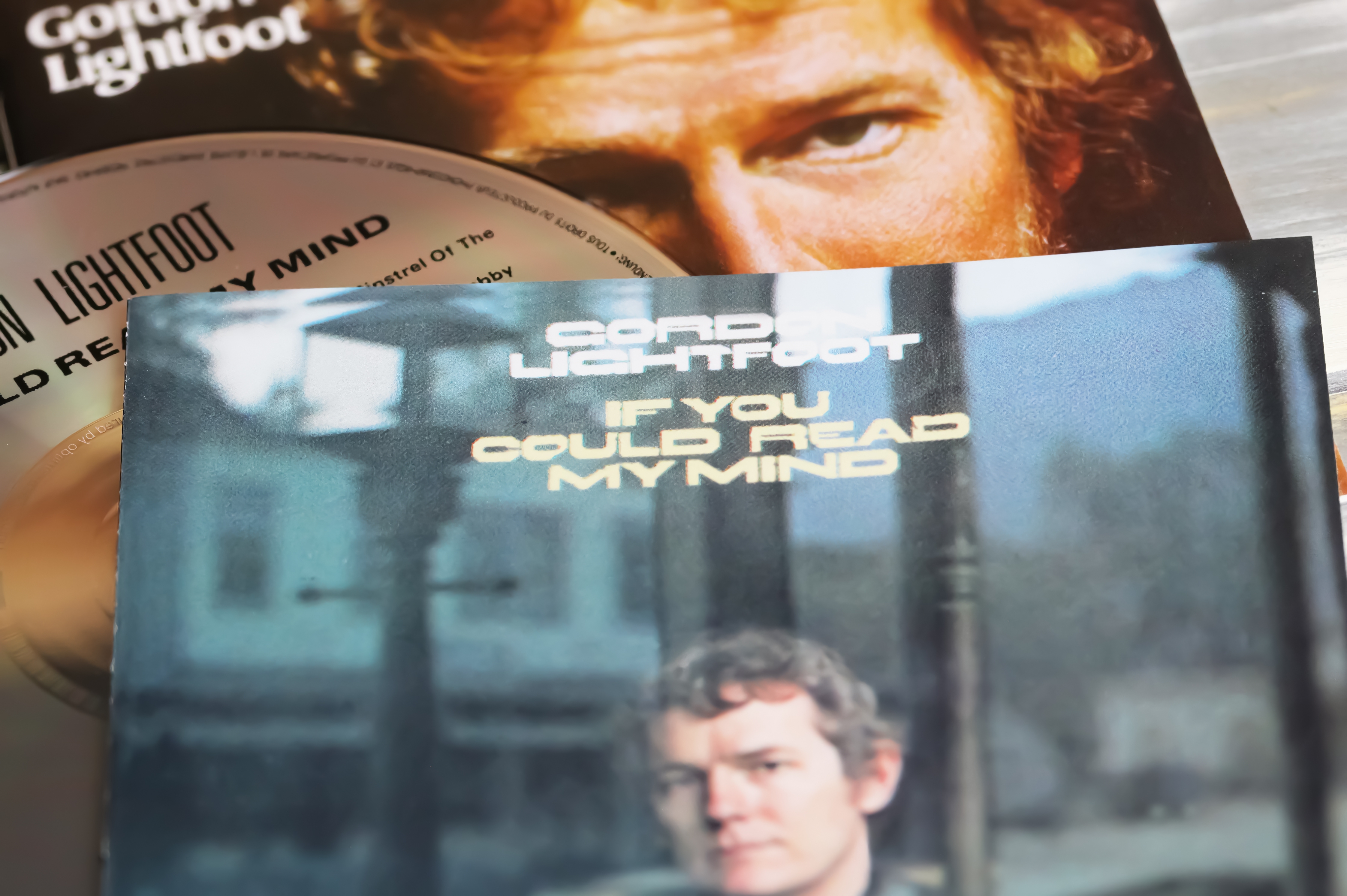
Covering Gordon Lightfoot’s ‘I’ll Be Alright’


Here’s another Gordon Lightfoot tune that may not be as recognizable as many of the other songs of his that I’ve covered here. Somehow, “I’ll be Alright” crept into my consciousness and I’m happy to offer my cover of the song in this post. To me, the song is as lovely and memorable as many of Lightfoot’s hits including: “If You Could Read My Mind,” “Early Morning Rain,” and “Song For A Winter’s Night.”

Please enjoy this remembrance of the one and only Gordon Lightfoot.

Categories
acoustic guitar artists Arts & Entertainment music profiles

On The Road To Find Out


In this life, change is constant. This is not news to most of us. However, some things never change. A good example is the music of the artist profiled in this post. In 1977, after years of contemplation and a near-death experience with tuberculosis, Cat Stevens converted to Islam and radically changed his lifestyle. He is now known as Jusuf Islam, but the beauty and truth of his music haven’t changed. Jusuf’s songs have endured and are still relevant almost fifty years after they were released. His unique guitar style and vocalizations have remained bright, new, and refreshing through the intervening decades.

“On The Road To Find Out” is a song about a young man who sets out on a journey to clear his mind and see what he can discover. The song parallels Stevens’ life experiences. After a seven-month recovery from tuberculosis, Stevens felt a deep emptiness in his life and a yearning for something more. Out of these ashes, “On the Road to Find Out” was born. The lyrics are not about traveling in a physical sense. They are about Stevens discovering who he was and the purpose, if any, of his existence. Stevens achieved fame and fortune in 1967 at the age of only eighteen when his first three singles hit the charts in his native England. Like many of his recording artist peers, Stevens examined his noteworthy accomplishments and found they had not brought him the peace of mind or happiness he envisioned.

Many of Stevens’ songs reflect his quest for existential answers and a deep sense of fulfillment. I can only hope he found it.

Here’s my cover of this song’s rich lyrics and beautiful melody.

Categories
artists Arts & Entertainment folk music profiles

Folk Legends Ian & Sylvia


Ian Tyson began making a living as a rodeo rider. After breaking an ankle in a spill, Tyson began playing the guitar. As things turned out, rodeo riding was not to be his destiny. Tyson went on to become a famous Canadian folksinger and songwriter. After spending an evening with Bob Dylan, Ian wrote his first song, namely “Four Strong Winds.” It is widely recognized as one of the best folk songs ever written.

While singing in clubs and on college campuses, Tyson met Sylvia Fricker. The duo began singing together and eventually became known throughout North America as Ian & Sylvia. After some time on the road, the duo decided to go to New York to seek a manager and a record label. They succeeded. Vanguard Records released their first album titled “Ian and Silvia” in 1962. The couple married three years later. Ian & Silvia, along with Gordon Lightfoot, are the most popular folk and pop recording artists to emerge from Canada.

“Four Strong Winds” is another song about lost love, but I find great beauty in the words and the melody. I hope you can too. The song is usually strummed, but I’m using a finger-picking method. Here’s my cover.

Categories
acoustic guitar Arts & Entertainment music profiles

From a Distance: The Song


A telephone call changed the life of Julie Gold. Although she had solid management, steady gigs, and a powerful repertoire, she failed to progress as a singer/songwriter until becoming involved with the Greenwich Village singer/songwriter scene. Performing at open mikes, Gold was befriended by Christine Lavin, who became her mentor.

When Julie’s parents sent her a piano she played while growing up, the first song she wrote on it was titled “From a Distance.” Lavin sent a tape of the song to a rising star on the country/folk music scene.

While working as a secretary for HBO in New York, Gold received her life-changing phone call from Nanci Griffith. Nanci wanted permission to record “From a Distance” on her cross-over album, Lone Star State of Mind. The album and the song went on to become big hits.

“From a Distance” became even more popular and won a Grammy Award for Song of the Year when Bette Midler recorded it in 1990.

Here is my cover of the song accompanied by an original guitar composition.

This blog post is dedicated to Toby Aurora Bentley. Toby was taken from us too soon. May she rest in peace and love until we can welcome her back.

Categories
Arts & Entertainment music profiles

Time After Time


Cyndi Lauper Time After Time

Time After Time is a Cyndi Lauper song. I’ve never been a big fan of her music, but that doesn’t mean it doesn’t resonate with others. She has a big enough audience without me. This song caught my attention when I heard Eva Cassidy sing it in her beautiful, unique style. It has taken me a few weeks to learn because the fingering is complicated. Eva Cassidy is known for her divine vocals, but trust me, she can play the damn guitar.

The meaning behind a lyric can create a strong connection to a song. It can help you to form a bond with a singer-songwriter. It lets you know the artist has gone through some of the same things you have. Cyndi Lauper’s hit Time After Time is one of those songs for many people. The song was the second single for her debut album, She’s So Unusual. It was actually the last song written for the album, but it made a lasting impact on the album and Lauper’s career.

A TV Guide advertisement for a science fiction movie sparked the idea for the song. Using a simple set of piano chords, Lauper co-wrote the song with Rob Hyman. As the piece evolved, for Lauper it became a response to an ex-lover who was lost and in need of help. She can’t move forward without him by her side.

Over a two-week period, Time After Time was written, recorded, and mastered straight to the album. There wasn’t time for a demo. The song went on to become a number-one hit in the United States. Here’s my version of Time After Time “Eva Style.”

Breaking a big project down into little steps makes it possible to achieve the final result.

Categories
Essays inspiration issues life Making Changes motivation positive thinking profiles Success

Words From Afar Are Not Enough


Business team

Why One-On-One “You Specific” Mentoring Is Essential for Your Fulfillment and Success

I enjoy reading words of inspiration as much as you probably do.  I believe in the power of positive thinking.  I love practicing the art of creative visualization as much as the next guy or gal.  It’s all wonderful and good, but it takes more than arms-length words and solitary mental constructs to effect positive change and consistent success in any endeavor.  I’m a golf enthusiast, so I’ll use an example from the ranks of professional golf to make a few points.

Jason Day, a professional golfer from Australia, walked a crooked path to success.  Jason, unlike his super-successful contemporary, Jordan Spieth, did not have a strong connection with his parents while growing up. He had a troubled youth before meeting Colin Swatton at Kooralbyn, a golf-centric boarding school in southeast Queensland.  Jason’s mother had to borrow money to send her son to Kooralbyn in a desperate attempt to do something about his delinquent behavior after his father died of stomach cancer when Jason was 12.

Colin Swatton was a golf instructor at Kooralbyn when he first met the head-strong, rebellious Day. Swatton’s non-confrontational style won Jason over. When Swatton moved on to teach at Hills International College, Day followed him. From there, Swatton became Day’s golf coach, mentor, close friend, and full-time professional caddie.  In Jason Day, Swatton saw a diamond in the rough.  He gave his protégé the advice and encouragement needed to overcome the inner demons and soaring outer obstacles blocking Day’s path.  Swatton filled in the holes in Jason’s psyche and the gaps in his emotional development.  Jason Day possessed rare talent, but, by his own admission, he never would have become the man he is today without a whisperer like Colin Swatton in his life.  Despite the challenge of a bulging disc in his lower back, Jason is now one of the top-ranked golfers in the world.  He is a devoted father and husband, and he has earned the admiration and affection of his peers.

Enough of the super heroes of the world.  Let’s talk about you and me.  After I’ve read a self-help book, the inspiration and advice usually fade within forty-eight hours.  Formulaic self-help exercises quickly become dry practices that yield little or lasting benefits.  I picked up a self-help book by a famous author recently.  Two things became immediately clear: (1) the author had a lot of nice things to say, and (2) his precepts were so far over my head that I couldn’t practice them if I tried for a million years.

So, what does it take to move forward, achieve, and grow?

To amplify what I said earlier, it takes a special personal relationship.  It is a relationship that always accepts and honors who you are and where you are.  It can be a parental, mentoring, teaching, romantic, or friend-to-friend relationship.  In the case of the first three, the relationship begins with the child or student receiving more at first.  I’ve learned that, over time, the best of these relationships blossom into mutuality where both parties reap significant rewards. There’s an energy and information exchange in these relationships; call it love, call it caring and concern, call it chemistry. Whatever it is, it’s a radiant, magic elixir.  It produces extraordinary human beings, some famous and others who live and work quietly outside of the limelight.