It started out as a poem. Then it turned into a song. Then it became a background song for the movie “Beaches.” After various song covers at home and abroad, in 1988, Bette Midler made “Wind Beneath My Wings” a #1 hit in the USA. A year later, the song won Grammy Awards for both Record of the Year and Song of the Year.
“Sky Blue and Black” is an emotional roller coaster, looking back on the joys and sorrows of love and its lasting impact. Jackson Browne wrote the song over a four-year period and released it on his album “I’m Alive” in 1992. The source material comes from Jackson’s relationship with a famous actress. However, Browne never wants his songs to be identified with his specific life events, so he rarely speaks about his real-life relationships, especially in the context of his music.
“It’s a drag to even imagine that people are thinking about [the] relationship instead of their own lives,” Jackson told the Los Angeles Times. “I think if a song is any good, eventually it’ll turn out to be about the life of the listener and not about the life of the writer. Anyway, that’s my hope.”
Enjoy my reconstituted version of “Sky Blue and Black” and the original cover.
Cat Stevens wrote “The First Cut Is The Deepest” when he was eighteen. At the time, he had no intention of becoming a worldwide star performer. He sold the song for thirty pounds to P.P. Arnold, a soul singer who lived near him in London. She released “The First Cut Is The Deepest” on her first album. It reached #18 on the U.K. charts in 1967. Eventually, Rod Stewart and Sheryl Crow covered the song, making it a major hit in America.
Stevens released his version of the song on his debut album, New Masters. Because he never released “The First Cut Is the Deepest” as a single, the album went largely unnoticed.
Despite his shyness, Stevens’ songwriting and singing burst through to make him an international star in the music industry. I’m using Stevens’ version in my cover.
The Seekers are an Australian band formed in 1962. The Folk and Gospel group achieved the zenith of their popularity in the mid ’60’s with several hit songs. Their most memorable chart-topper is a song titled “I’ll Never Find Another You.” It reached #1 on the UK charts in 1965, making the Seekers the only Australian band with a #1 hit song outside of Australia. The song reached #97 in the United States, quite a feat in itself. The group has continued to perform to standing ovations around the world into the 1990’s.
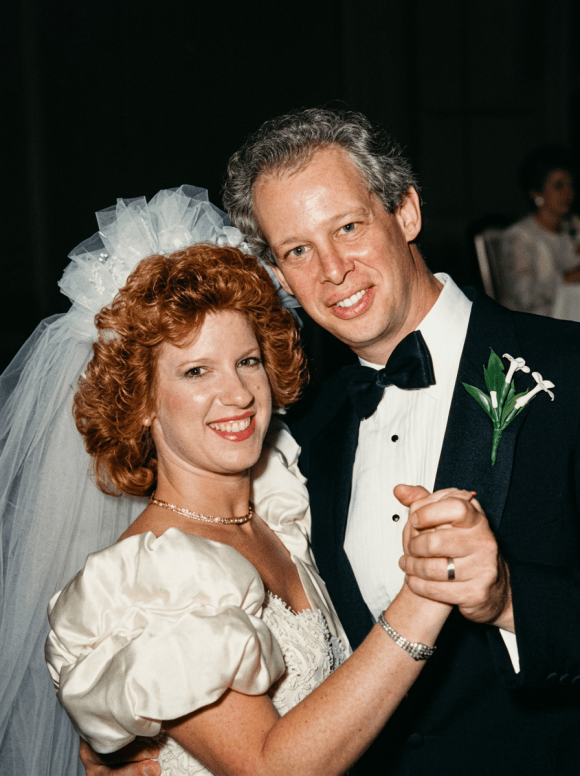
I am dedicating this song to my wife of 37 years, Bonnie Erens-Gittlin. Without exaggeration, every word in the lyrics applies. I am grateful to have spent my adult life with this woman and the beautiful daughter we have raised. Here’s my cover.
Listening to the Heart Brings Peace and Harmony into a Life
In this song, Cat Stevens is singing to a woman he yearns for in a Human form. On another level, he may be singing, aware or unaware, to the Divine Feminine. In either case, the object of Stevens’ love is unattainable in the present. Yet, I believe, the admirer (Stevens) continues to yearn for his beloved in the hope that he will, one day, meet his perfect love, in either or both Human and Divine forms.
There are many interpretations of “How Can I Tell You.” In my view, the song is hopeful rather than despairing. However one interprets “How Can I Tell you,” I feel the song is filled with incredible beauty that cannot help but shine through.
Stevens first met Alun Davies as a backup musician in a recording session. He liked what he heard. After another session, Stevens recognized that Davies was an exceptional talent. In a following private session, Stevens played something like fifty of his original songs for Davies, whereupon Davies decided Cat was also an exceptional talent. He agreed to accompany Stevens on an upcoming tour. After the tour, Davies became Stevens’ permanent 2nd guitar until Stevens stopped playing music with his conversion to Islam in 1977. When Stevens began performing again in 2003, the two artists reunited.
Here is a new version of “How Can I Tell You” with me playing and singing Davies’ now famous second guitar part.
A movie studio commissioned a composer to write a song for Kevin Costner’s Film, “Prince of Thieves.” He wrote the music for “Everything I Do.” Bryan Adams, with his producer Mutt Lange, wrote the lyrics, bridge, arrangement, and outro. Adams used a line from the movie for the song title.
The studio did not like the instrumentation in the finished product. They buried it midway in the credits, not anticipating what a huge hit the song would become.
“Everything I Do” is one of the most successful singles of all time, selling over 3 million copies. It was #1 for 16 weeks in England and seven weeks in the United States.
Enjoy my cover with background instrumentation by Giovanni Egusquiza.
Here’s my cover, produced with an incredible guy I’m working with to create unique recordings of beautiful music written by masterful artists of the past 60 years.
Previous to this writing, I had never heard of Bryan Adams. I am in the minority because Adams has created a number of beautiful, chart-topping hits that most people besides me are familiar with. “Heaven” is another song that came into my mind from someplace I can’t define. When I heard Boyce Avenue’s stirring performance of it, I fell in love with the song immediately. On July 15, 1985, “Heaven” reached #1 on the Billboard Chart. Paradoxically, it was written for a movie that flopped.
Bryan Guy Adams was born in 1959. As a teenager, he played in bands and in local studios. In 1978, he met drummer and songwriter Jim Vallance, and together they formed a partnership that lasted for decades. Their early collaboration helped Adams strike a deal with A&M Records for a reported one dollar. His debut album was released when the folk-rock genre exploded in the early eighties. The album was good enough to earn Adams a second one with A&M. It helped establish Adams as an artist on the rise. His third album, 1983’s Cuts Like a Knife, proved to be the singer-songwriter’s breakthrough effort, including three Top 40 hits.
Later that year, while working on his fourth studio album, Reckless, Adams considered including “Heaven” on it, but initially felt it didn’t live up to the quality of the rest of the album. At the last minute, however, Adams changed his mind and added “Heaven” to the Reckless tracklist.
Reckless went on to sell 12 million copies worldwide, becoming the most successful album of Adam’s career. Here’s my cover of “Heaven.”
Despite its somewhat foreboding title and subject matter, this Nanci Griffith song is upbeat and fun to play. “I Wish It Would Rain” was released by MCA in 1988 on Nanci’s 6th album titled “Little Love Affairs.” I hope you enjoy listening to the song as much as I enjoy playing it. I’m including a video of Nanci Performing in the late 1980’s. Just look at her beautiful smile. Here’s my cover.
Here’s another song, written by Paul Kennerly and made famous by Emmylou Harris, called “Heaven Only Knows.” The song was released on Emmylou’s 1989 album, “Bluebird.” The song reached #16 on the Hot Country Music Chart.
Since I’m a newcomer to the Country Music Scene, I’d never heard of Paul Kennerly before. He’s an Englishman who has written 30 published Country Music songs. (I guess there are stranger things that abound in our world). I don’t recall Kennerly’s name being mentioned in connection with any of the songs I’ve covered here. Be that as it may, he has written two powerful songs that Emmylou Harris has brought to my attention. I covered the other song, “Born to Run,” in my previous blog.
“Heaven Only Knows,” as performed by Emmylou and her band, features a driving beat, compelling lyrics, and the recording artist’s beautiful, singular voice.