Tom Paxton released “The Last Thing On My Mind” in 1964 on his album, Ramblin’ Boy.” The inspiration for the song came from Dave Van Ronk and Bob Dylan’s versions of “He Was A Friend of Mine.” This lost love ballad became one of Paxton’s biggest hits. He is also known for his protest songs against the Vietnam War and other social injustices. (What Did You Learn In School Today?)
“The Last Thing On My Mind” was one of the first songs I learned some forty years ago when I started playing the guitar. This is the first time I’ve released my cover publicly. The themes of the song include friendship, loss, and the passage of time.
Bob Dylan recorded the first version of “Tomorrow Is A Long Time” in 1962. He didn’t release it until 1971 on his “Greatest Hits Album.” Oddly, Ian and Sylvia were the first recording artists to release the song in 1963 on their album “Four Strong Winds.”
The song is about longing for a loved one, specifically Suze Rotolo, who Dylan dated from 1961 to 1964. It is widely believed that another Dylan song, “Girl From The North Country,” is also about Rotolo.
“Girl From The North Country” is another one of those songs that popped into my head from out of nowhere. I can’t decide if it’s a message from the Beyond or just a little piece of my subconscious rising like a sunspot from the deep layers of my skin with aging. Whatever the case, “Girl From The North Country” is one of Dylan’s earliest recorded songs, written in England in 1961 and released in 1963. Listening to it now, I find the ballad enchanting.
As a young adult, I followed Dylan’s work tangentially only because it was prominent in the mainstream. Lately, I’ve developed a deep appreciation for Dylan’s music and the man himself. I’ve covered several Dylan songs in this blog, including “Mr. Tambourine Man,”“My Back Pages,” and now this one.
“Girl From The North Country” is a beautiful ballad recounting a lost love. Many believe the woman in the song is Suze Rotolo. At the time, Dylan had just dropped out of college to pursue his musical career in New York City. Rotolo had just graduated from high school and entered the Greenwich Village folk scene. Their first meeting took place at the First Riverside Church concert in New York City. Dylan described the meeting in his memoir: “Cupid’s arrow had whistled past my ears before, but this time it hit me in the heart, and the weight of it dragged me overboard.”
Eventually, the couple lived together in Greenwich Village and then grew apart when Dylan went to England, and Rotolo went to Italy to continue her education.
After some time passed, Dylan went to Italy to find Retolo. At the same time, Rotolo returned to New York City. The couple finally reunited and lived in Dylan’s apartment until their final breakup.
The album cover of Dylan’s second album, Freewheeling, features Dylan and Rotolo walking arm in arm down a Greenwich Village street.
Nanci Griffith introduced her third album with its title song, “Once in a Very Blue Moon,” on the Austin City Limits TV show in 1984. She sang to a live audience with her typically bold and beautiful voice, which continues to endear this singer/songwriter to millions of people around the world after her passing.
This poignant song could easily sound sad, but not the way Nanci performs it. With her crystal-clear voice, it actually sounds uplifting. A quality comes through Griffith’s songs. It sounds to me like “nothing will ever get me down.” I’m sure Ms. Griffith endured many hardships and obstacles in her life, but she always came out on top. I dedicate my cover to the memory of this inspiring woman.
The Incredible String Band burst onto the folk music scene in 1966 with the release of their first album, aptly named “The Incredible String Band.” As an avid lover and consumer of folk, I had never heard anything like their songs. The band started out as a trio composed of Clive Palmer, Robin Williamson, and Mike Heron. Williamson and Heron composed most of ISB’s music. Palmer eventually dropped out, replaced by other musicians and the girlfriends of Williamson and Heron.
Signed by Electra Records, the group produced seven albums for the label, most notably their first four, which included “The Five Hundred Spirits or the Layers of the Onion” and “The Hangman’s Beautiful Daughter.”
Through intermittent tours and appearances at prestigious venues like the Albert Hall, The Incredible String Band gained worldwide fans and international recognition from their humble beginnings in Edinburgh, Scotland.
Listen to Mike Heron’s lilting, whimsical “Painting Box” to get a sense of The Incredible String Band’s multifaceted musical range. Here’s my cover.
Cat Stevens ( Yusuf Islam) has never publicly said what this song is about, so we are left to offer our own interpretations.
When I read the lyrics, I get a picture of a farmer of indiscriminate age waking up at the crack of dawn and looking out through a window at his fields. At the very instant when the sun rises, there is barely sound. Our farmer reflects back on his youth and how it felt every day to awaken with a song in his heart and the dreams he envisioned to pursue.
The last refrain floated into my head from out of nowhere:
“There’ll be the evening,
In the end,
But ’till that time arrives,
You can rest your eyes,
And begin again.”
The lyrics are beautiful and express the child-like innocence found in many of Cat Stevens’ songs. I interpret this last refrain to mean: Take advantage of and be grateful for every moment you are alive.
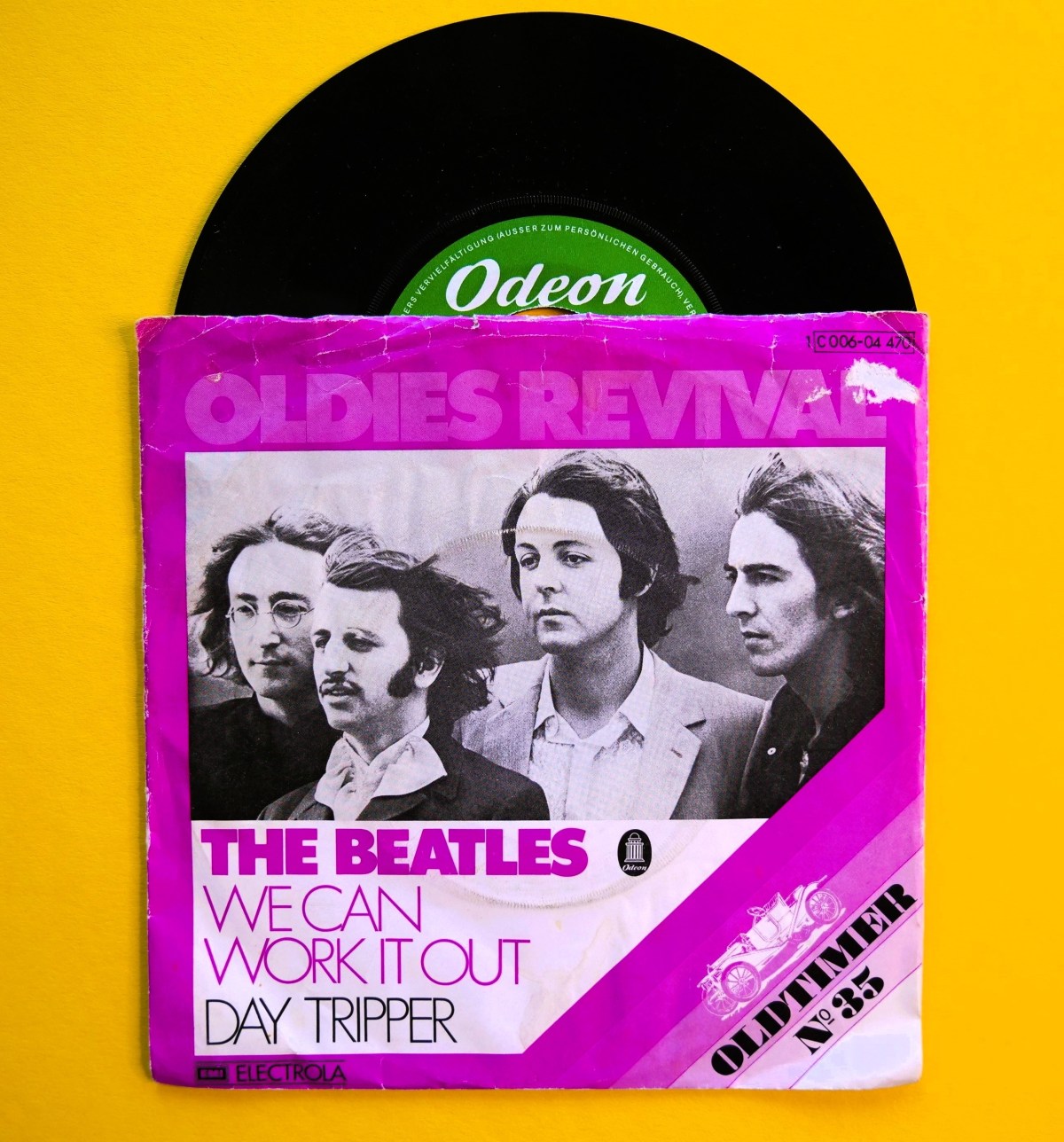
Back in the days when recording artists released singles, “We Can Work It Out” made its debut in 1965. The Beatle’s manager, Brian Epstein, felt that the other song on the record, “Day Tripper,” was more commercial and so, should be the lead song. Typically, the lead song of a single is recorded on the top side (A side) and the other song (B side) goes beneath it. Since both songs became hits, the record turned out to be the first double “A” single ever recorded.
John Lennon and Paul McCartney wrote the song with Paul writing the optimistic verses and John writing the more pessimistic chorus, in this case, the bridge.
The song sprang from a disagreement Paul had with his then-girlfriend, actress Jane Asher. Jane and her mother, Margaret, had a powerful impact on Paul’s life. The couple stayed together for five years from 1963 to 1968.
If you’ve been following this blog, then you know I’m a huge fan of Cat Stevens. He produced some of the most iconic and unique music of the 1960s and ’70s. Shortly thereafter, Stevens’ sincere spiritual search led to his conversion to Islam, a surprise to many, including myself. For several decades after his transformation, Stevens, now known as Jusuf Islam, remained musically inert.
During his most productive years, Stevens gave over his immense musical talent to the study and preaching of Islam. Although Stevens says, in his own words, “I’m only trying to help,” I can’t help thinking that the world lost out on a treasure trove of inspiring, educational, and entertaining music
To be fair, I guess I’m just expressing my sour grapes. Everyone has the right to do whatever he or she wants with their life. Stevens believes his conversion to Islam “was meant to be.” It may very well be because Stevens has done a lot for the Arabic world. And he has stayed with his persuasion for almost fifty years. Kudos to Cat…er…Yusuf.
“Hard Headed Woman” celebrates an empowering and life-affirming love. The artist envisions an enriching and fulfilling relationship in which each partner contributes to the other’s growth and happiness. The song reminds us of the importance of finding someone who complements and strengthens us rather than a companion who fits a pre-determined, superficial mold.
“Day Is Done” is a simple song about a clandestine relationship. Since very little has been written about the song, it is difficult to pinpoint its exact meaning. It could be about two married adults having an illicit affair. The lyrics and tone, however, indicate a relationship between two adolescents forbidden by parents or society.
The drawings on the album cover of “Lost Dogs and Mixed Blessings,” where the song is one of the tracks, tend to support the theory of a prohibited young love.
In “Day is Done,” Prine has written a charming little song with universal implications. Many of his songs deal with the intricacies of human relationships and are laced with Prine’s subtle sense of humor. Lost Dogs and Mixed Blessings was John’s fourteenth album. Released in 1995, it is another example of the artist’s exploration of the human condition.
From humble beginnings, John Prine came a long way in his fifty-year career. He won Grammy Awards and was posthumously inducted into the Country and Folk Music Hall of Fame. What struck me, however, is this early recollection of his career. It is taken directly from Prine’s official website:
“Prine still remembers the first three songs he performed on any stage: Sam Stone, Hello in There, and Paradise. With humility, he recalls, “I sang those three songs and people just sat there and looked at me. I thought, ‘Wow, those are really bad.’ They wouldn’t even applaud.”
Things changed dramatically when a young journalist named Roger Ebert dropped into a Chicago folk club for a beer while John was on stage. Ebert wrote a glowing review of Prine’s performance in the Chicago Sun-Times which essentially launched John’s career.












 Heart Banter by David Gittlin