In this song, (Yusuf) Cat Stevens is singing to a woman he yearns for in a Human form. On another level, he may be singing, aware or unaware, to the Divine Feminine. In either case, the object of Stevens’ love is unattainable in the present. Yet, I believe, that the admirer (Stevens) continues to yearn for his beloved in the hope that he will, one day, meet his perfect love, in either or both Human and Divine forms. There are many interpretations of “How Can I Tell You.” In my view, the song is hopeful rather than despairing.
However one interprets “How Can I Tell you,” I feel that the song is filled with incredible beauty that cannot help but shine through.
And thank you, Yusuf Islam (Cat Stevens), for your always beautiful, wise, and inspiring music.
I first heard “Cornflower Blue” as the opening song on Kate Wolf’s 1983 double album “Give Yourself to Love.” As I listened to the album many times over, “Cornflower Blue” grew on me (no pun intended). I began to appreciate the exquisite beauty in the lyrics and in Kate’s lovely singing voice.
Oftentimes, songs like this one will find their way into my heart and I feel compelled to play them myself. With this song, I had my doubts. The chances were good that I might not pull it off. Learning how to play “Cornflower Blue” like Kate does was like learning how to walk again. The style is completely counterintuitive to what I’m used to, but I’m glad I made the effort. I hope my cover of the song conveys some of the mystery and beauty of the original.
Bob Dylan recorded the first version of “Tomorrow Is A Long Time” in 1962. He didn’t release it until 1971 on his “Greatest Hits Album.” Oddly, Ian and Sylvia were the first recording artists to release the song in 1963 on their album “Four Strong Winds.”
The song is about longing for a loved one, specifically Suze Rotolo, who Dylan dated from 1961 to 1964. It is widely believed that another Dylan song, “Girl From The North Country,” is also about Rotolo.
Relationships, and especially love relationships are difficult. Here’s my cover of “I Thought I Was A Child,” a song about the universal search for love and Browne’s admiration of the wisdom of an older woman.
In her brief lifetime, which was cut short by Leukemia, Kate Wolf became a major influence on the folk scene with songs like “Give Yourself to Love,” “Across the Great Divide,” “Green Eyes,” “September Song,” and many more. Kate’s audience has continued to grow since her unfortunate passing. As an example, I found her late in my life. Here’s my cover of “Green Eyes.”
“Day Is Done” is a simple song about a clandestine relationship. Since very little has been written about the song, it is difficult to pinpoint its exact meaning. It could be about two married adults having an illicit affair. The lyrics and tone, however, indicate a relationship between two adolescents forbidden by parents or society.
The drawings on the album cover of “Lost Dogs and Mixed Blessings,” where the song is one of the tracks, tend to support the theory of a prohibited young love.
In “Day is Done,” Prine has written a charming little song with universal implications. Many of his songs deal with the intricacies of human relationships and are laced with Prine’s subtle sense of humor. Lost Dogs and Mixed Blessings was John’s fourteenth album. Released in 1995, it is another example of the artist’s exploration of the human condition.
From humble beginnings, John Prine came a long way in his fifty-year career. He won Grammy Awards and was posthumously inducted into the Country and Folk Music Hall of Fame. What struck me, however, is this early recollection of his career. It is taken directly from Prine’s official website:
“Prine still remembers the first three songs he performed on any stage: Sam Stone, Hello in There, and Paradise. With humility, he recalls, “I sang those three songs and people just sat there and looked at me. I thought, ‘Wow, those are really bad.’ They wouldn’t even applaud.”
Things changed dramatically when a young journalist named Roger Ebert dropped into a Chicago folk club for a beer while John was on stage. Ebert wrote a glowing review of Prine’s performance in the Chicago Sun-Times which essentially launched John’s career.
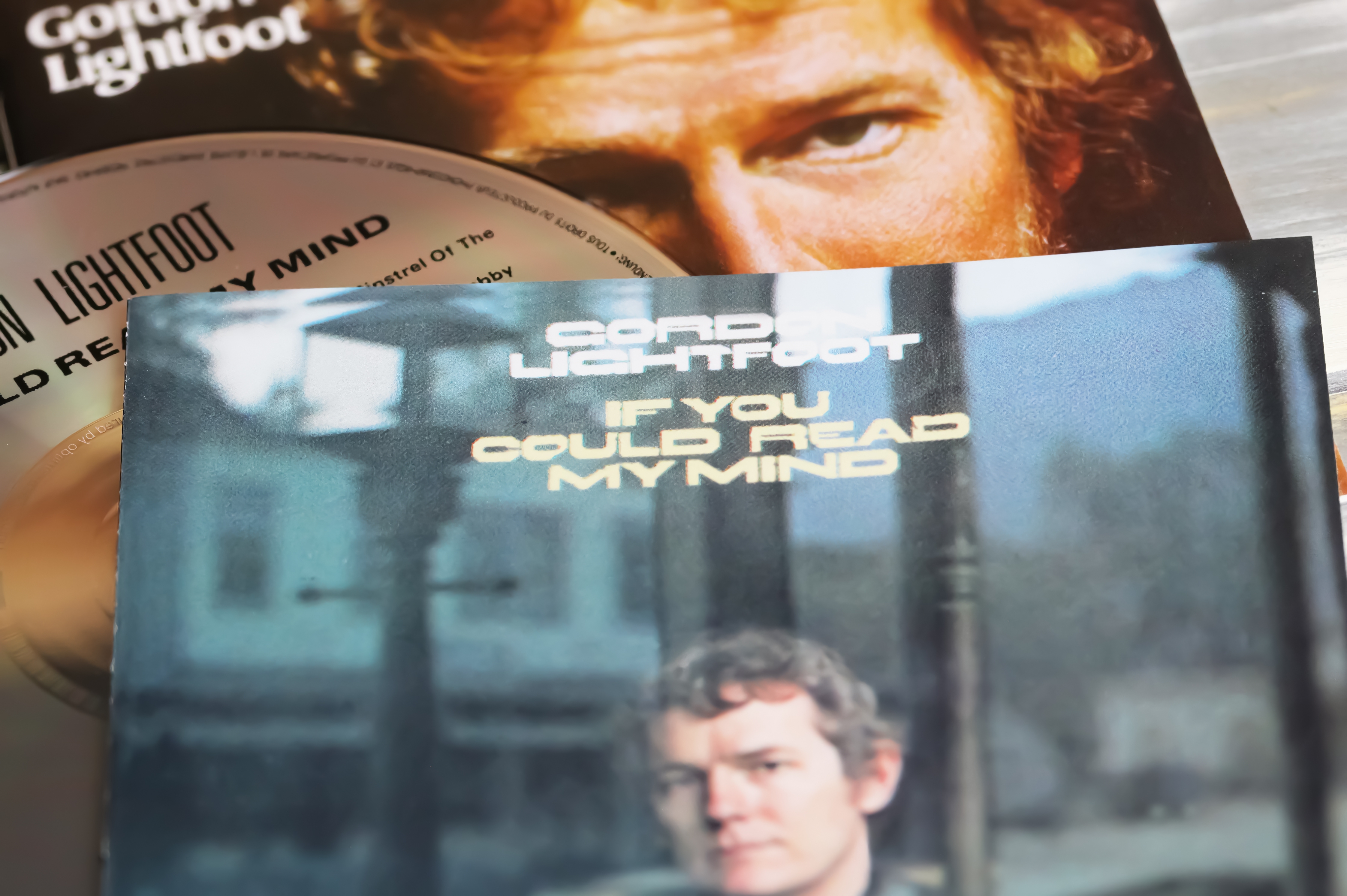
Here’s another Gordon Lightfoot tune that may not be as recognizable as many of the other songs of his that I’ve covered here. Somehow, “I’ll be Alright” crept into my consciousness and I’m happy to offer my cover of the song in this post. To me, the song is as lovely and memorable as many of Lightfoot’s hits including: “If You Could Read My Mind,”“Early Morning Rain,” and “Song For A Winter’s Night.”
Please enjoy this remembrance of the one and only Gordon Lightfoot.
Eva Cassidy is a perennial favorite of mine. When I saw a “Songbird” tutorial pop up on Jerry’s Guitar Bar, I couldn’t resist. Here’s my cover of Eva’s beautiful song.
Ian Tyson began making a living as a rodeo rider. After breaking an ankle in a spill, Tyson began playing the guitar. As things turned out, rodeo riding was not to be his destiny. Tyson went on to become a famous Canadian folksinger and songwriter. After spending an evening with Bob Dylan, Ian wrote his first song, namely “Four Strong Winds.” It is widely recognized as one of the best folk songs ever written.
While singing in clubs and on college campuses, Tyson met Sylvia Fricker. The duo began singing together and eventually became known throughout North America as Ian & Sylvia. After some time on the road, the duo decided to go to New York to seek a manager and a record label. They succeeded. Vanguard Records released their first album titled “Ian and Silvia” in 1962. The couple married three years later. Ian & Silvia, along with Gordon Lightfoot, are the most popular folk and pop recording artists to emerge from Canada.
“Four Strong Winds” is another song about lost love, but I find great beauty in the words and the melody. I hope you can too. The song is usually strummed, but I’m using a finger-picking method. Here’s my cover.
Gordon Lightfoot is one of those rare individuals who resides in the top echelon of his profession. It takes a huge deposit of raw talent, hard work, intestinal fortitude, and luck to reach the level of success Lightfoot has achieved in the music business. Amidst all of this recognition, Gordon remains a simple and straightforward man. He is a survivor with no plans to retire. At 83 years young, Lightfoot once dodged death when his manager found him lying on the floor of his dressing room with a burst aorta. Lightfoot has navigated numerous romantic relationships, spawned six children and five grandchildren, remained close with his offspring, and outlasted most of his contemporaries, not without some regrets.
When he comes on stage these days, Lightfoot often uses a misquote inaccurately attributed to Mark Twain: “Reports of my death have been greatly exaggerated.” In November of 2021, Lightfoot had the honor of re-opening the newly renovated Massey Hall in Toronto in a live performance. He has played the historic concert venue more than 160 times.
Lightfoot released his fifteenth original album in 1982 on Warner Records. The songs on the album are slower and more contemplative than many of the songs he released in the prior decade. As is his custom, Lightfoot compiled the album’s songs from scraps of notes he collected in his briefcase and tapes he recorded at home.
Of the album’s title song, “Shadows,” Lightfoot has made a few somewhat vague comments. He says it was the best song he had at the time, and that it is about a particular problem he was going through in his life involving a man and a woman, and nature.
I feel the song is quite beautiful. I’ve learned it the way Lightfoot plays it. Here is my cover of “Shadows.”











 Heart Banter by David Gittlin