Categories
acoustic guitar artists Arts & Entertainment relationships

John Fogerty’s Emotional Journey in ‘Have You Ever Seen The Rain’


John Fogerty wrote “Have You Ever Seen The Rain” about his brother, Tom Fogerty, who left Creedence Clearwater Revival in 1971 at the apex of the band’s popularity. The departure of his brother was a sad time for John.

Eventually, the hurt healed, and the meaning of the song changed. In Fogerty’s own words, “This song was originally written about a very sad thing that was going on in my life. But I refuse to be sad now. These days, this song reminds me of my little girl, Kelsy, and every time I sing it, I think about Kelsy and rainbows.

“Have You Ever Seen the Rain” is another song that emerged unexpectedly from my subconscious. The song bounced around in my head until I played it. Here’s my cover. 

Categories
Arts & Entertainment children inspiration motivation music

Keep Your Dreams Alive


Kate Wolf’s music conveys Love, Beauty, and a full range of human emotions. “See Here She Says” is a remarkable song because it speaks to children and adults alike with a reminder that the dreams of the Heart are one of the most valuable commodities we own.

“The time that’s left is yours to keep” is a phrase at the end of the chorus of Kate’s song “See Here She Says.” The phrase impacts me powerfully because it is sweet advice to use our time wisely. This is especially true for children, but it is also important for people of all ages to keep in mind.

Each moment that is given to us is precious. Why waste it on foolish pursuits that bear no useful results? Yes, recreation, relaxation, and pleasure are important too, but they are best employed as a balance for the attainment of meaningful goals. And if the motivation to achieve these goals comes from the heart, then the process of manifesting them will surely, for the most part, be enjoyable.

In a truncated life of only forty-four years, Kate Wolf embodied the words of this song. She used her time to create over two hundred songs, performing mostly at venues in her native state of California. Kate’s work has warmed and gladdened the hearts of millions of people around the world. Here’s my cover of “See Here She Said.”

Categories
acoustic guitar artists Arts & Entertainment folk guitar folk music

Dylan Cover: Mr. Tambourine Man


Bob Dylan wrote and recorded the original version of “Mr. Tambourine Man,” but The Byrds’ electrified folk-rock version shot it to #1 on both the US and UK charts. The song hadn’t been released when The Byrds learned it from a demo Dylan gave to their manager, Jim Dickson.

Dylan released Tambourine Man in March 1965 on his Bringing It All Back Home album.

What is “Mr. Tambourine Man” about? On the surface, this tambourine man is a wandering musician whose music has captured Dylan under its spell. The song is considered by many to be about drug experiences, with lines like “Take me for a trip upon your magic swirling ship” and “Take me disappearin’ through the smoke rings of my mind.” Phrases like these suggest a marijuana or LSD trip. Dylan is famously close-lipped about explaining his songs, but in his 1985 Biograph compilation album, he revealed that “Mr. Tambourine Man” is not about drugs. Instead, he said the song was inspired by a backup folk musician named Bruce Langhorne, who played a large tambourine in one of Dylan’s recording sessions.

To me, the song’s poetic images are like impressionist paintings. The melody is haunting and mesmerizing. The song stands alone as a true work of art. Here’s my version.

Categories
acoustic guitar Arts & Entertainment music profiles

Covering Gordon Lightfoot’s ‘I’ll Be Alright’


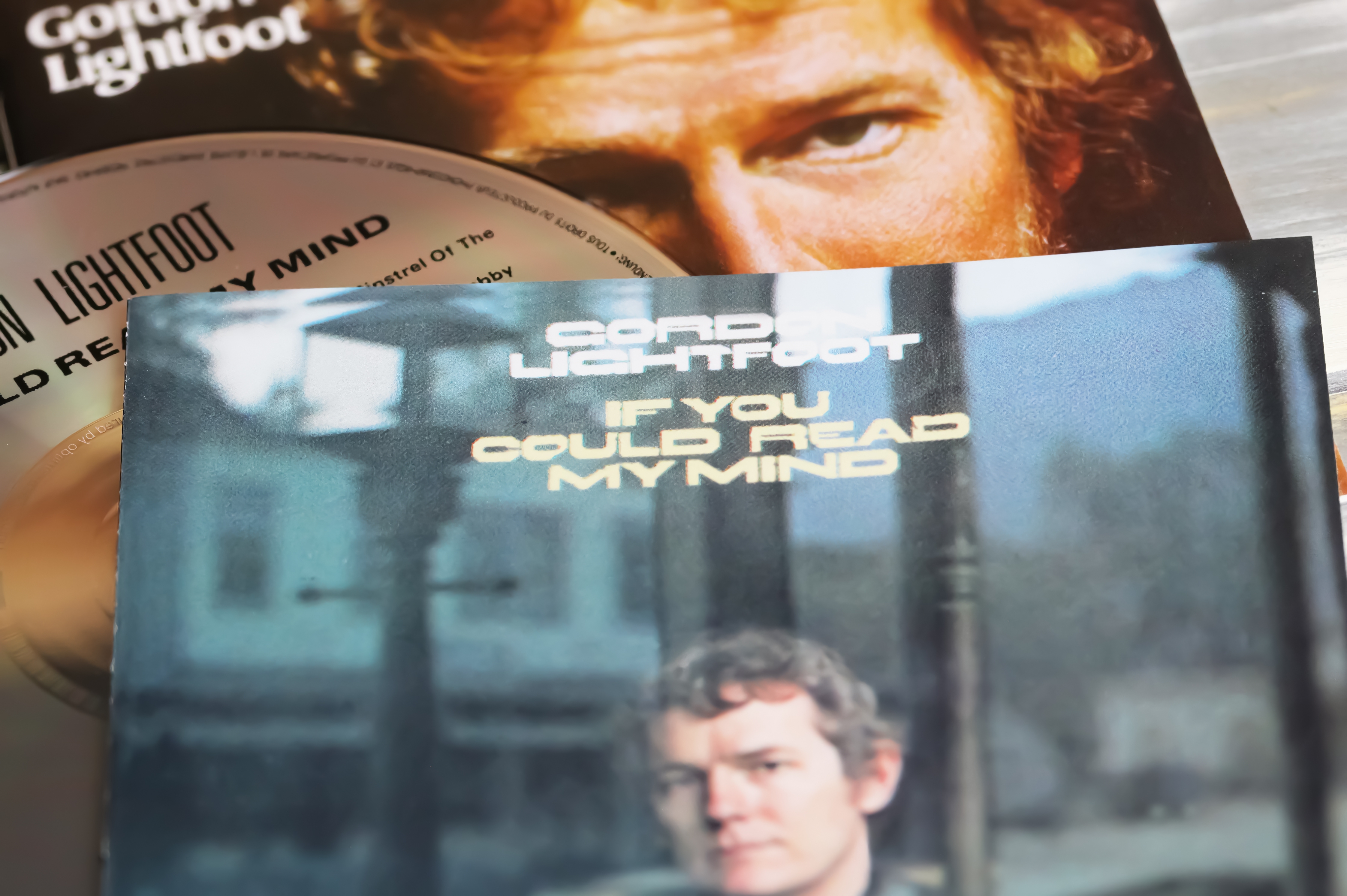
Here’s another Gordon Lightfoot tune that may not be as recognizable as many of the other songs of his that I’ve covered here. Somehow, “I’ll be Alright” crept into my consciousness and I’m happy to offer my cover of the song in this post. To me, the song is as lovely and memorable as many of Lightfoot’s hits including: “If You Could Read My Mind,” “Early Morning Rain,” and “Song For A Winter’s Night.”

Please enjoy this remembrance of the one and only Gordon Lightfoot.

Categories
artists Arts & Entertainment folk music music

The Summer Side of Life


“Summer Side of Life” is the lead-off song from a 1972 Gordon Lightfoot concert in London, England. The song kept rolling around in my head until I decided to learn it and post it here.

Ostensibly, the song is about a young man who returns from the Vietnam War and mourns a lost love and possibly his war experiences. It’s a song about before and after, and maybe two sides of life. After the first two verses, I find the lyrics to be somewhat impenetrable. So, I can’t say for sure what the song is about, but it speaks to me about the difference between youth and old age.

I’d love to have my youth back with my current perspective and the freedom to follow my bliss, as Joseph Campbell says. Wouldn’t it be lovely to have decades to develop ourselves and our abilities without the distraction of economic necessity? Ahhh…if it could only be so.

It’s been fun learning this song. I hope you enjoy it.

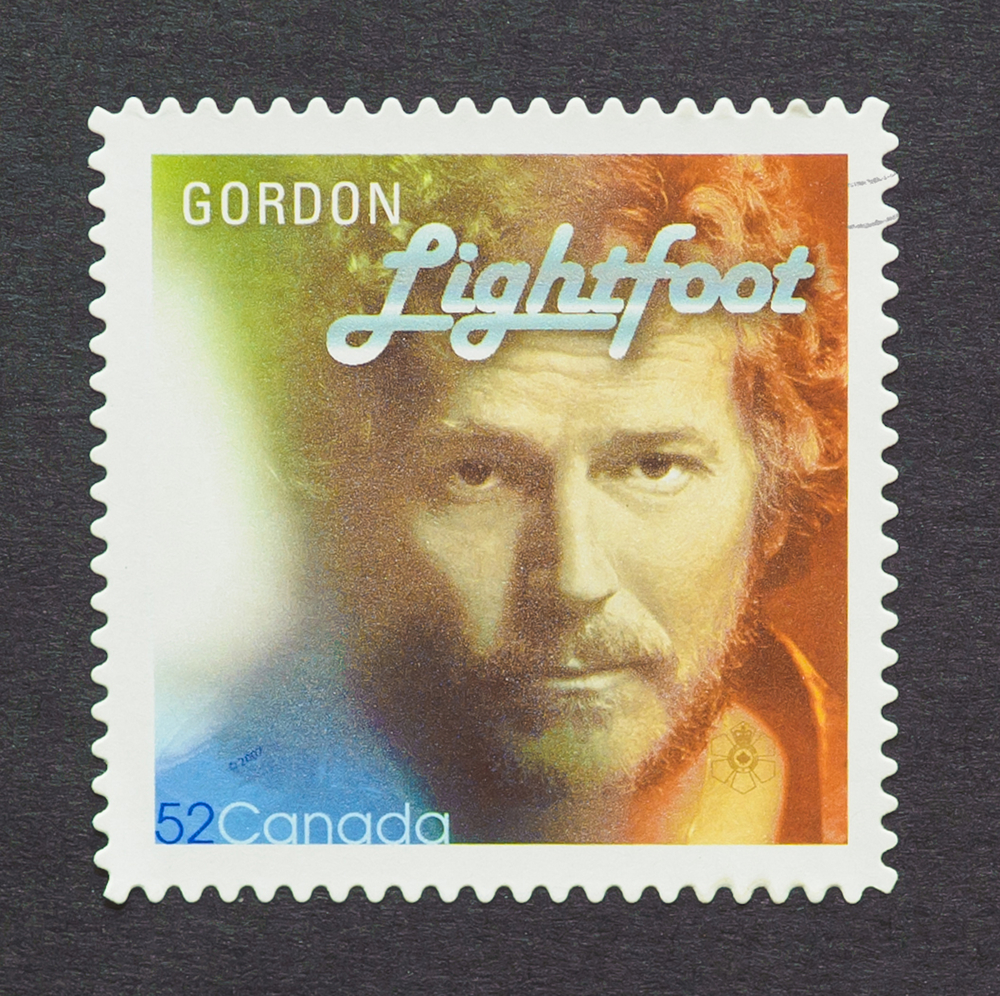
Did they really make a Canadian stamp imprinted with a portrait of GL as a young man?

Categories
Arts & Entertainment Interviews music reflections

Love Found And Lost


“Sky Blue and Black” by Jackson Browne is an emotional roller coaster, looking back on the joys and sorrows of love and its lasting impact. Browne wrote the song over a four-year period and released it on his album “I’m Alive” in 1992. The source material comes from Jackson’s relationship with a famous actress. However, Browne never wants his songs to be identified with his specific life events, so he rarely speaks about his real-life relationships, especially in context with his music.

“It’s a drag to even imagine that people are thinking about [the] relationship instead of their own lives,” Jackson told the Los Angeles Times. “I think if a song is any good, eventually it’ll turn out to be about the life of the listener and not about the life of the writer. Anyway, that’s my hope.”

Here’s my cover of “Sky Blue and Black”.

Categories
Arts & Entertainment folk guitar folk music music

The Beauty of the Bells


Have you heard of Steve Gillette? If you were alive in the 1960s and liked folk music, there’s a chance the name rings a bell. Gillette never reached the top of the charts, but he’s a very talented singer/songwriter. Many of his songs have been performed by artists you have heard of, including John Denver, Gordon Lightfoot, Ian and Sylvia, Nanci Griffith, and Linda Ronstadt.

The Bells in the Evening appears on Gillette’s debut album released in 1967. The album, simply titled “Steve Gillette,” stands as one of Steve’s finest recordings. “The Bells” is a bittersweet (actually sweet bitter) song of love blossoming in the spring and fading away in the fall. It’s a song full of immense joy and sorrow that combine in a mixture of incredible beauty. The song is also replete with imagery. When you listen, what images come to your mind?

I’ve revisited “The Bells of the Evening” adding some embellishments and the sound of my new guitar. Here’s my cover.

Categories
Arts & Entertainment folk guitar inspiration music

“Vincent” Revisited


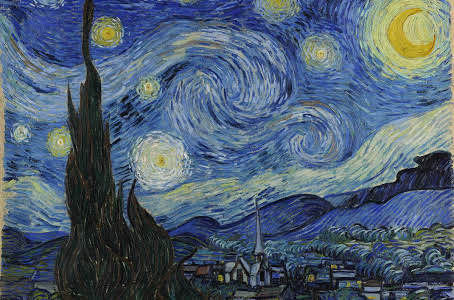
The Starry Night, Famous Oil Painting,

I’m reposting a blog previously titled “Vincent: A True Lover.” I’ve decided to re-learn the song closer to the original.

“Starry, starry night/ Paint your palette blue and grey/ Look upon a summer’s day/ With eyes that know the darkness in my soul.”

Those words came to Don McLean as he gazed at Vincent Van Gogh’s 1889 painting “The Starry Night.” Soon, he had a masterpiece of his own: “Vincent,” a 1972 hit that he released right on the heels of his defining epic “American Pie.”

Like Van Gogh’s painting, Mclean’s “Vincent” has touched a broad array of hearts and minds over the last 50 years. The song, the painting, and the book “Dear Theo,” written by Van Gogh’s brother, have certainly touched my heart again and again. I’ve always thought that Vincent’s style was at least in part inspired by his mental illness. To me, the brush strokes reflect an altered state of perception similar to the hallucinogenic patterns seen under the influence of Mescaline or LSD.

Famous Oil Paintings By Vincent Van Gogh

Van Gogh labored in obscurity until his self-inflicted death at the age of thirty-seven. He sold only a few of his paintings during his lifetime. Today, Van Gogh is a household word, and his paintings each sell for fifty million dollars or more. “The Starry Night” is one of Van Gogh’s most famous paintings.

Here’s the updated version of “Vincent” played closer to the original recording by Don Mclean.

Thought for the Day

When your world shrinks, your issues amplify. Keep your world and your perspective broad, for your own happiness, and the happiness of others.

Categories
Arts & Entertainment inspiration music paintings

Appreciating The Beauty Within And Without


A photographic interpretation of the Kate Wolf song “Muddy Roads.” Visit http://www.davidgittlin.net for the full post titled “Through Her Music.”

Lately, I’ve been posting on Facebook images of late 18th century impressionist paintings and 1930-40’s Art Deco cars and architecture. I’ve also been listening to and playing a lot of Kate Wolf’s music. I believe the unifying theme of these adventures is BEAUTY.

What I’m about to say may seem odd, self-inflated, or downright delusional, but what the hell. I’m going to say it anyway. It seems that I’m undergoing a dramatic shift in consciousness. I’m focusing on, feeling, and sensing the beauty and light within me and around me.

I’m choosing to focus on this beauty, not as some kind of self-improvement practice. It’s something I want to do. I don’t have to impose it on myself. You might say “the sun in my heart is rising,” finally, after all these years of struggling to arise out of the negativity in and around me. It’s not that the negativity has gone away. It’s just easier and more desirable to focus on something better.

It’s something that comes from inside and outside of me. It’s something that is beautiful, peaceful, and fulfilling. It’s something that beats the hell out of the over-controlled grind of daily life.

I started with the intention of sharing a selection of the beautiful images and music I mentioned earlier. I may have gotten a bit side-tracked along the way. So, without further delay:

Frank Lloyd Wright's 1935 Falling Water House at Twilight
Frank Lloyd Wright’s 1935 Falling Water House shown here at twilight.

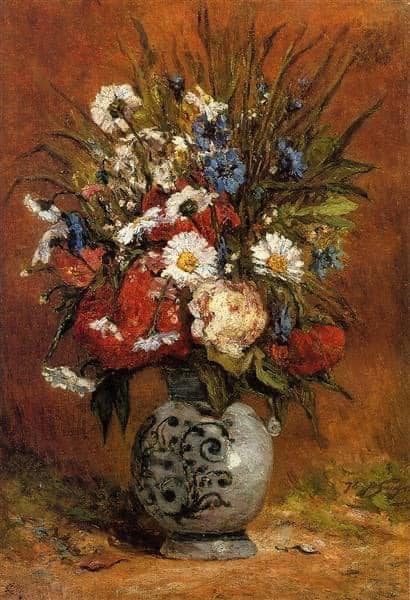
This is a truly beautiful painting. “Daisies and Peonies in Blue Vase” by Paul Gauguin.
Painting by Claude Monet from his famous water-lilies series. Monet painted about 250 water-lily studies from his garden during the last thirty years of his life.

My version of “Poet’s Heart” written by Kate Wolf Copyright 1985


.

Categories
inspiration psychology

Are You Stuck In Shades of Gray (And Black)?


Are you stuck in the land of sadness? Do you always come back to this all-too-familiar place, no matter what you do to get out?

Surprisingly, I’ve found very little in the annals of Psychology relating to prolonged periods of sadness besides labeling these states as some variation of depression. It may be called Clinical Depression, Major Depression, Schizophrenia, Anhedonia, or some other name neatly categorized in the manual of psychological diagnosis.

What if the primary cause of, let’s call it, “sadness for no reason,” was emotional “stuckness.” It’s like being stuck in first gear, or being emotionally tone deaf. It’s like feeling only grays and blacks instead of experiencing the full spectrum of human emotion. I like to think of the full spectrum as the colors of a rainbow.

What if there was a way to change emotional mono-tonality into a state of emotional multi-tonality?

What causes emotional mono-tonality? The most likely answer is fear of being hurt. The little boy or girl inside us needs protection from some form of emotional criticism, non-acceptance, or abuse. The subconscious response is to dampen or completely shut off the emotions. It’s a good strategy for a defenseless little boy or girl. However, it becomes a problem later in life when a void of emotions and the program cutting off feelings continues to run causing depression, limited capacity, and self-destructive behavior.

I can vividly remember the moment when I shut down my emotions. I was a thirteen-year-old boy standing in an open field outside my Junior High School. As I recall the experience, I’m struck with feelings of uncertainty, insecurity, and something I can only describe as the raw pain of existence rushing in. These feeling were overwhelming.

I reacted by flipping a mental switch to turn off the uncomfortable feelings. Maybe I was a Yogi in my past life. Who knows? I just did the deed, oblivious of the effect it was destined to have on my future self.

After a morning meditation yesterday, the idea hit me that prolonged, “unreasonable” periods of sadness can be the result of “frozen emotions.” Emotions are supposed to circulate rather than remain fixed. Could my constant effort to control my thoughts and emotions be the cause of the lingering sadness on the sea bed of my emotional psychosphere?

“Of course it can”, I told myself. A frozen emotional state is like a river or a lake frozen solid. Nothing moves.

No movement leads to stagnation. Picture a pond where the source of fresh water has been blocked. What does it look like eventually?

Emotional stagnation leads to sadness and depression. Constantly struggling to “stay positive” can easily lead to the opposite result. Fixing thoughts and emotions on a single desired state of feeling/being is the definition of “freezing.” We can wind up trapped in a state of grays and blacks.

The big question is where is the fine line between over-control and adequate control of thoughts and emotions. There is an interesting theory presented by Doctor David Burns in his famous book, “Feeling Good.” He says, basically, that thoughts determine emotions. I believe there is a fair amount of truth to this idea. In his book, Burns goes on to identify a series of self-defeating thought patterns that lead to sadness, depression, and unproductive behavior. All of this makes sense, and Burns claims to have had a significant success rate with his methods for reversing self-defeating thought patterns.

I’ve tried Burns’ method. It can help, especially in the short run, but I find it incomplete. Talking back to misconceptions becomes too mechanical and laborious after a while. And, it really doesn’t get to the root of the problem: the feelings themselves.

My personal experience teaches me that over-controlling thoughts and emotions can lead, ironically, to sadness and depression. Why? Because emotions need room to breathe. They need time and space to unwind and, if necessary, to heal.

It would be lovely to constantly walk around in a relaxed and released state of being. I’ve been advised to let go of my emotions and allow them to just “arise.” Sounds wonderful. I wish it worked for me.

Here’s the paradox. The demands of everyday life don’t provide us with enough time to allow our emotions to unwind, express, and heal. If you don’t have to work; if you aren’t in relationships; if you have no goals, then, by all means, go ahead and feel however the hell you want to. Just don’t be surprised if you find yourself alone and homeless.

So what’s the answer? It’s obviously an individual thing. We’ve all heard and read that it’s necessary to carve out alone time to rest and recharge. It can be a long walk in nature. It can be painting a picture. It can be anything that helps you relax and enjoy. For me, it doesn’t stop there.

I’m currently using a psycho-spiritual approach to get my stuck emotions moving. With no intention of sounding overly dramatic, it’s also something I do to approach my “existential dilemma.”

What I’m about to say is not an attempt to advocate or promote anything. If it resonates, then fine. If not, we can still be friends.

My approach begins with regular meditation periods of about thirty minutes in the morning and just before bedtime. During these periods, I let my emotions out of their corral. In open fields, they can romp and kick without doing any damage to myself or any collateral damage to those around me. I do this meditation in conjunction with a tangible energy field that I tap into through my connection to the Trillium Awakening community of teachers and practitioners. I’m able to reach levels of peace, love and joy within myself aided by the Trillium energy transmission. I know. It sounds crazy, but it works for me.

One of the benefits of this practice is an activation of my emotional core. What gets stirred up isn’t always pleasant, but it’s movement, and, I believe, steps in the right direction.

I’ve also discovered an underlying program that affects my thoughts and emotions. It feels more like it is embedded in my body rather than in my mind. So, it is coming from the bottom up rather than the top down. The program needs to be understood and accepted. I might say “befriended.” Then, hopefully, it will unwind and lose its effect. Or transform into something more conducive to good feelings.

My approach may sound totally bonkers to you. No problem. Find your own way. Whatever you do, let’s discover pathways to breathing in and breathing out the full spectrum of human emotions. Let’s experience the rainbow.

Feature photo by Pop and Zebra on UnSplash.com