

My father is back. He’s forty-five-years-old. He looks just like himself, except he’s learned not to smoke. He’s learned a lot of things in heaven, not the least of which is how to be a better human being. Ever since he died in 2006, I have thought of my father as Morton rather than my father. As you might have guessed, Morton and I were not exactly bosom buddies before this new version came along.
This new Morton has a beautiful new wife who is not my mom. She’s a brunette, tall, with a model’s figure, and she’s smart and very good at human relations. She has to be to get along with Morton. She doesn’t take abuse from anyone, including Morton. She is a deeply rooted human being who can correct Morton when he gets mean or when he gets too into his work and forgets to be a person. Her name is Jennifer. Her maiden name is Jennifer Ward-Allen. She’s from a mixed Jewish and Irish family, which is odd. Her hair is red and her complexion is fair. She has green eyes. She doesn’t look Jewish, but she is Jewish, which works for Morton. Jennifer exudes an inner as well as an outer beauty. Although I had no problem with my original mother, I sense that this woman is much more caring, present and aware.
Last week, I went to sleep as a seventy-year-old family man, and woke up as a twenty-five-year-old single man. After recovering from the shock of looking in the mirror, I take stock of my surroundings. I quickly discover that I’m not living in the beautiful home my wife, Bonnie, has made for me. It’s a sterile apartment where I used to live in North Miami. The place has since been torn down and redeveloped into two luxury condo towers, but now it’s back to being an aging complex known as “The Summer Winds Apartments.”
My first concerns as a twenty-five-year-old are for my wife and daughter. Will I ever meet my loyal and devoted wife Bonnie again? If I do, will we have our precious daughter, Danielle? As I contemplate these disturbing eventualities, the phone rings. I go into the galley-sized kitchen to answer it.
“Hello?”
“This is your father calling. Remember me?”
“Who is this? You have some nerve calling and impersonating my father. If you are a telemarketer, I’m going to report you to the FTC and the Florida Attorney General’s office, and to any other law enforcement agency that will listen.”
“Calm down, David. It’s really me.”
“How can it be you? You died thirteen years ago.”
“It’s me, son. You kept thinking about the good times we had with the racing stable after we sold the business and you got married. You were wishing for those good times again. You were wishing you could be young again. Well, someone up there must like you, because I’m back, stronger than ever. You remember that Wall-Tex commercial where they used that slogan after they settled the plant workers strike.”
“How can I forget? How can I forget anything we did? But how can this be you? You expect me to believe this is some kind of miracle?”
Morton sighs heavily. “Oy vey, David. Don’t make this harder than it has to be.”
“Okay. If you’re my father, then what was the name of the horse we owned that won the In-Reality Division of the Florida Stallion Stakes?”
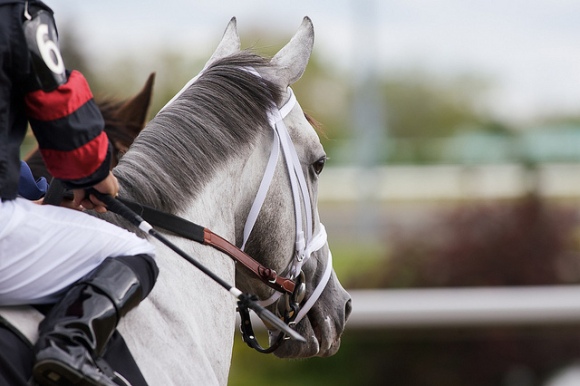
“His name was Silver Sunsets.”
“How did he run?”
“He came from dead last at the quarter pole to first place at the wire.”
“Oh my God. It’s really you.”
“Live and in living color, my boy. Now, can we get down to business?”
Morton asks me if I might be interested in doing marketing for his new company.
The company is a custom packaging manufacturer equipped with an expert design team and all of the latest online ordering applications. The company’s potential is worldwide and unlimited. Morton plans to develop a top notch, multi-lingual sales force under one roof using state-of-the-art, virtual training programs. He tells me to be ready to work if I come on board, because, “You know I don’t settle for anything except hitting our goals, and I set high goals, in case you forgot.”
I say, “How could I ever forget.” He says, “Good. Show up to meet this guy at nine at such and such a place.”
I meet Morton’s new Vice President of Marketing and CEO. He has the combined personality of two of my previous bosses, plus, I sense that he’s better at making money than either of them. He just understands what is required to make money. He has the instincts and the knack for it that can’t be taught, just like Morton.
The guy’s name is Guy Pearce, like the actor. He’s thirty-two with brown hair and hazel eyes. Incredibly, he bears a striking resemblance to the actor. When I ask him if he is THE GUY PEARCE, he shakes his head and says, “never heard of the guy, I mean, you know, that Guy.” “Funny,” I say. “You look just like him.” Then I ask him if he’s seen the HBO version of the movie “The Time Machine” starring Pearce. He just stares right through me. This Guy is a no nonsense guy.
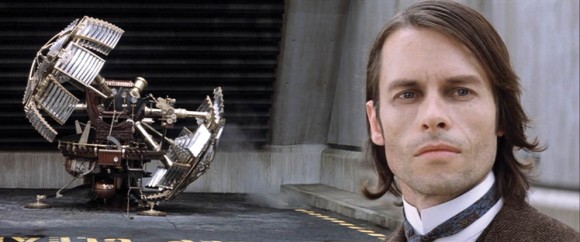
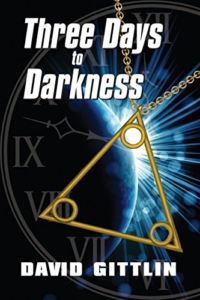
Pearce asks me what I’ve been doing. I show him a paperback edition of “Micromium: Clean Energy from Mars.” I show him my website, my blog, the digital book, and the audio book. I show him the other two digital books I’ve written, “Scarlet Ambrosia” and “Three Days to Darkness.” I talk about how I conceived Micromium, wrote it, and created four versions of it. He reads the copy on the back. He asks me what I did in my last job. It seems like the last honest job I had was in a previous incarnation. I don’t tell that to Pearce. I tell him the highlights of Fulfillment Online and Business Cards Online, two proprietary, ground-breaking online ordering applications that I marketed at a direct mail, printing, and fulfillment company my family owned. I tell him I created a mailer that landed more than fifty Fortune Five Hundred Companies as clients. I tell him that I have created just about every type of marketing and communications campaign imaginable at the two previous companies where I worked as marketing director. I conveniently leave out the fact that my previous bosses were instrumental in my success.
He picks up the Micromium full color print edition and tells me, “This right here shows me that you’re qualified to do what this company needs. You can create content and packaging and sell it. That’s marketing A to Z. If you can take direction, then I’m proud to welcome you aboard. Do you want the job? I nod my head. I’m not sure that I want an honest job again, but what the hell. It’s getting lonely writing books that are really tough to sell.
I watch anxiously as Pearce picks up the phone and calls Morton. He says, “I just hired David.” I overhear Morton saying “Good. It’s about time he got back to work.”
I guess the twenty year vacation is over. Now I have a REAL job to get up for every morning. I feel important, valued. That’s what I want. I don’t enjoy being irrelevant. It’s very easy to become irrelevant at my age. Oops, I mean my former age.
I suddenly remember this new edition of Morton telling me as a young boy things like: “When you grow up, you will be in a world much different than the one you’re in now. Everything won’t come easily to you. You’ll have to earn the respect of your peers and your supervisors. You’ll have to earn everything. It won’t be given to you like it is now.
“You can start right now by believing in yourself. You can see that I’ve accomplished something in my life, and I have much more to accomplish. You can accomplish and be a winner too if you believe in yourself. Listen to the things I tell you. What I tell you will always be for your own good. You can trust me and you can trust what I tell you. You don’t always have to agree with me, but I’m asking you to listen first, and then we can discuss things. There will be many situations that come up and they will be learning experiences. We need to talk about them. Don’t be afraid to talk to me. My door will always be open if you need to talk.
“There are winners and losers in this world, David. You want to be a winner. Winners are generally happy people. I’ve never met a happy loser.”
These are the things a father needs to tell his son. These are the sort of things Morton never told me. Hey, I’m not feeling sorry for myself. I’m just sayin’. If you are young and you are reading this, make sure your Dad tells you these things, and if he doesn’t, then remember what I just said. Got it? Good.
I also have new memories of going to the racetrack with Morton to watch the horses run. I remember him teaching me how to read the racing form. In my first life with Morton, I never even knew he went to the racetrack occasionally with my mother. It wasn’t until he started a racing stable and asked me to be a partner in Three G Stable that I learned of Morton’s interest in horses and the the amazing sport of horse racing. Not many people have the opportunity to see the sport from the inside like I did. It’s something I’m extremely grateful for. I’ll always treasure sharing those experiences with my parents and my daughter Danielle. There really was a Three G Stable. I really did go to the barn and the petting zoo with Danielle. We really did have many claiming and allowance winners and stakes winners.
Oops. I’m waxing nostalgic. Gotta get back to business.
The new Morton decides to buy a farm in Ocala to breed, race, and sell thoroughbred race horses. We purchase two freshman sires, one from the Galileo/Saddlers Wells line for turf horses, and one from the Northern Dancer and Mister Prospector cross for dirt horses that can also potentially run on the turf. Both of these Florida Stallions turn out to be leading sires, not just in Florida, but in the Eastern United States including Kentucky. We get offers from Kentucky to buy the two stallions, but we keep them in Florida. We buy well-bred stakes winning mares at auction to breed to our stallions. We keep a few of the offspring to race ourselves. We claim horses to fill out the stable. My love of breeding horses and the sport of racing is rekindled. I enjoy working in the packaging company and what I do with the horses is a labor of love.
We hire Mark Casse to be our trainer. Mark is the son of the legendary Norman Casse, a Florida breeder, owner, and Co-founder of the Ocala Breeder’s Sales Company. Mark is destined to become a world class trainer. At the time we hire him, he is a young man starting out in his career with a reputation as a patient handler with a knack for developing every horse in his care to their fullest potential. I find Mark to be a quiet, humble man with an innate love for his horses. He treats all of them as individuals, and gives them the time and the attention they need to mature into winners.
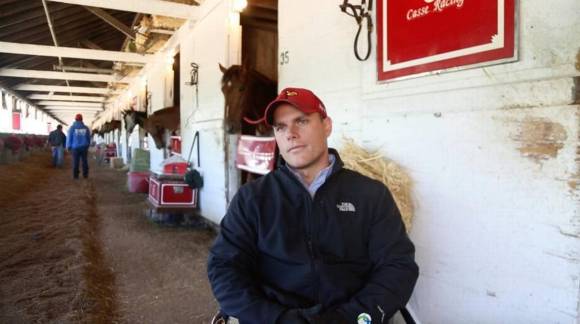
One of the horses Morton and I breed shows great promise as a yearling. We decide to keep him and race him when he doesn’t reach his reserve at public auction as a two-year-old. He is by Classic Empire out of an Unbridled mare who has already produced two graded stakes winners. We name him “Beautiful Dreamer,” after the title of my second screenplay. We call him “Dreamer” for short.
Dreamer matures slowly. He shows no aptitude for short races in his early training. He wins his first race at a mile and then runs second in the Foolish Pleasure Stakes at Gulfstream Park. It is a prep race for the In-Reality stakes, the biggest race at Gulfstream for Florida-bred two-year-old colts and Geldings. Like Silver Sunsets, Dreamer has a grey coat and wins the In-Reality Stakes. Beautiful Dreamer goes on to run third in the Breeder’s Cup Juvenile at Churchill Downs. We put him away at our farm for the winter after the Breeders Cup, and run him back at a mile on the turf in an allowance race in January at Gulfstream Park. He runs second in the race. From there, he runs second in the Fountain of Youth Stakes. Mark encourages us to run in the Florida Derby against the best thoroughbreds stabled on the east coast. We listen to his advice, and Dreamer wins the Florida Derby at the relatively long odds of eleven-to-one. The fact that Dreamer was not one of the favorites in the field is an indication of the high quality of the horses he beat.
The Florida Derby win qualifies Dreamer for a spot in the Kentucky Derby. After huddling with Mark, we decide to enter Dreamer in the mile and a quarter first leg of the Triple Crown. He draws post ten in a full twenty horse field. He’s a horse that possesses tactical speed, but he doesn’t break alertly when the gates open. He’s ridden by Julian Leparoux, an excellent rider, who manages to recover after the bobbled start. “Dreamer” circles wide around horses at the quarter pole turning for home and rallies furiously down the stretch to finish third at odds of seven-to-one. It’s a respectable showing, but we’re disappointed. We now know that Dreamer had a legitimate chance to win the race with a better start. It hurts, but that’s horse racing.

We think about going on to the Preakness Stakes, but decide against it, opting instead to enter the Haskell invitational Stakes for three-year-old colts at Monmouth Park. The track comes up muddy on a rainy day. Dreamer stalks the winner all the way around the mile and an eight race, but he can’t get past a clear front runner who is bred for wet tracks and scores at odds of nineteen-to-one. Dreamer goes off second choice in the race at odds of five-to-two. The nine-to-five favorite finishes third.
Should we go for the Grade One Travers Stakes at Saratoga Race Track in upstate New York? We decide against it, opting instead to enter Beautiful Dreamer in the Suburban Stakes at Belmont as a Fall prep for the Breeders’ Cup Classic later in November if he does well. Once again, Dreamer finishes second after tracking in fourth place behind a fast pace. Dreamer looks like a winner seventy yards from the wire, but another horse passes him five yards from the wire. We decide that Dreamer is good enough to run in the Breeders’ Cup Classic. Mark elects to change riders for the race. First, we ask Jose Ortiz to ride Dreamer in the Classic, but he has another commitment. Then we ask his brother, Irad Ortiz Junior to ride for us. He accepts the mount. He likes our trainer, and he wants to give Mark a chance to put his name down in racing lore. We’re confident that Irad will give us a better chance of winning with his impeccable sense of timing. Irad has had his eye on our horse for a while, and he’s confident that he can move Dreamer up several lengths with the right ride.
Meanwhile, my father, stepmother and I are having the time of our lives with this horse. This year, Gulfstream Park is hosting the Breeders’ Cup races for the first time in twenty years. It makes it much easier on our horse. Dreamer is familiar with the track because he is based at Gulfstream and trains there. He also doesn’t have to travel, which for many horses can be an energy-draining and disconcerting experience. Horses get nervous when their routines are interrupted, and they don’t like being cramped up in unfamiliar spaces. After hundreds of years of inbreeding, thoroughbreds still have their deeply ingrained instinct to run at the first signs of danger. It’s hard to run from danger in the cargo hold of a jet plane.

Finally, Breeders’ Cup Day dawns bright and sunny with no rain in the forecast. We’re relieved, because we don’t want to be wired on a wet track by a freak front runner like what happened in the Haskell. Dreamer has been training brilliantly for the race. Our trainer, Mark, says he’s in peak form. Dreamer is the fourth choice in a fourteen-horse field behind two heavy favorites and another highly regarded horse owned by John Magnier, the super-rich founder of Ladbrokes, a chain of sports betting parlors in England. We have our work cut out for us. Mark is his usual quiet and calm self. He’s never been much of a talker, but we can tell that he’s excited about the race and our chances. He can’t wait to get Dreamer in the gate.

We watch and bet the races, having fun and forgetting about the big race. It’s an interesting day with favorites and long shots winning and placing throughout the card. The European horses win most of the turf races while the American horses generally prevail on the dirt. The Breeders’ Cup racing card is probably the most fun card to bet all year. The fields are big and almost every horse in each race has a chance to win because they’re all so good. So, I like to get creative, which usually results in me losing my butt. Still, it’s fun.
At five-thirty, we leave our seats and a courtesy golf cart designated exclusively for the Breeders’ Cup owners transports us to the barn where beautiful Dreamer is waiting. He’s happy to see us. His big head bobs up and down and his front hoof paws the straw in the bed of his stall. Carefully opening the stall door, Mark attaches a chain to Dreamer’s halter and leads him out. He stands before us at attention, his gray coat dappled, radiating energy and health. He knows it’s time to race, and somehow, I sense that Dreamer knows that what he’s about to do is special. Horses are creatures of habit, and Dreamer know it’s later in the day than he’s ever run before. His eyes dart from Mark to Morton and to me, as if he’s asking for an explanation of what’s going on. Mark places a reassuring hand on Dreamer’s shoulder, and I stroke his flank gently to let him know everything is alright. Mark says something into Dreamer’s ear. He flicks it forward to listen. Whatever Mark said, it calms Dreamer down immediately. He’s ready to do whatever is asked of him.
We accompany Dreamer and Mark all the way from the barn to the saddling enclosure where Mark will saddle and prepare Dreamer for the race. The crowd in the stands and on the grounds has swelled to over one hundred thousand people. Police officers patrol the saddling enclosure looking for possible trouble and to make sure the onlookers stay behind the ropes and temporary fences where they belong. I feel very important to be one of the relatively few people on the other side of the barriers. Dreamer is taking in all of the excitement like a pro. I sense that he has his mind on running, and somehow, he knows the horses that he’ll be competing against are better than most of the ones he’s faced before. He looks down and shakes his head and long silvery mane, as if to shake out any last remaining knots of tension. Mark strokes Dreamer’s shoulder and head to keep him calm and relaxed.
Irad Ortiz enters the enclosure. He shakes our hands. We wish him luck. He gives Dreamer a few reassuring pats on the shoulder. The horse immediately feels at ease with Irad. Irad has been aboard Dreamer to breeze him five eights of a mile a week before the race to get acquainted. The two of them are a team now, as if they’ve known each other for years. The call comes for “riders up.” Mark has already spoken to Irad about the race earlier in the day to give him his riding instructions. Now, all he has to do is to give Irad a leg up and tell him to “have a good trip.” Irad expertly guides Dreamer away. We watch them disappear into the tunnel leading to the racetrack. Mark gives us a thumbs up. He likes to watch the races by himself when he saddles a horse, so we go our separate ways back to the owner’s box and Mark to his observation post.
The horses for the Breeders’ Cup Classic file by the stands in the post parade. There are fourteen horses in the race. Dreamer has post position seven. His post position gives Irad an excellent opportunity to settle Dreamer optimally going into the first turn of the mile and a quarter race. The major objective for Irad is to secure a good stalking position without going wide. All of the jockeys will be trying to save as much horse as they can going around the first turn and up the backstretch. If the horse is a front runner, the jockey will be trying to slow the pace down as much as possible. The other jockeys have to be alert to the pace and settle their horses accordingly. If the pace is slow, the horses that run from mid pack and beyond will have to stay closer than they normally would if the pace is honest. The first half of the race is just as important as the last half. A jockey’s mistake in judgement can cost a horse all chances of winning before they reach the half-mile pole.
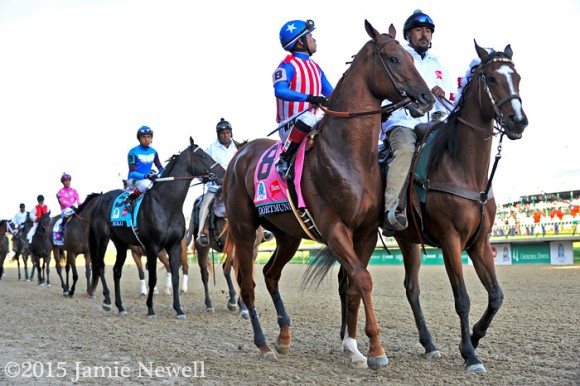
Dreamer is prancing on his toes with his head held high as he passes us in the post parade. Mark has obviously done the most anyone can do to prepare Dreamer for the race. Now, the rest is up to the horse. Dreamer is a solid fourth choice at odds of five-to- one. Morton bets a hundred on him on the nose—typical Morton. I bet twenty on Dreamer to win. I know that Mark never bets on the horses he trains. It’s a good habit. Many lesser trainers bet on their horses because they think they will make a big score and they need the money. Sometimes they make that big score, but it’s just not a classy thing to do. The top trainers don’t do it.
Ten minutes later, the horses have warmed up and are entering the starting gate. Mark has instructed Irad to do a minimal prep for the race, just a slow, short gallop to get his legs and muscles loose. We watch the loading through binoculars. The horse in slot six is acting up, delaying the start. We can see Irad stroking Dreamer’s mane to keep him from getting upset by the unruly horse next door. Finally, all of the horses are loaded. We wait nervously for the starter to open the gates. It seems like an eternity, then the gates spring open and the horses explode out of the gate with pent up energy. The number five horse from England veers in and knocks the four horse off stride. Irad deftly guides Dreamer away from the trouble. The rest of the field sorts itself out naturally after the troubled break.
Due to the mishap, Dreamer runs third in the fourteen-horse field, closer to the pace than he normally likes to be. Irad lets him settle back into fourth, but the bulky field is tightly bunched behind the two horses battling for the lead. The number four and ten horses cut out the first quarter in twenty-three seconds flat, which is fast for the mile and a quarter distance. The number ten horse backs off and lets the four horse have the lead. They go the half in forty-seven and one fifth seconds, a more reasonable pace. Irad keeps Dreamer poised in fourth place. As the horses reach the three-quarter pole, the number ten horse moves up to challenge the four horse for the lead again. The pace quickens. Irad stays put as other horses pass him on the outside. I grow concerned that Dreamer will not be up to the challenge of running against the best horses in the world. In my imagination, I see Dreamer floundering on the rail and falling behind as the serious run for the finish line begins.
The front runners reach the quarter pole in one minute ten and four fifths seconds. It’s an honest pace for horses of this caliber. Now, Dreamer starts to move up on the rail as the horses turn for home. Irad is taking the shortest distance home. The danger of another horse blocking him looms. It’s a risky move that Irad attempts, but he has no other choice. He will lose too much ground if he tries to go around horses. Irad has one of the best clocks in his head of any jockey alive. I know that his timing is impeccable, but the rail in front of him is suddenly blocked by the tiring front runners which are slowing and shortening their strides. Irad has to make a move; now or never.
Irad angles Dreamer off of the rail. I see another horse rushing up behind Dreamer vying for the same lane to the wire. Irad taps Dreamer on the shoulder with his whip and the horse responds with a burst of acceleration, beating another horse to the three-path.
Dreamer blows by the faltering front runners and opens a clear lead down the homestretch. With a similar explosion of speed, I watch the number one horse, named Bal Harbour Boss, burst out of the pack in mid-stretch. It gobbles up ground from behind Dreamer with every stride. The fast-closing “Boss” reaches Dreamer’s flank on the inside and they run in tandem, neck and neck to the wire. As Dreamer and his adversary pound to the wire lengths in front of the rest of the field, I expect Bal Harbour Boss to tire because it has had to cover more ground with a wide ride outside of horses up the backstretch all the way to the quarter pole. Except the damn horse is resolute. It won’t give an inch.
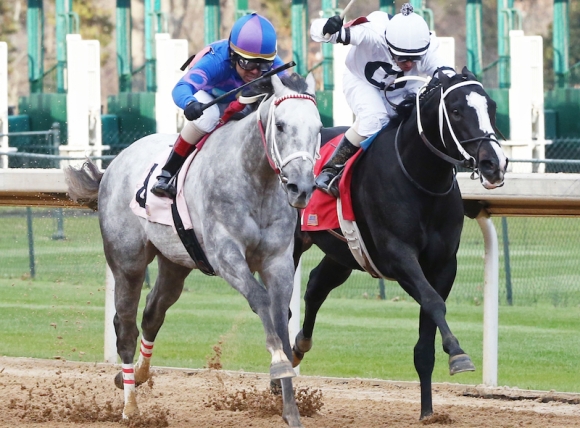
The hundred thousand plus throng of spectators bellows so loud that it feels like the ground is shaking and an earthquake is coming. The Jockeys urge their mounts onward. The race announcer’s voice crescendos as Dreamer and Bal Harbour Boss bob heads to the finish line. Photo finish. I can’t tell if Dreamer got his head up in time. It’s impossible to tell with the naked eye which horse has won the race. So much is on the line. The first-place purse is worth three million dollars. The winning horse will command a high stud fee. And then, there’s the thrill, prestige, and satisfaction of winning one of the biggest races in the world.
Morton is white as we wait for the results to be posted. I give him a hug and tell him. “No matter what, we proved that Dreamer has the genes and the heart of a champion.” Morton says nothing. He stands there, white as a sheet. I know what he’s thinking. Second place is “nowheresville” in Morton’s vocabulary.
The results flash on the tote board in the infield. The number one is posted on top of Dreamer’s number seven. Morton slumps. We’ve lost. We’ve been nosed of the win. Then a red square appears around the two top numbers. Next to it, the words “DEAD HEAT” flash in red. It’s a tie. Beautiful Dreamer is a co-champion with Bal Harbour Boss. I hug Morton. I hug my stepmother. We are delirious. Sharing the top honors beats the hell out of losing. The dead heat is the first in Breeders’ Cup Classic history.
We meet Mark in the winners’ circle. I can tell that he’s beside himself. He doesn’t show emotion easily, but he’s obviously overcome by the biggest achievement of his training career. The winners’ ceremony is a long one because both horses and their entourages have to be photographed. I hug Mark. I hug Irad Ortiz. They are both slightly taken aback by my display of emotion, but I can tell they understand. Mark and the Jockey are both ecstatic, albeit a bit more quietly.
The sight of Beautiful Dreamer wearing the Breeders Cup Champion yellow garland of flowers will be forever etched in my memory. Sharing a moment like this with signicant others goes beyond any feeling I can describe. I can’t remember anything immediately after the race. I’m just somewhere else, and it’s a very good place to be. The next thing I know, I’m driving to a restaurant in North Miami for a victory dinner.
After several hours of intense celebrating with my father and Jennifer at an excellent Italian restaurant named Il Tulipano, I return to my humble one bedroom apartment and stumble into bed. I’m asleep in seconds from the sheer exhaustion of a long day filled to the brim with exciting moments. When I wake up, I’m back home with my wife, seventy-years-old again. My first reaction is bitter disappointment, but then I realize that I have my wife and daughter back again. I remember what my father said at dinner in Il Tulipano, another ghost of the past that has disappeared and moved on. With his wine glass raised, my father said: “We’re fortunate to have won this race, but what’s most important is that we’re together and we care about each other.” My father’s words remind me to appreciate the people who are with me now.
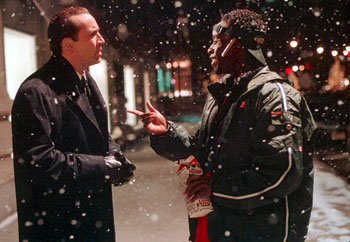
Was it all a dream, or did it really happen? I decide it was just a glimpse, like in the movie “Family Man” with Nicolas Cage, Tea Leoni, and Don Cheadle. An angel has given me a glimpse of what my life actually was and might have been, like Don Cheadle did for Nicolas Cage in the movie. Yeah, that’s what it was; a beautiful dream that became real for a few fleeting moments in time; a precious glimpse that has taught me to appreciate my life and loved ones; past, present and possible.


 Micromium: Clean Energy from Mars received a 4+ star review, making it an IndieReader Approved title.








 Heart Banter by David Gittlin