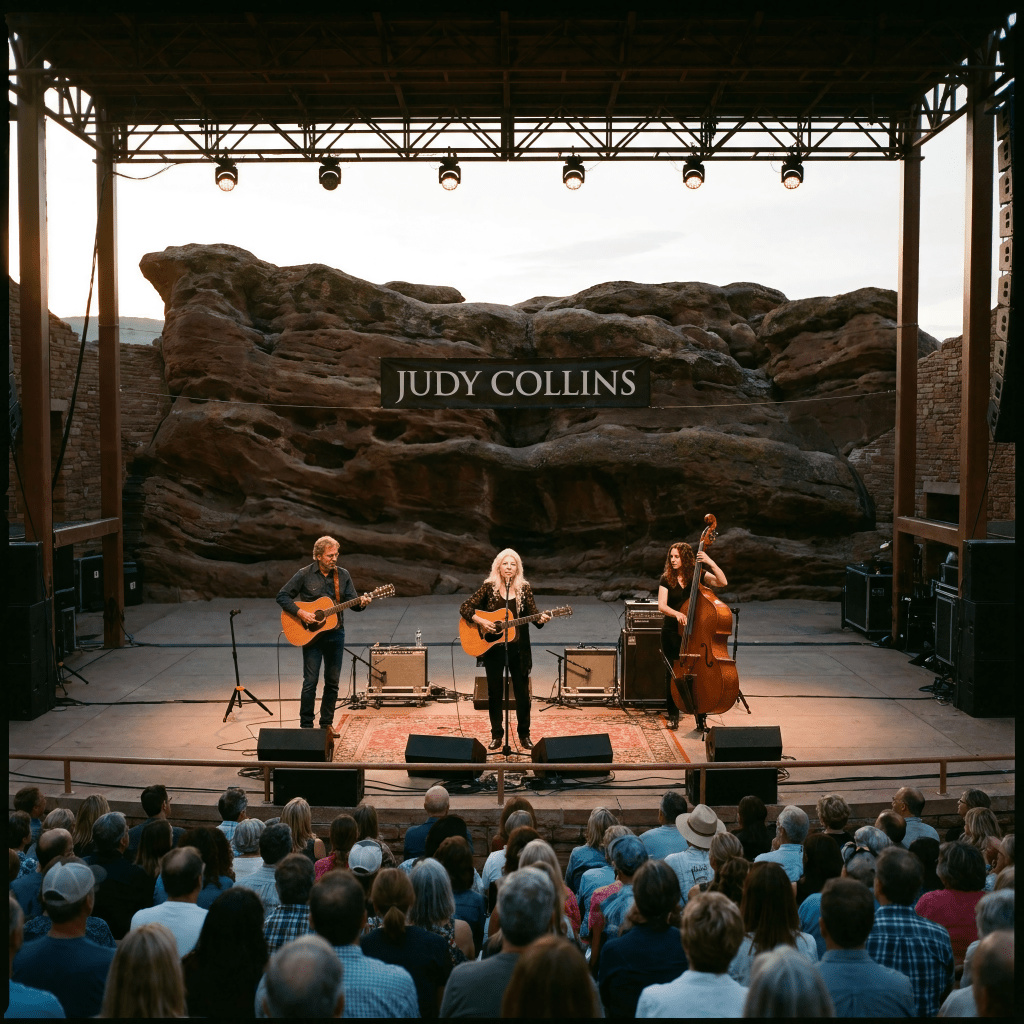
I recently changed my music source from Sirius XM to Pandora. As an avid fan of Folk and Country Music, it turned out to be a wise decision. Now, I can listen to my favorite recording artists singing songs from the 60’s through the 90’s. And lately, several of those songs are appearing on this blog.
Like the previous song I posted here, “Silver Skies Blue” captured my attention almost immediately. I had never heard it before because, prior to Pandora, I had never listened to Judy Collins’ music the way I do now. In addition to Silver Skies Blue, I’ve posted several of Judy’s cover and original songs including: When I Was a Girl In Colorado, Suzanne, and Hey, That’s No Way to Say Goodbye.
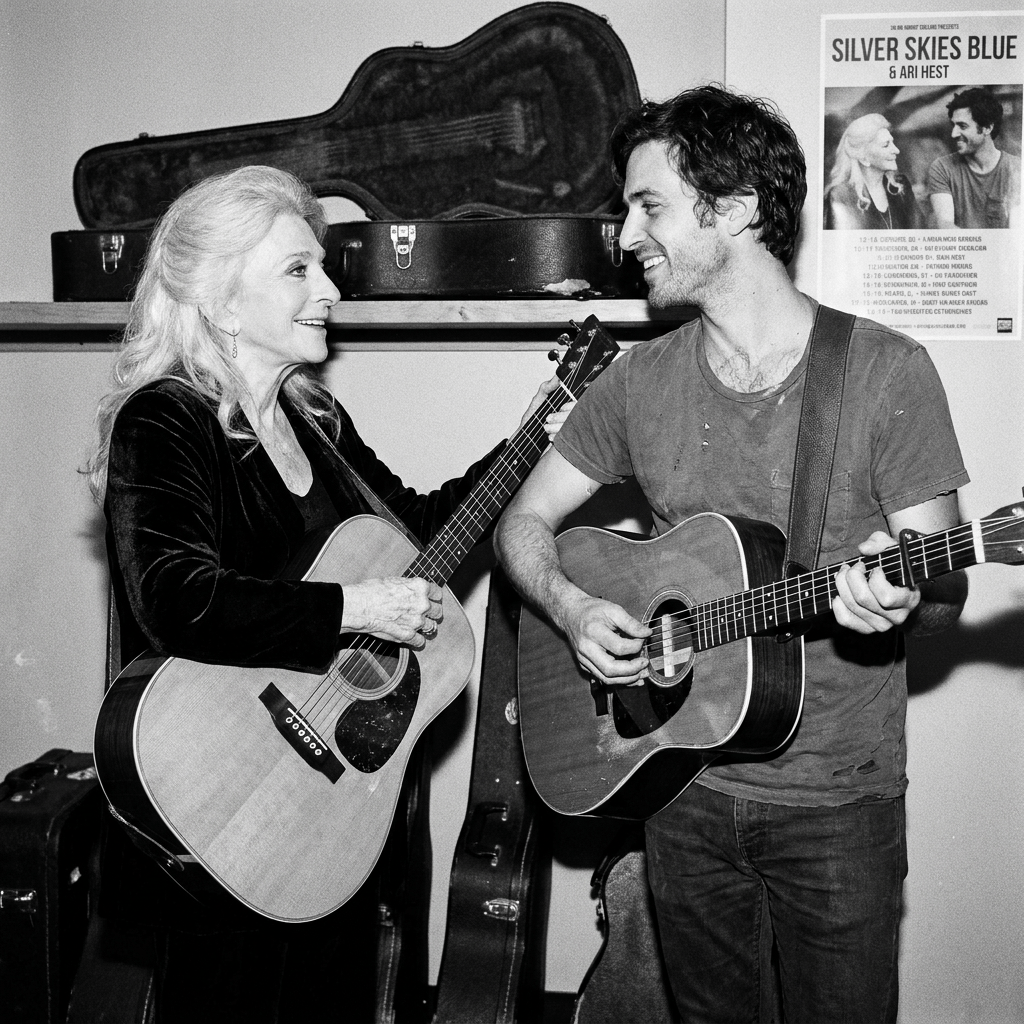
The album “Silver Skies Blue” features songs by Collins and Ari Hest, who also performs with his polished guitar play and powerful, deep voice that complements Judy’s higher one perfectly. The album, released in 2016, earned Collins her first Grammy nomination in 40 years.
At 82 years young, Judy Collins used poetry that she had written and collected over the years to create an album of original songs named Spellbound. She used the isolation of the Covid Pandemic to write and perfect the music.
“Spellbound” broke new ground because it was the first album Judy Collins produced in her six decade career that contained all original songs. This is a remarkable achievement for someone who had made her name mostly by singing and playing cover songs from recording artists she admired.
The first song on “Spellbound” is titled “When I Was a Girl in Colorado.” I’ve changed it to “A Boy In Colorado.” In words and music, the song conveys a picture of the artist when she moved with her family to Denver, Colorado from Seattle, Washington as a young girl in 1949.
The song’s lyrics hearken back to the natural beauty of “rivers dancing on canyon walls,” “blooming paintbrush flowers,” and “bluebirds in the pine trees.” These images reflect Judy’s deep love for the wilderness, which at one point in her early life almost led her to become a park ranger.
Here’s my cover. Drop me a line if you feel moved to do so.
“When You Say Nothing At All” is a country music song with a storied past. Written by Paul Overstreet and Don Schlitz, the song was picked up by Keith Whitley. He loved the song when he first heard it, and wasn’t going to let it go to another recording artist. Whitley had learned his lesson when he passed on another Overstreet-Schlitz song that became a hit for Randy Travis. This time around, “When You Say Nothing At All” became a major hit for Whitley when he introduced it in 1988 on his “Don’t Close Your Eyes” album. Sadly, Whitley passed away a few months later at the age of 33.
As an interesting side note, Schlitz and Overstreet created the song after an unproductive day in the studio. While strumming their guitars, they sang about coming up with nothing at all, which led to the song’s lyrics. They didn’t think the song was anything special, but history proved them wrong.
Country Singer Allison Krause and her band, Union Station, reintroduced the song in 1995 on a tribute album to Keith Whitley. “When You Say Nothing At All” became their first top 10 country hit.
In his thirties, Leonard Cohen wrote novels, poetry, and the occasional song. These were his passions, and he hoped to make a living at them. Unfortunately, at this early stage in his career, Cohen realized these passions couldn’t support him. Most people at this point would, with a heavy heart and great disappointment, turn to a more mundane and practical way to make a living. Not Leonard. He decided to earn his way with another one of his loves: Country Music. Along the way, Cohen had taught himself to play the acoustic guitar.
It should be noted that most successful singer-songwriters begin to hone their musical talents from the ages of somewhere between five and twelve. Again, not Leonard. It should also be noted that the decade-long eruption of folk music from the early sixties to the early seventies had passed Cohen by, largely unnoticed. In other words, Cohen’s chances of a successful music career were less than his chances in the literary arts. People laughed at his hubris.
Now, here’s the interesting part. I will refer to my experiences with my father to illustrate the point I’m going to make. My father was a very successful businessman. I once asked him, “What is the secret of your success?” In his typical manner, he gave me a short answer: “In my early thirties,” he said, “I found out that I had the goods.” Translated, that means my dad discovered that he had the talent in spades to build companies and make money.
Okay, let’s go back to Leonard Cohen. On his way to Nashville, Cohen stopped in New York. There, someone introduced him to Judy Collins. What are the odds of a no-name like Leonard Cohen meeting a rising star like Miss Collins? I’d say at least 28 million to one. Unless there is another factor at play. And here’s what I believe. Because Leonard Cohen inherently “had the goods,” he met Judy Collins, and they became good friends. Eventually, Collins brought her friend’s work to the attention of a record label. In time, Cohen became a household name and an internationally known recording artist. Leonard Cohen, whether he knew it or not, had a remarkable musical talent. He had what it took to be a star.
And what I’ve discovered is that you can’t force it. Yes, it takes hard work to hone your talent, but don’t expect to be the 1% unless you are the 1%.
At some point, one has to accept whether or not one has “the goods.” I dreamed of becoming a widely read author. It never happened, but I’ve mellowed about it. I enjoy writing my little books that are read by my little audience. I never dreamed of reaching a broad audience with my music. But that has happened. It takes an effort, and I enjoy it almost as much as writing. I guess the moral of the story is to enjoy what you do if you are following your heart, and most importantly, don’t worry about the results.
Please enjoy my covers of Leonard’s beautiful song, Suzanne.
“Eternal Flame” is another song that came into my head from out of nowhere. It just started playing in my mind on its own. I remembered the song, but I had never heard of (or don’t remember) an all-girl band called The Bangles. The group was popular in the 1980s. Susanna Hoff, their lead singer, wrote Eternal Flame with songwriters Billy Steinberg and Tom Kelly. The idea came from a Cyndi Lauper song Hoff admired, and from the eternal flame shrine near the Elvis Presley tomb in Graceland, where The Bangles saw it.
“Eternal Flame” became one of The Bangles’ biggest hits, reaching #1 in nine countries, including the USA in 1989.
I still don’t know why “Eternal Flame” barged unannounced into my head, but I’m glad it did. The song is BEAUTIFUL! Here’s my cover.
It started out as a poem. Then it turned into a song. Then it became a background song for the movie “Beaches.” After various song covers at home and abroad, in 1988, Bette Midler made “Wind Beneath My Wings” a #1 hit in the USA. A year later, the song won Grammy Awards for both Record of the Year and Song of the Year.
“Sky Blue and Black” is an emotional roller coaster, looking back on the joys and sorrows of love and its lasting impact. Jackson Browne wrote the song over a four-year period and released it on his album “I’m Alive” in 1992. The source material comes from Jackson’s relationship with a famous actress. However, Browne never wants his songs to be identified with his specific life events, so he rarely speaks about his real-life relationships, especially in the context of his music.
“It’s a drag to even imagine that people are thinking about [the] relationship instead of their own lives,” Jackson told the Los Angeles Times. “I think if a song is any good, eventually it’ll turn out to be about the life of the listener and not about the life of the writer. Anyway, that’s my hope.”
Enjoy my reconstituted version of “Sky Blue and Black” and the original cover.