Categories
acoustic guitar artists Arts & Entertainment music profiles

On The Road To Find Out


In this life, change is constant. This is not news to most of us. However, some things never change. A good example is the music of the artist profiled in this post. In 1977, after years of contemplation and a near-death experience with tuberculosis, Cat Stevens converted to Islam and radically changed his lifestyle. He is now known as Jusuf Islam, but the beauty and truth of his music haven’t changed. Jusuf’s songs have endured and are still relevant almost fifty years after they were released. His unique guitar style and vocalizations have remained bright, new, and refreshing through the intervening decades.

“On The Road To Find Out” is a song about a young man who sets out on a journey to clear his mind and see what he can discover. The song parallels Stevens’ life experiences. After a seven-month recovery from tuberculosis, Stevens felt a deep emptiness in his life and a yearning for something more. Out of these ashes, “On the Road to Find Out” was born. The lyrics are not about traveling in a physical sense. They are about Stevens discovering who he was and the purpose, if any, of his existence. Stevens achieved fame and fortune in 1967 at the age of only eighteen when his first three singles hit the charts in his native England. Like many of his recording artist peers, Stevens examined his noteworthy accomplishments and found they had not brought him the peace of mind or happiness he envisioned.

Many of Stevens’ songs reflect his quest for existential answers and a deep sense of fulfillment. I can only hope he found it.

Here’s my cover of this song’s rich lyrics and beautiful melody.

Categories
Arts & Entertainment Interviews music reflections

Love Found And Lost


“Sky Blue and Black” by Jackson Browne is an emotional roller coaster, looking back on the joys and sorrows of love and its lasting impact. Browne wrote the song over a four-year period and released it on his album “I’m Alive” in 1992. The source material comes from Jackson’s relationship with a famous actress. However, Browne never wants his songs to be identified with his specific life events, so he rarely speaks about his real-life relationships, especially in context with his music.

“It’s a drag to even imagine that people are thinking about [the] relationship instead of their own lives,” Jackson told the Los Angeles Times. “I think if a song is any good, eventually it’ll turn out to be about the life of the listener and not about the life of the writer. Anyway, that’s my hope.”

Here’s my cover of “Sky Blue and Black”.

Categories
artists Arts & Entertainment folk guitar music

A Transcendent Voice


Photo by Nick Fang

Hi everyone. The voice I’m referring to here is not mine. It belongs to Kate Wolf (1942-1986). She wrote and performed (mostly in her native California) over 200 songs. Her music comes directly from the heart and tends to be bittersweet. In 1980, Kate released her fourth album on her own label, Owl Records. The album is titled “Close to You.” Many of the songs on the album have become fan favorites, including some I have posted on this blog: Across the Great Divide, An Unfinished Life, Here in California, and Stone in the Water.

A recording of Kate playing a song by Tom Paxon called “Hold On to Me Babe” drew me to Wolf’s music again. Her voice is transcendent as it is in most of her recordings. I haven’t been listening to Kate’s music lately, and her version of Paxon’s song reminded me of the beautiful realms she takes me to.

Another song on the album reminded me of the precious few people I have been close to in this life. Here is my cover of “Friend of Mine” with an original accompaniment.

Categories
acoustic guitar Arts & Entertainment folk music music

If You Could Read My Mind


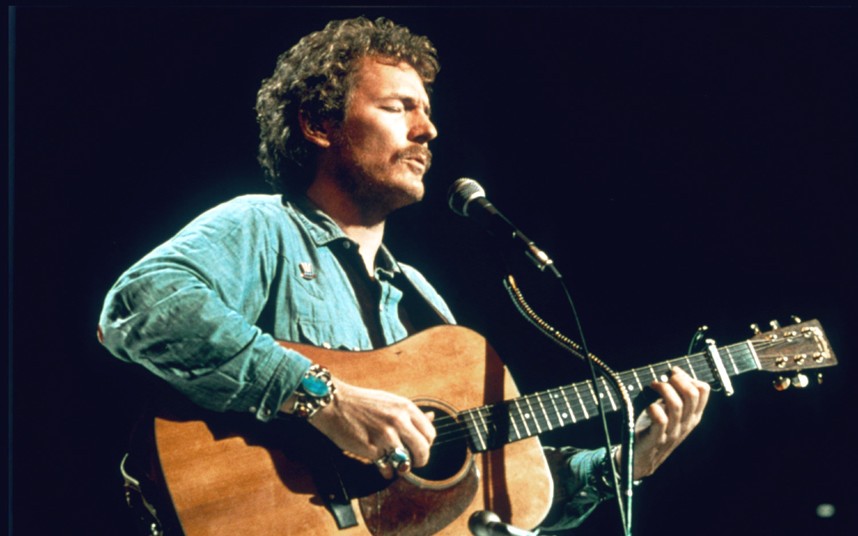
I’m watching an interesting film titled “If You Could Read My Mind.” The Canadian documentary is about the life and career of Gordon Lightfoot.

Lightfoot arrived in downtown Toronto as a young man after growing up in Oridella, a small rural Canadian town. Since there were no clubs to play in at the time, Gordon landed a job in a bank to earn a living. Lightfoot was about to earn a promotion when he told his manager that he had decided to leave the bank to accept a role as an extra on a square dancing Canadian TV show. Lightfoot’s manager found it hard to believe that the young man was leaving a good job with a future to go square dancing.

As folk music became commercially viable in the late sixties, clubs began to spring up featuring promising musicians. Gordon landed a spot in one of them. He stood apart from the crowd because he performed many of his own songs in a characteristically pure voice. After he developed a following, a club owner invited Lightfoot to perform at his club across the street at twice the salary. Lightfoot gratefully accepted the invitation to perform at the Riverboat, Toronto’s premier folk music club.

With his beautiful voice and prolific outpouring of quality music, it was only a matter of time before Warner/Reprise records rewarded Lightfoot with a one million dollar recording contract, an unheard-of number for a Canadian singer. His first album with the new label was released in 1970 when Gordon was forty-two. Lightfoot had left United Artists after five albums because he felt they did not represent him adequately. “Sit Down Young Stranger” shipped 80,000 copies before sales stopped dead. The album “had no legs” in the industry’s parlance. Warner changed the name of the album and picked a new single to lead it off. “If You Could Read My Mind” became a runaway hit when an announcer on an important local radio station kept playing it. Sales of the album ballooned to 650,000 copies. The rest is history.

Here’s my cover of the song.

Gordon Lightfoot is not a “legend in his own mind” as Dirty Harry said about the perp he was about to blow away. Lightfoot is a genuine “legend in his own time.” He has been performing live well into his seventies and beyond. It is said that time waits for no man. Time may have made an exception in Mr. Lighfoot’s case.

Categories
Arts & Entertainment music profiles

Time After Time


Cyndi Lauper Time After Time

Time After Time is a Cyndi Lauper song. I’ve never been a big fan of her music, but that doesn’t mean it doesn’t resonate with others. She has a big enough audience without me. This song caught my attention when I heard Eva Cassidy sing it in her beautiful, unique style. It has taken me a few weeks to learn because the fingering is complicated. Eva Cassidy is known for her divine vocals, but trust me, she can play the damn guitar.

The meaning behind a lyric can create a strong connection to a song. It can help you to form a bond with a singer-songwriter. It lets you know the artist has gone through some of the same things you have. Cyndi Lauper’s hit Time After Time is one of those songs for many people. The song was the second single for her debut album, She’s So Unusual. It was actually the last song written for the album, but it made a lasting impact on the album and Lauper’s career.

A TV Guide advertisement for a science fiction movie sparked the idea for the song. Using a simple set of piano chords, Lauper co-wrote the song with Rob Hyman. As the piece evolved, for Lauper it became a response to an ex-lover who was lost and in need of help. She can’t move forward without him by her side.

Over a two-week period, Time After Time was written, recorded, and mastered straight to the album. There wasn’t time for a demo. The song went on to become a number-one hit in the United States. Here’s my version of Time After Time “Eva Style.”

Breaking a big project down into little steps makes it possible to achieve the final result.