“Eternal Flame” is another song that came into my head from out of nowhere. It just started playing in my mind on its own. I remembered the song, but I had never heard of (or don’t remember) an all-girl band called The Bangles. The group was popular in the 1980s. Susanna Hoff, their lead singer, wrote Eternal Flame with songwriters Billy Steinberg and Tom Kelly. The idea came from a Cyndi Lauper song Hoff admired, and from the eternal flame shrine near the Elvis Presley tomb in Graceland, where The Bangles saw it.
I still don’t know why “Eternal Flame” barged unannounced into my head, but I’m glad it did. The song is BEAUTIFUL! Here’s my cover.
When Richard Marx wrote “Right Here Waiting,” he never meant to publish it. He wrote the song in 2010 as a personal message to his girlfriend and actress, Cynthia Rhoads. At the time, Rhoads was in South Africa making a film. Since Skype or Google Meets didn’t exist, Marx shipped the track directly to Rhoads. Marx wrote the song in twenty minutes. His friends were so moved by it that they convinced the artist to publish it. The song went on to become one of Marx’s biggest hits.
Prior to this blog post, I had never heard of Richard Marx. I was only vaguely aware of the song. When I heard the beginning of the song on a Facebook reel, I was inspired to learn it. Now that I’ve read the backstory, I agree with Marx’s friends. “Right Here Waiting” is a truly moving and beautiful ode to long-distance love. Marx plays a piano accompaniment. I’ve composed a guitar background. Here’s my cover.
Graham Nash of Crosby, Stills, Nash, and Young wrote: “Teach Your Children.” The song appears on the group’s album, Deja Vue. The lyrics pertain to the difficult relationship Nash had with his father, who spent time in prison. Nash has talked about songwriting in these terms: “The idea is that you write something so personal that every single person on the planet can relate to it. Once it’s there, it unfolds outward, so that it applies to almost any situation.”
In another quote, Nash says, “When I wrote ‘Teach Your Children,’ we didn’t know what we were doing. It was like: ‘This sounds pretty fun. We can sing this! Let’s do it!’ And then, all of a sudden, people are singing it back to me forty years later.”
Graham Nash is a photographer as well as a great musician and songwriter. Soon after writing “Teach Your Children,” Nash visited an art gallery and saw two photographs hung side by side. The photographs clarified the meaning of the song for Nash. One photo, by Diane Arbus, is titled “Child with Toy Hand Grenade in Central Park.” The other is Arnold Newman’s portrait of German industrialist Alfried Krupp, the man who manufactured arms for World Wars I and II.
In a Songfacts interview, Nash told this story about the two photos: “I have never told any gallery owner how to hang my images. They know their space way better than me, and I’m always curious as to how they put images together. And in this particular show, the gallery put these two photos together. The photos made me realize that if we didn’t teach our children a better way of dealing with our fellow human beings, we were fucked. Humanity was in great danger.”
Now, this is me talking. I often feel that art comes from somewhere else. Let’s call it “The Great Beyond.” To me, a serious artist is a channeler of messages from The Beyond through the prism of his or her experiences and personality. These messages want to come through and be heard by a large audience. “Teach Your Children” is a good illustration of this idea. Here’s my cover.
Here is CHAPTER ONE of a new manuscript I’m working on.
“What have you got for me, Faulk?”
Eying my supervisor, Clive Borinsky, I wonder, for the four hundredth time, why he only calls me by my last name. Despite the gaping holes in my science training, I am Deputy First-Class Investigator Derrick Faulk. I hold the highest investigator rank in the National Science Service, a division of the National Security Authority. Our organization’s primary mission is to ensure that the rapid pace of scientific and technological advancement does not run amuck and consequently destroy the world.
Somewhere around four hundred instances of disrespect have finally worn me down.
“Would it trouble you to call me Agent Faulk?”
Sitting next to me, my associate, Aurora Zolotov, turns her head to the wall painted a dismal shade of green. The subtle shake of her body tells me she is stifling a laugh. Aurora is as colorful, beautiful, and other-worldly as the Northern Lights, after which she is named. I have tried not to have feelings for her, but I am steadily succumbing to the onslaught of her charms. After working with Aurora for nearly six months, I find it difficult to resist her radiant beauty and personality. The most maddening aspect of the situation is that Aurora does not make the slightest effort to affect me the way she does.
Borinsky glares at me. He finally decides to ignore my remark. “It’s been twenty-four hours since the unauthorized file copy has been missing. You and your partners better have some good news for me.”
“Our forensic IT team has thoroughly examined AndroBiotica’s IT systems,” I answer. “They have determined that no exterior cyber breach occurred. We’ve questioned each IT employee extensively. The forensics team scanned their computers. We found no examples of wrongdoing by any employee.”
Borinsky places his elbows on the desktop of his workstation, hunches his shoulders, and leans toward us.
“Are you saying the file disappeared into thin air?”
“We are saying it is reasonably certain the IT Department is not responsible for the theft,” Brendt Williams offers.
I cringe inwardly. At this moment, I want to strangle Brendt. He is the remaining member of our team. A handsome, trim, affable man in his mid-thirties with a full head of blond and prematurely graying hair, Aurora and I find Brendt marginally useful, thanks mainly to his overly logical mind. Sitting atop Brendt’s superstructure of qualifications is a conspicuous lack of intuition. Only the top two percent of our profession possess this essential trait sufficiently to handle a crisis of this magnitude. Brendt’s other capabilities have propelled him to the sixty-seventh floor to complement our team. And so, we are stuck with him. At least he means well.
“Reasonably certain is not good enough,” Borinsky explodes. “I want you to be dead sure!”
“We are more than reasonably certain,” I quickly interject. “Agent Williams’ choice of words is unfortunate. He intended to say we have high confidence in our findings so far.”
Borinsky is a man in his late forties who looks like he smokes three packs of sagarillos a day and is somewhere in his late sixties. His eyes look like the double-door entrance to a bomb shelter after a cold fusion holocaust. I’d feel sorry for the man if I didn’t hate him intensely.
“Do you have anything to add, Agent Zolotov?”
“I believe agent Faulk has given you an accurate update on our progress.”
“Are you telling me that ninety-five percent of AndroBiotica’s employees remain under suspicion?”
“That’s one way to put it, Director. I am confident we will find ze culprit or culprits quickly by ze application of superior deductive techniques and intuition.”
I’ve observed that Aurora tends to revert to her native accent when under pressure.
“Our next target is the Science Department,” I add to inform Borininsky and deflect his attention.
Borinsky glances at the updated computer interface on his compact and super-efficient workstation. Despite his exalted position, the man has failed to make his office feel like anything but a prison cell.
“Get on with it, then. I have work to do. I’d say you have another forty-eight hours at the outside to get the file back before all hell breaks loose.”
We scurry out of Borinsky’s office like squirrels evading a predator. Waiting for the bullet elevator, I tell Agent Williams to re-interview the IT employees. I observe him wilt visibly.
“Do you think that’s a good use of our time? There are only three of us on the case.”
Two and a half, I think to myself.
“Because you opened your big mouth in Borinsky’s office, it is now necessary to waste time. Borinsky will surely ask us if we did the re-interviews.”
The elevator arrives. We descend twenty-three floors in a matter of seconds. The elevator’s intelligent gimbals make it feel like we are standing still.
As the doors open on sixty-seven, I turn to Aurora. “You’ll handle backgrounding the scientists.”
She winks at me. “Of course.”
I wish she wouldn’t wink at me that way.
We go our separate ways. I head down the long corridor to my corner office.
The AndroBiotica File will be available in sixty to ninety days.
Like many of us, Don McLean suffered through difficult passages in his life, many of which are reflected in his music. He wrote and recorded “Empty Chairs” when his marriage was failing. Despite the subject of lost love, I feel there is incredible beauty in the lyrics and the melody, and Mclean’s unique guitar style.
Although the subject is mentioned just once in the song, McLean chose the symbol to sum up his feelings and state of mind at the time. The title is inspired by Vincent Van Gogh’s paintings of empty chairs. Mclean sympathized with Van Gogh and admired his paintings as revealed in his song “Vincent” recorded on the same album: “American Pie.”
I’ve re-recorded “Empty Chairs” with a better guitar and some improved technique. Please enjoy listening.
“The time that’s left is yours to keep.” These words come at the end of the chorus of the song “See Here She Says” by Kate Wolf.
While I find all of the lyrics in this song beautiful, this sentence hit me in the center of my heart. I can picture a mother teaching a child about life. She is telling the child about the importance of dreams and to use his or her time wisely. Use it well, not only for yourself but for others.
Certainly, love, beauty, and a full range of human emotions come through Kate Wolf’s music. “See Here She Says” is a remarkable song because it speaks to children and adults alike with an ocean of love and understanding. Interestingly, the word “sea” appears at the beginning of the first verse.
Perhaps I can feel Kate’s heart even more now that she has passed into spirit.
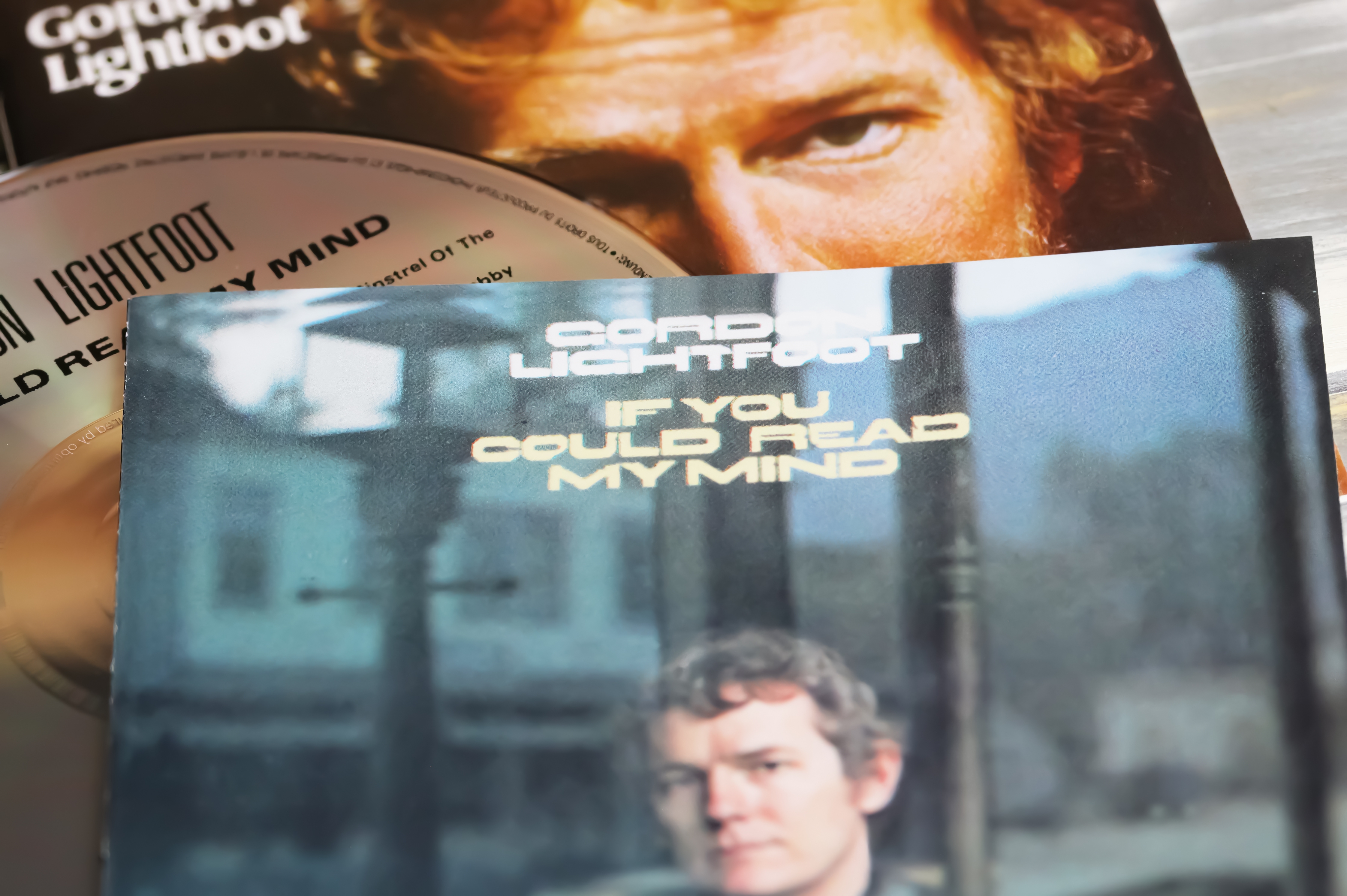
Here’s another Gordon Lightfoot tune that may not be as recognizable as many of the other songs of his that I’ve covered here. Somehow, “I’ll be Alright” crept into my consciousness and I’m happy to offer my cover of the song in this post. To me, the song is as lovely and memorable as many of Lightfoot’s hits including: “If You Could Read My Mind,”“Early Morning Rain,” and “Song For A Winter’s Night.”
Please enjoy this remembrance of the one and only Gordon Lightfoot.
Join ebullient mystery writer, Jacob Cassel, his astronomer wife Amy, a highly evolved and sometimes cantankerous AI named Arcon, and Silenna, a courageous Aneleyan scientist, in an outer space adventure that will keep you turning pages and guessing what happens next.
Silenna is a visitor from a planet that has been destroyed in an intragalactic war. She has come to Earth to begin a peace initiative to avoid what happened to her home world, Aneleya. In addition, Silenna has tangible solutions to offer for our world’s most vexing problems.
At the end of her first public address to the United Nations General Assembly, Silenna receives a distress call from a crew of Aneleyan survivors stranded in the Golden River Nebula 4,077 light years away from Earth. Now, Silenna has a dilemma. Does she ignore the distress call and fulfill her promises to the people of Earth? Or does she answer the distress call from the few survivors of her race?
River to the Multiverseis the fourth novella in The Silver Sphere Series. It continues the saga where it left off in the third novella, Promise of the Visitor. You can read the previous three illustrated novellas in The Silver Sphere Trilogy, or read the novellas individually. While it helps to be familiar with the previous three novellas, it is not necessary to read them first. The author has included enough information in River to the Multiverse to orient the reader to this stand-alone story.
Buy It Now on Amazon and Online Retailers Worldwide
“Summer Side of Life” is the lead-off song from a 1972 Gordon Lightfoot concert in London, England. The song kept rolling around in my head until I decided to learn it and post it here.
Ostensibly, the song is about a young man who returns from the Vietnam War and mourns a lost love and possibly his war experiences. It’s a song about before and after, and maybe two sides of life. After the first two verses, I find the lyrics to be somewhat impenetrable. So, I can’t say for sure what the song is about, but it speaks to me about the difference between youth and old age.
I’d love to have my youth back with my current perspective and the freedom to follow my bliss, as Joseph Campbell says. Wouldn’t it be lovely to have decades to develop ourselves and our abilities without the distraction of economic necessity? Ahhh…if it could only be so.
It’s been fun learning this song. I hope you enjoy it.
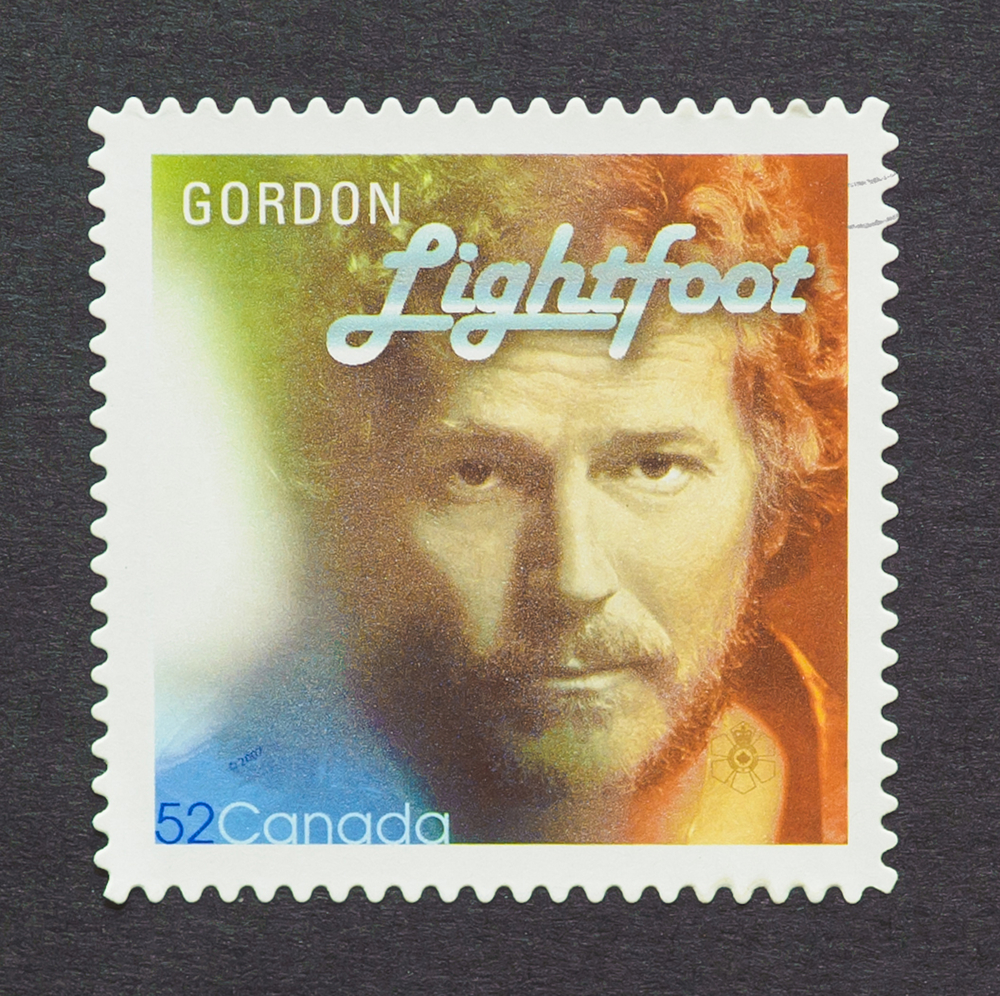
Did they really make a Canadian stamp imprinted with a portrait of GL as a young man?







 Heart Banter by David Gittlin