Categories
acoustic guitar Arts & Entertainment current events music Politics

The Political Impact of Paul Simon’s Music


Born to Jewish Hungarian parents in Brooklyn in 1941, Paul Simon grew up to be one of the foremost musicians of our time. He is best known for his albums with childhood friend Art Garfunkle, but I believe Simon’s solo work is where he really shines.

“American Tune” is a fine example. With its melody, guitar picking, lyrics, and overall artistry, the song comes together as a masterpiece. “American Tune” expresses the recording artist’s political disappointment in the early nineteen-seventies. The nineteen-sixties bloom of racial equality, love, and peace had already blossomed and faded.

While my favorite recording artists continued to produce heartfelt, meaningful, and exquisitely beautiful folk and folk rock music, America’s social and political evolution stalled. With the election of President Richard Nixon in 1972, the glowing hope and ideals of the prior decade receded into the background.

Paul Simon artfully captures the undercurrents of this period in this remarkable song. Despite its melancholy tone, I am deeply moved by the beauty of the words and music.

“American Tune” popped into my head unexpectedly and without warning. It literally came “from out of nowhere.” I think it did because we are about to take another evolutionary backward step under the Trump administration.

Please enjoy my cover of Paul Simon’s moving song.

Categories
acoustic guitar artists Arts & Entertainment music

Acoustic Guitar Cover of Bob Seeger’s “Against the Wind”


“Against the Wind” is regarded as one of Bob Seeger’s best songs. The lyrics are replete with the songwriter’s reflections on his youth, past relationships, and music career. The metaphor of running against the wind came from Seeger’s high school days, where he ran on the track team.

Seeger created his eleventh album, “Against the Wind,” intending to record hit songs. In other words, the artist wasn’t overly concerned with aesthetics. He wanted to make a commercially viable collection of songs, leaving it up to Capitol Records which ones to release as singles. Along with his Silver Bullet Band, Seeger certainly succeeded.

“Against the Wind” has been described as a bittersweet cross between country and rock music. The song holds an attraction for me as I look back on my life from the perspective of a 75-year-old. I’ve published eleven novels and recorded innumerable songs. Has any of it made a positive and significant impact on the world? Perhaps in a very small sense, the answer is “yes.” But the results have been far below my expectations.

I’m sure we are all, in one sense or another, running against the wind. There are things we turn away from that must be confronted. There are obstacles we must overcome if we are to move forward. Seeger ends this song with a determination to keep running against the wind no matter what it takes. I offer my cover in the same spirit.

Recorded with Audacity software–Absolutely the best free recording software out there.

Categories
artists Arts & Entertainment music songwriting

Acoustic Guitar Cover: Credence Clearwater Revival’s “Lookin’ Out My Back Door”


John Fogerty

John Fogerty wrote this song, in part, for his son, Josh. Josh was three years old at the time, and John could barely wait for his son to hear him sing the song on the radio, especially the part that goes: “Doot doot doo lookin’ out my back door.”

In the song’s chorus, a passing parade is mentioned. Fogerty says the lyric is inspired by a Dr. Seuss book he read as a child, “To Think I Saw It On Mulberry Street.”

Some people say the lyric “Won’t you take a ride on the flying spoon” is a reference to cocaine or heroin. Fogrety vehemently denies this. He discouraged drug use by any of his band members, saying drugs interfered with their music and their jobs.

Credence Clearwater Revival gained prominence in the late 1960’s. The band split up acrimoniously in 1972. John Fogerty is still performing as of this writing.

Here’s my cover of this fun song.

Categories
acoustic guitar artists Arts & Entertainment music

A Beautiful Ode to Life: “Silent Sunlight”


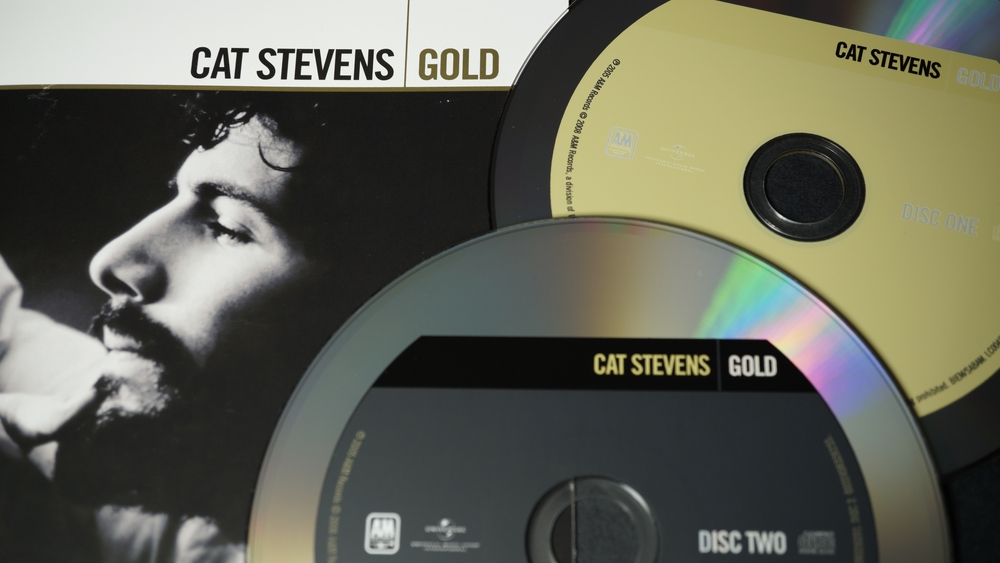
Cat Stevens ( Yusuf Islam) has never publicly said what this song is about, so we are left to offer our own interpretations.

When I read the lyrics, I get a picture of a farmer of indiscriminate age waking up at the crack of dawn and looking out through a window at his fields. At the very instant when the sun rises, there is barely sound. Our farmer reflects back on his youth and how it felt every day to awaken with a song in his heart and the dreams he envisioned to pursue.

The last refrain floated into my head from out of nowhere:

“There’ll be the evening,

In the end,

But ’till that time arrives,

You can rest your eyes,

And begin again.”

The lyrics are beautiful and express the child-like innocence found in many of Cat Stevens’ songs. I interpret this last refrain to mean: Take advantage of and be grateful for every moment you are alive.

Here’s my cover.

Categories
artists Arts & Entertainment inspiration music

Hard Headed Woman


If you’ve been following this blog, then you know I’m a huge fan of Cat Stevens. He produced some of the most iconic and unique music of the 1960s and ’70s. Shortly thereafter, Stevens’ sincere spiritual search led to his conversion to Islam, a surprise to many, including myself. For several decades after his transformation, Stevens, now known as Jusuf Islam, remained musically inert.

During his most productive years, Stevens gave over his immense musical talent to the study and preaching of Islam. Although Stevens says, in his own words, “I’m only trying to help,” I can’t help thinking that the world lost out on a treasure trove of inspiring, educational, and entertaining music

To be fair, I guess I’m just expressing my sour grapes. Everyone has the right to do whatever he or she wants with their life. Stevens believes his conversion to Islam “was meant to be.” It may very well be because Stevens has done a lot for the Arabic world. And he has stayed with his persuasion for almost fifty years. Kudos to Cat…er…Yusuf.

“Hard Headed Woman” celebrates an empowering and life-affirming love. The artist envisions an enriching and fulfilling relationship in which each partner contributes to the other’s growth and happiness. The song reminds us of the importance of finding someone who complements and strengthens us rather than a companion who fits a pre-determined, superficial mold.

Here’s my cover.

Categories
acoustic guitar Arts & Entertainment folk music music

Cat Stevens: Wild World


Cat Stevens wrote and recorded quite a few hits at the Zenith of his career in the 1960s and 1970s. Stevens is an exceptionally talented artist. His songs began to climb the charts in his native England when he was only eighteen. There is a recurring theme in Stevens’ work about leaving home to go out into the world. In Stevens’ words:

“Wild World has to do with leaving, the sadness of leaving, and the anticipation of what lies beyond. There is a criticism sometimes of my music that it’s kind of naïve, but then again, that’s exactly why people like it. It goes back to the pure childish approach of seeing things almost for the first time.”

I’ve covered several of Stevens’ songs on this blog, including “On the Road to Find Out,” “Fill My Eyes,” and “The Wind.” I’m a huge fan. Stevens’ songs still inspire me some sixty years after their release. Here’s my cover of another popular CS song: “Wild World.”

Categories
artists Arts & Entertainment music profiles

Van Morrison: Brown-Eyed Girl


“Brown-eyed Girl” was originally called “Brown-Skinned Girl.” The song is about an interracial relationship. Morrison changed the name to make it more acceptable to radio stations at the time (1967). Some stations banned it anyway for the line, “Making love in the green grass.” Why some gatekeepers took issue with the line in the free-loving sixties is beyond me. I guess there is no accounting for taste.

From his roots in Northern Ireland, Van Morrison began his musical career at the age of thirteen. He played the saxophone, harmonica, and guitar in several bands until he formed his own group called “Them.”

“Brown-Eyed Girl” launched Morrison’s solo career due to the song’s overwhelming popularity. Ironically, Morrison never truly cared for the song. He considered it “too commercial.” And the psychedelic cover of Morrison’s first solo album appalled him. I think it’s safe to say Van Morrison never came anywhere near the mainstream of music and pop culture.

Most of Morrison’s work consists of rhythm and blues and occasional jazz pieces. The man may be unpredictable, but his songwriting has certainly been prolific. He has written over three hundred songs in his fifty-year career.

Commercial or not, this is a fun song to play. Here’s my cover.

Categories
Arts & Entertainment memories music paintings

Empty Chairs: A Beautiful Song About Love And Loss


Like many of us, Don McLean suffered through difficult passages in his life, many of which are reflected in his music. He wrote and recorded “Empty Chairs” when his marriage was failing. Despite the subject of lost love, I feel there is incredible beauty in the lyrics and the melody, and Mclean’s unique guitar style.

Although the subject is mentioned just once in the song, McLean chose the symbol to sum up his feelings and state of mind at the time. The title is inspired by Vincent Van Gogh’s paintings of empty chairs. Mclean sympathized with Van Gogh and admired his paintings as revealed in his song “Vincent” recorded on the same album: “American Pie.”

I’ve re-recorded “Empty Chairs” with a better guitar and some improved technique. Please enjoy listening.

Categories
acoustic guitar Arts & Entertainment music profiles

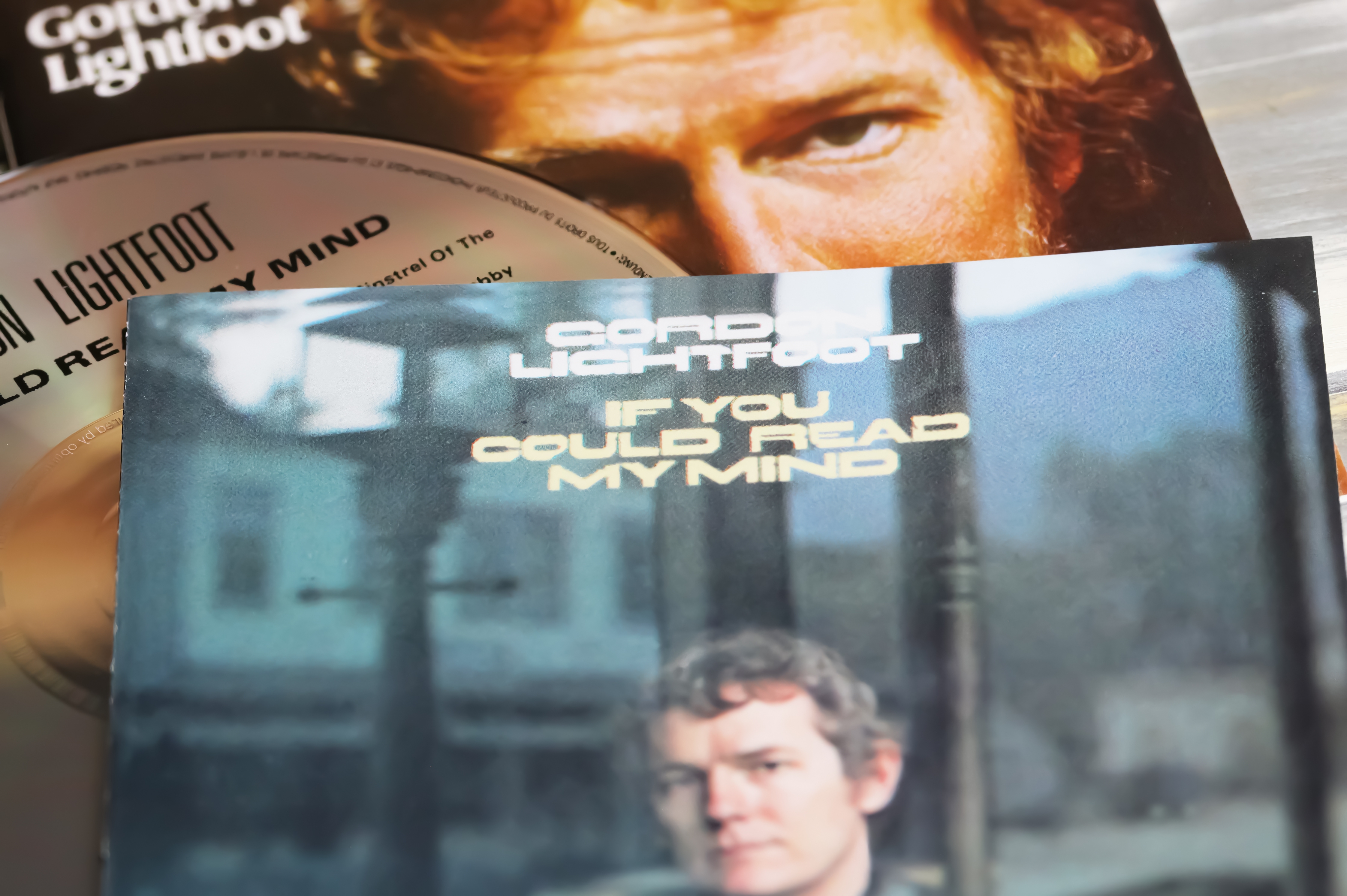
Covering Gordon Lightfoot’s ‘I’ll Be Alright’


Here’s another Gordon Lightfoot tune that may not be as recognizable as many of the other songs of his that I’ve covered here. Somehow, “I’ll be Alright” crept into my consciousness and I’m happy to offer my cover of the song in this post. To me, the song is as lovely and memorable as many of Lightfoot’s hits including: “If You Could Read My Mind,” “Early Morning Rain,” and “Song For A Winter’s Night.”

Please enjoy this remembrance of the one and only Gordon Lightfoot.

Categories
acoustic guitar artists Arts & Entertainment music profiles

On The Road To Find Out


In this life, change is constant. This is not news to most of us. However, some things never change. A good example is the music of the artist profiled in this post. In 1977, after years of contemplation and a near-death experience with tuberculosis, Cat Stevens converted to Islam and radically changed his lifestyle. He is now known as Jusuf Islam, but the beauty and truth of his music haven’t changed. Jusuf’s songs have endured and are still relevant almost fifty years after they were released. His unique guitar style and vocalizations have remained bright, new, and refreshing through the intervening decades.

“On The Road To Find Out” is a song about a young man who sets out on a journey to clear his mind and see what he can discover. The song parallels Stevens’ life experiences. After a seven-month recovery from tuberculosis, Stevens felt a deep emptiness in his life and a yearning for something more. Out of these ashes, “On the Road to Find Out” was born. The lyrics are not about traveling in a physical sense. They are about Stevens discovering who he was and the purpose, if any, of his existence. Stevens achieved fame and fortune in 1967 at the age of only eighteen when his first three singles hit the charts in his native England. Like many of his recording artist peers, Stevens examined his noteworthy accomplishments and found they had not brought him the peace of mind or happiness he envisioned.

Many of Stevens’ songs reflect his quest for existential answers and a deep sense of fulfillment. I can only hope he found it.

Here’s my cover of this song’s rich lyrics and beautiful melody.