Categories
artists Arts & Entertainment folk guitar folk music Folk Song Covers

Tom Paxton: An Emergent Folk Music Icon


Tom Paxton released “The Last Thing On My Mind” in 1964 on his album, Ramblin’ Boy.” The inspiration for the song came from Dave Van Ronk and Bob Dylan’s versions of “He Was A Friend of Mine.” This lost love ballad became one of Paxton’s biggest hits. He is also known for his protest songs against the Vietnam War and other social injustices. (What Did You Learn In School Today?)

“The Last Thing On My Mind” was one of the first songs I learned some forty years ago when I started playing the guitar. This is the first time I’ve released my cover publicly. The themes of the song include friendship, loss, and the passage of time.

Here’s my cover.

Categories
acoustic guitar artists Arts & Entertainment music

A Beautiful Ode to Life: “Silent Sunlight”


Cat Stevens ( Yusuf Islam) has never publicly said what this song is about, so we are left to offer our own interpretations.

When I read the lyrics, I get a picture of a farmer of indiscriminate age waking up at the crack of dawn and looking out through a window at his fields. At the very instant when the sun rises, there is barely sound. Our farmer reflects back on his youth and how it felt every day to awaken with a song in his heart and the dreams he envisioned to pursue.

The last refrain floated into my head from out of nowhere:

“There’ll be the evening,

In the end,

But ’till that time arrives,

You can rest your eyes,

And begin again.”

The lyrics are beautiful and express the child-like innocence found in many of Cat Stevens’ songs. I interpret this last refrain to mean: Take advantage of and be grateful for every moment you are alive.

Here’s my cover.

Categories
acoustic guitar artists Arts & Entertainment music

Acoustic Guitar & Vocal Cover of “Danny’s Song”


Most of the lyrics in “Danny’s Song” were inspired by a letter Kenny Loggins’ brother, Dan, wrote to him in 1968 after Dan’s son, Colin, was born. In the letter, Dan said he planned to marry the boy’s mom, Sheila, and they planned to move to Berkley, California, even though they had no money.

Kenny Loggins wrote the song in 1970 and released it as a single. It went nowhere. Later that year, Kenny teamed up with Jim Messina and released the song on their first album, “Sittin’ In.” Again the song went nowhere. If nothing else, “Danny’s Song” showcased Loggins’ talent for capturing a feeling for a moment in time.

It was not until Anne Murray covered the song and released it as a single in 1973 that it became a hit, reaching #1 in Canada and #7 on the charts in America. The song’s success put Loggins and Messina on the map.

Here’s my cover.

Categories
artists Arts & Entertainment folk music music

Dylan Cover: My Back Pages


“Ah, but I was so much older then, I’m younger than that now.”

These lyrics and the refrain popped into my head a few mornings ago. This sort of thing has been happening to me frequently these days: Long-forgotten songs resurfacing. It may be a function of the aging process, or it might be the universe talking to me. I kind of hope it’s the latter.

In the 1970s, a group called the Bryds covered a few Bob Dylan songs. They made songs like Mr. Tambourine Man and this one popular. The Bryds’ cover of Mr.Tambourine Man went to number one on the US charts, and their cover of My Back Pages went to thirty. I may have never listened to My Back Pages had it not been for The Byrds. By the way, Roger McGuinn and The Byrds are credited with starting the Folk Rock Revolution. And they inspired Bob Dylan to go electric.

In 1964, Dylan released his fourth album, “Another Side of Life.” Around this time, he began to distance himself from his earlier songs. He claimed his earlier work was not about politics. Instead, it was about universal themes and not individual political issues. In “My Back Pages,” Dylan lambasts himself for his authoritarianism and arrogance.

Moving forward, Dylan’s music focused more on individual consciousness and personal freedom. He is remembered more for his music from 1965-1970 than his earlier work.

To me, the lyrics at the top infer that we tend to think we know it all at a young age. I know that I did. As we age, we gain more wisdom and realize that we know less than we thought we did. This understanding opens us to learning more when we admit that we know little in comparison to what is out there. To be open to learning without imposing pre-existing ideas is to become more pliable and, therefore, young.

Here’s my cover of this powerful song.

Categories
acoustic guitar Arts & Entertainment folk music music

If You Could Read My Mind


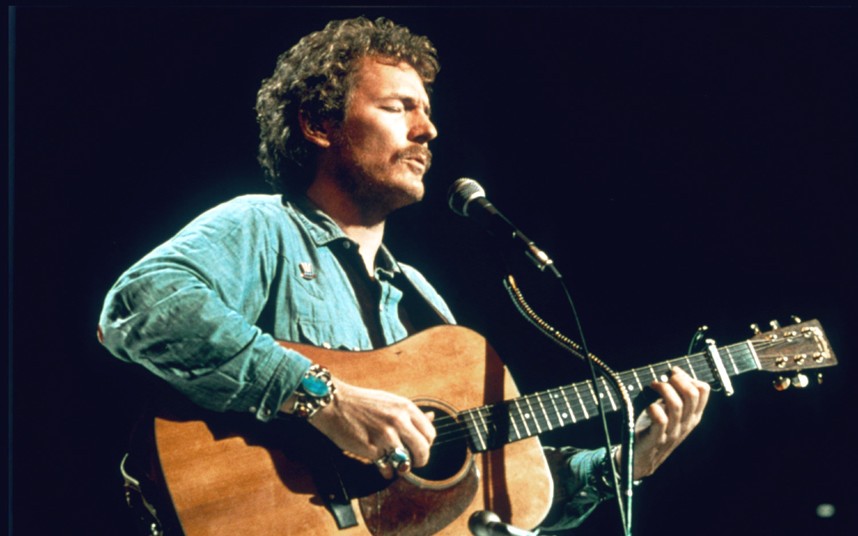
I’m watching an interesting film titled “If You Could Read My Mind.” The Canadian documentary is about the life and career of Gordon Lightfoot.

Lightfoot arrived in downtown Toronto as a young man after growing up in Oridella, a small rural Canadian town. Since there were no clubs to play in at the time, Gordon landed a job in a bank to earn a living. Lightfoot was about to earn a promotion when he told his manager that he had decided to leave the bank to accept a role as an extra on a square dancing Canadian TV show. Lightfoot’s manager found it hard to believe that the young man was leaving a good job with a future to go square dancing.

As folk music became commercially viable in the late sixties, clubs began to spring up featuring promising musicians. Gordon landed a spot in one of them. He stood apart from the crowd because he performed many of his own songs in a characteristically pure voice. After he developed a following, a club owner invited Lightfoot to perform at his club across the street at twice the salary. Lightfoot gratefully accepted the invitation to perform at the Riverboat, Toronto’s premier folk music club.

With his beautiful voice and prolific outpouring of quality music, it was only a matter of time before Warner/Reprise records rewarded Lightfoot with a one million dollar recording contract, an unheard-of number for a Canadian singer. His first album with the new label was released in 1970 when Gordon was forty-two. Lightfoot had left United Artists after five albums because he felt they did not represent him adequately. “Sit Down Young Stranger” shipped 80,000 copies before sales stopped dead. The album “had no legs” in the industry’s parlance. Warner changed the name of the album and picked a new single to lead it off. “If You Could Read My Mind” became a runaway hit when an announcer on an important local radio station kept playing it. Sales of the album ballooned to 650,000 copies. The rest is history.

Here’s my cover of the song.

Gordon Lightfoot is not a “legend in his own mind” as Dirty Harry said about the perp he was about to blow away. Lightfoot is a genuine “legend in his own time.” He has been performing live well into his seventies and beyond. It is said that time waits for no man. Time may have made an exception in Mr. Lighfoot’s case.

Categories
current events Essays inspiration issues memories profiles

Wasn’t That a Time?


Wasn’t that a time?  Wasn’t that a time to try the souls of men?  Wasn’t that a terrible time?”

The lyrics from a sixties folk song made popular by Peter Paul and Mary reverberate through the decades and remain relevant today.

Unfortunately.

The lyrics to the folk song hearken back to the war for American independence and major conflagrations waged since including World Wars I and II.

I recently bought an album by Tom Paxton.  Listening to his music on YouTube brought me back to the turbulent sixties and my love for the folk artists who became popular then.  Listening to these songs of social conscience and satire, love ballads, Children’s songs and others that reflect beautifully, poignantly and heart fully on our human experience, I am struck by the purity of this music.  It moves me deeply.  It penetrates my soul.  It inspires me to pick up my guitar and sing.

Looking back, I realize that these artists, these wandering troubadours, were great men and women.  Some of them are still alive and singing.  What a time the sixties were.  What noble visions for a better world, given voice by these passionate musicians, arose from the struggle.

Some of these visions have been realized.  We live in a better world today in some respects.  Yet we haven’t yet learned our lessons.  We live in a world where human beings still murder other human beings in the name of God.  We live in a world where a Russian President is intent upon restoring Russia to its Cold War boundaries by invading autonomous neighbor states.  We live in a world where hatred and intolerance still threaten our very existence.

When will they ever learn,” Mary Travers sings plaintively.  When, indeed, will we ever learn?

David Gittlin has written three feature length screenplays, produced two short films, and published three novels. Before quitting his day job, he spent more than thirty years as a marketing director building expertise in advertising, copy writing, corporate communications, collateral sales materials, website content/design and online marketing.