Categories
Arts & Entertainment folk guitar folk music Folk Song Covers inspiration songwriting

Exploring Life’s Meaning in Cat Stevens’ Lyrics


Far from old age, Cat Stevens wrote “Oh Very Young” when he was twenty-five. The wisdom in the song surpasses Stevens’ chronology with lines like, “You’re only dancin’ on this Earth for a short while.” Stevens contracted tuberculosis when he was nineteen, and it almost killed him. After that experience, Stevens kept an eye on the Big Picture.

Always the explorer, Stevens sought the meaning and purpose of life, as illustrated in his songs like “On the Road to Find Out.” He eventually converted to Islam in 1977. Around the same time, he permanently left the world stage as a singer and songwriter. In his relatively short career, Cat Stevens left us with a body of music that is still relevant today and, to millions around the world, extremely enjoyable.

Originally, I played this song using a picking method, and then I switched to strumming. I watched a video of Stevens performing the song with a strumming method. I thought, I’ll never be able to play it that fast. To my amazement, I wound up playing the song as fast as Stevens when I strummed it. Interesting. Here’s my cover.

In case you’re interested, here’s the finger-picked version.

Categories
acoustic guitar artist profiles Arts & Entertainment folk guitar folk music Folk Song Covers music

An Insight Into Jackson Brown’s Unique Music


Jackson Browne’s guitar techniques, lyrics, and melodies stand apart from the crowd. What he says through his music is sometimes searing, sad, and occasionally, happy. However, all of Browne’s songs have something in common: an incredible sensitivity and beauty.

Browne wrote “These Days” when he was only sixteen years old. Despite his youth, Browne demonstrated a keen sense of heartbreak. I’m not sure how a sixteen-year-old could feel the depth of emotion and remorse expressed in this song. If we assume Jackson experienced and gave voice to the words and tone of “These Days,” then he was wise beyond his years and deeply rooted in himself from early on.

The song had its first release when a protégé of Andy Warhol named Nico picked it up on her “Chelsea Girl” album. Brown played acoustic guitar in the background. “These Days” gained wider recognition when several artists subsequently covered it.

Brown eventually released his version of the song in 1973 on the album “For Everyman.” He rewrote “These Days” to make it more optimistic. In his own words, Jackson remembers, “Over the rest of my teenage years and into my 20s, I developed a kind of optimism, a kind of resoluteness, so I changed [one verse] to: ‘I’ll keep on moving, keep improving.’ That’s more to me what life is made of, the idea that I’ll get through this, I’ll continue looking.”

I’ve always wanted to play this song the way Jackson Browne does. Thanks to my friend Jerry Lambert, I can now do it. Here’s my cover.

Categories
acoustic guitar artist profiles Arts & Entertainment folk guitar folk music

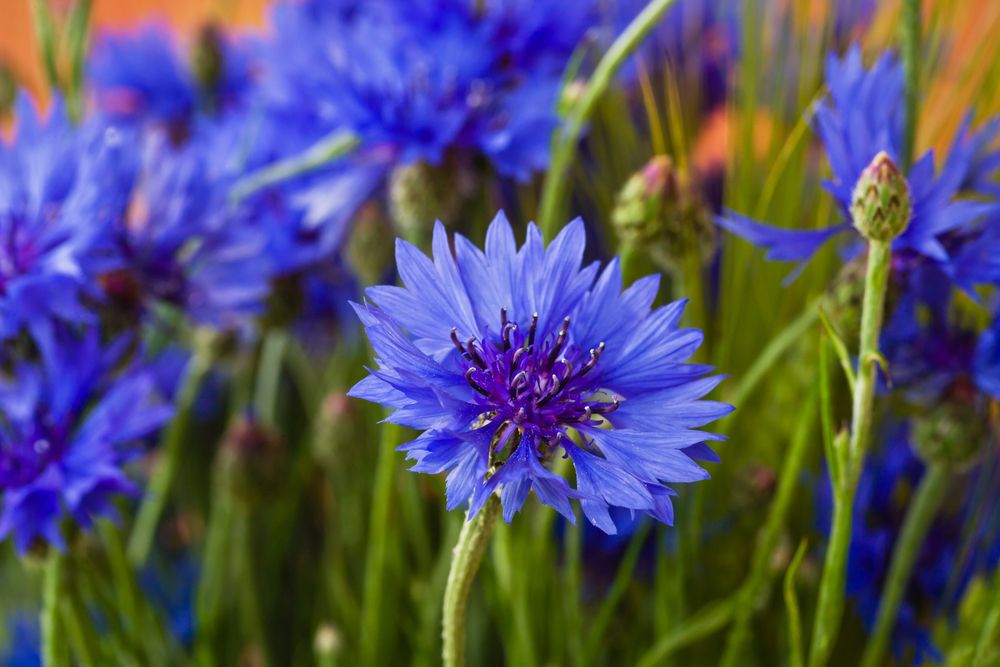
Discovering the Beauty of Kate Wolf’s ‘Cornflower Blue’


I first heard “Cornflower Blue” as the opening song on Kate Wolf’s 1983 double album “Give Yourself to Love.” As I listened to the album many times over, “Cornflower Blue” grew on me (no pun intended). I began to appreciate the exquisite beauty in the lyrics and in Kate’s lovely singing voice.

Oftentimes, songs like this one will find their way into my heart and I feel compelled to play them myself. With this song, I had my doubts. The chances were good that I might not pull it off. Learning how to play “Cornflower Blue” like Kate does was like learning how to walk again. The style is completely counterintuitive to what I’m used to, but I’m glad I made the effort. I hope my cover of the song conveys some of the mystery and beauty of the original.

Categories
artists Arts & Entertainment folk guitar folk music Folk Song Covers

Tom Paxton: An Emergent Folk Music Icon


Tom Paxton released “The Last Thing On My Mind” in 1964 on his album, Ramblin’ Boy.” The inspiration for the song came from Dave Van Ronk and Bob Dylan’s versions of “He Was A Friend of Mine.” This lost love ballad became one of Paxton’s biggest hits. He is also known for his protest songs against the Vietnam War and other social injustices. (What Did You Learn In School Today?)

“The Last Thing On My Mind” was one of the first songs I learned some forty years ago when I started playing the guitar. This is the first time I’ve released my cover publicly. The themes of the song include friendship, loss, and the passage of time.

Here’s my cover.

Categories
Arts & Entertainment folk guitar folk music love relationships

Exploring Bob Dylan’s Tomorrow Is A Long Time: A Love Song


Bob Dylan recorded the first version of “Tomorrow Is A Long Time” in 1962. He didn’t release it until 1971 on his “Greatest Hits Album.” Oddly, Ian and Sylvia were the first recording artists to release the song in 1963 on their album “Four Strong Winds.”

The song is about longing for a loved one, specifically Suze Rotolo, who Dylan dated from 1961 to 1964. It is widely believed that another Dylan song, “Girl From The North Country,” is also about Rotolo.

Here’s my cover.

Categories
acoustic guitar Arts & Entertainment folk music inspiration music

The Incredible String Band: Cover of “Painting Box”


The Incredible String Band burst onto the folk music scene in 1966 with the release of their first album, aptly named “The Incredible String Band.” As an avid lover and consumer of folk, I had never heard anything like their songs. The band started out as a trio composed of Clive Palmer, Robin Williamson, and Mike Heron. Williamson and Heron composed most of ISB’s music. Palmer eventually dropped out, replaced by other musicians and the girlfriends of Williamson and Heron.

Signed by Electra Records, the group produced seven albums for the label, most notably their first four, which included “The Five Hundred Spirits or the Layers of the Onion” and “The Hangman’s Beautiful Daughter.”

Through intermittent tours and appearances at prestigious venues like the Albert Hall, The Incredible String Band gained worldwide fans and international recognition from their humble beginnings in Edinburgh, Scotland.

Listen to Mike Heron’s lilting, whimsical “Painting Box” to get a sense of The Incredible String Band’s multifaceted musical range. Here’s my cover.

Categories
Arts & Entertainment folk music humor music

All The Best


This John Prine song has been lauded as, “One of the best breakup songs ever written.” Here’s my cover of Prine’s “All The Best.”

Categories
acoustic guitar artists Arts & Entertainment folk guitar folk music profiles

John Prine Encore: Day Is Done


“Day Is Done” is a simple song about a clandestine relationship. Since very little has been written about the song, it is difficult to pinpoint its exact meaning. It could be about two married adults having an illicit affair. The lyrics and tone, however, indicate a relationship between two adolescents forbidden by parents or society.

The drawings on the album cover of “Lost Dogs and Mixed Blessings,” where the song is one of the tracks, tend to support the theory of a prohibited young love.

In “Day is Done,” Prine has written a charming little song with universal implications. Many of his songs deal with the intricacies of human relationships and are laced with Prine’s subtle sense of humor. Lost Dogs and Mixed Blessings was John’s fourteenth album. Released in 1995, it is another example of the artist’s exploration of the human condition.

From humble beginnings, John Prine came a long way in his fifty-year career. He won Grammy Awards and was posthumously inducted into the Country and Folk Music Hall of Fame. What struck me, however, is this early recollection of his career. It is taken directly from Prine’s official website:

“Prine still remembers the first three songs he performed on any stage: Sam Stone, Hello in There, and Paradise. With humility, he recalls, “I sang those three songs and people just sat there and looked at me. I thought, ‘Wow, those are really bad.’ They wouldn’t even applaud.”

Things changed dramatically when a young journalist named Roger Ebert dropped into a Chicago folk club for a beer while John was on stage. Ebert wrote a glowing review of Prine’s performance in the Chicago Sun-Times which essentially launched John’s career.

Here’s my cover of “Day Is Done.”

Categories
artists Arts & Entertainment folk music humor music

John Prine: I Remember Everything


John Prine began his professional career as a mailman in Illinois. He went on to become one of America’s most beloved singers and songwriters. If you are a fan of Folk and Country Music, then you know John Prine. His music was a blend of humorous lyrics about love, life, current events, and songs recounting melancholy tales from his life. Prine was active as a composer, recording artist, live performer, and occasional actor from the early 1970s until his death in 2020 from complications of COVID-19.

“I Remember Everything” was the last song John wrote. Published posthumously, it’s a simple yet moving song looking back on a life well-lived.

Prine may have had a premonition that his life was coming to an end. If that is the case, then “I Remember Everything” is John’s epitaph, which he characteristically wrote himself. Here’s my cover.

Categories
acoustic guitar artists Arts & Entertainment folk guitar folk music

Dylan Cover: Mr. Tambourine Man


Bob Dylan wrote and recorded the original version of “Mr. Tambourine Man,” but The Byrds’ electrified folk-rock version shot it to #1 on both the US and UK charts. The song hadn’t been released when The Byrds learned it from a demo Dylan gave to their manager, Jim Dickson.

Dylan released Tambourine Man in March 1965 on his Bringing It All Back Home album.

What is “Mr. Tambourine Man” about? On the surface, this tambourine man is a wandering musician whose music has captured Dylan under its spell. The song is considered by many to be about drug experiences, with lines like “Take me for a trip upon your magic swirling ship” and “Take me disappearin’ through the smoke rings of my mind.” Phrases like these suggest a marijuana or LSD trip. Dylan is famously close-lipped about explaining his songs, but in his 1985 Biograph compilation album, he revealed that “Mr. Tambourine Man” is not about drugs. Instead, he said the song was inspired by a backup folk musician named Bruce Langhorne, who played a large tambourine in one of Dylan’s recording sessions.

To me, the song’s poetic images are like impressionist paintings. The melody is haunting and mesmerizing. The song stands alone as a true work of art. Here’s my version.