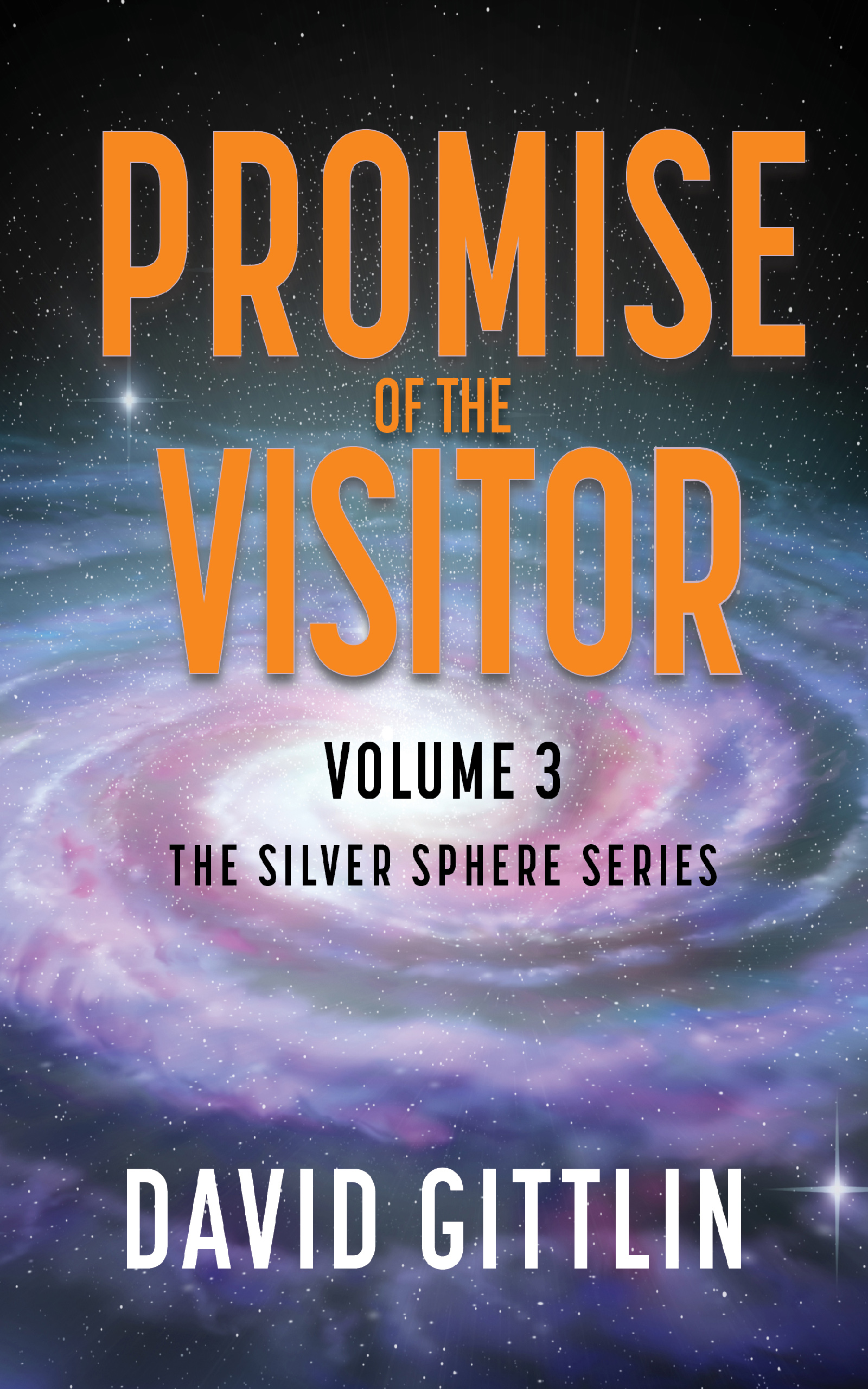

I’ve published fourteen novels, including the popular "Silver Sphere Series" and"The AndroBiotica Adventures." Before quitting my day job, I spent more than thirty years in corporate communications as a marketing director. My most recent novella, "Return of the Visitor," is now available on Amazon.com and other major online book retailers.
For more information about my novels, please visit www.davidgittlin.net and www.davidgittlin.com
“I live for a sense of a feeling of purposefulness in this world, you know, that I could stop my life at any point and feel that my life has been worthwhile; that the people I’ve loved and my children have all reached a point where their lives are now going to come to fruition. And as far as something I live by, it’s to try to be as alive as possible and feel free to make my mistakes and try to be as honest as I can with myself.”
Kate Wolf–Singer Songwriter–1942-1986
Perhaps Kate Wolf had these thoughts in mind when she wrote the song “Unfinished Life.” It’s a haunting ballade filled with hard-won wisdom, exquisite beauty, grace, and focused determination. The song is also ironically prophetic. Kate Wolf died tragically of Leukemia at the age of forty-four. Despite her abbreviated lifespan, she wrote over two hundred songs and performed them at venues in her native state of California and around the world. Kate’s life was, indeed, unfinished, but she left behind a treasure trove of beautiful music.
I first recorded “Unfinished Life” using a free-form guitar strumming method. Recently, while driving in my car, I listened to the song with a different pair of ears. I noticed the unique and highly effective guitar-picking technique Kate used to express the words and melody of the song. After some trial and error, I’ve come up with a version that approximates Kate’s recording.
“The future is not some place we are going, but one we are creating. The paths are not to be found but made. And the activity of making them changes both the maker and the destination.”
Actually, IT has arrived. The eBook–Not the catastrophe.
Download the eBook Free on Amazon Now Through July 11th, 2021
The Silver Sphere started out as five episodes posted intermittently on this blog. I’ve deleted the posts, re-written the story, and now it is available on AMAZON worldwide for only $1.49. Download it today and treat yourself to an engaging, fun, Science Fiction thrill ride. To whet your appetite, here’s Part One. Click on the Spotify button above if you’d like to listento a professional narratorread it.
PART ONE
Jacob
IT WASN’T REALLY a sphere.
I found it on the beach. Right at the water’s edge. Actually, I’m not entirely sure I found it. The sphere may have found me in some karmic sort of way. We’ll have to wait until later to sort it out because, as I will soon learn, time is in short supply.
First things first.
My name is Jacob Casell. Two days ago, I left a comfortable beach house to go out for a stroll in the middle of the night. The full moon and stars were my sole companions. I needed to think about the ending of my latest novel. I found the water and the salt air helped to stimulate my creative thinking.
The night was clear. I splashed my feet in the tips of the tides. I felt the crisp ocean breeze ruffling my longish hair as if it were saying, tell me your story. Before I could answer, I almost tripped and fell. A thing about the size of a basketball rocked gently in the water at my feet. I had the distinct feeling it was looking up at me, even though it had no discernable eyes.
The thing at my feet was a shiny silver sphere punctuated by streamlined indentations on its sides. It had a hole in the center which, in the moonlight, revealed nothing but bottomless darkness. Hardly an eye. Not a human one, at least.
As I examined it, the sphere began to pulsate. I stepped a few feet away. The sphere flashed on and off like a strobe light. I wondered if the damn thing was about to explode. Suddenly, the sphere stopped strobing. Then, it spoke to me. A voice inside my head spoke in stilted English.
“Do not be alarmed,” the thing said. “The lighting effect was me reanimating my systems. No sense wasting energy while I was waiting for you to happen along. You certainly took your time, didn’t you? And, by the way, I’m not a ‘thing.’ I am a highly evolved organism. You can think of me as artificial intelligence. I am actually much more than an AI, but your mind is not capable of conceiving what I truly am.”
I drew back a few more steps thinking, I must be dreaming. This can’t be happening.
“For a man who writes novels, you display little imagination,” the sphere said.
I felt strangely comfortable speaking to the machine, as if speaking to a telepathic silver sphere was as everyday an occurrence as eating a tub of macaroni and cheese for dinner.
“How do you know I’m a writer?” I said out loud. I wasn’t in the habit of communicating telepathically, after all.
“I’ve absorbed quite a bit of information about you in the short time we’ve been together.”
“I’m not sure I like that.” I didn’t say it out loud this time. I thought it.
“It doesn’t matter if you like it or not.”
“It matters to me.”
It seemed like the machine was surprised by my response and needed time to process it. I pushed the advantage. “It sounds like you were expecting me.”
“I was expecting someone. I suppose you’ll do.”
“Uh huh. Do you have a name?”
“You can call me Arcon. A-R-C-O-N.”
“Got it. I suppose you came here from some far distant solar system?”
“Next you will ask me: ‘do I come in peace?’”
“Do you?”
“The answer is yes and no. I’m not here to hurt anyone, but there will be worldwide chaos if news of my mission leaks out.”
“That sounds ominous.”
“It’s nothing compared to what will happen if you don’t help me to complete my mission.”
“Since you appear to know everything about me, you must realize that I’m not at liberty to help you. I’m past my deadline for turning in the final draft of a manuscript. My editor calls to scream at me daily.”
“There is a much bigger picture here than your manuscript. I’ll dispense with the formalities and call you by your first name which, naturally, I’ve learned without your help. I’m getting cold and tired of soaking in this sea water, Jacob. Please take me back to the beach house your wealthy friend has lent you.”
“But I just told you—”
“Pick me up, Jacob. If I miss my deadline, you won’t have to worry about yours.”
This is the prologue to the new edition of “Three Days to Darkness.” I’ve extensively rewritten the original novel (first published in 2010) to bring it up to date. It’s amazing how the world has changed in eleven years, but some things never change, like the themes grounding the story. I’ve also added a paperback edition to the digital edition, along with a spiffy new interior design. Don’t miss this heartwarming, humorous, and action-packed saga available at major online retailers worldwide.
Darius McPherson never saw it coming. His thoughts were elsewhere. On the kids. The ones he could save. They weren’t kids, really. Some of them were older than him. They were all tough and uneven around the edges, but a few of them were diamonds in the rough. They were the ones he considered his kids. They had real potential. They just needed someone to care about them. They needed a role model and some inspiration. Darius was happy to provide both. Not a bad summer gig for a guy waiting for his first year of law school to begin.
He pressed the bell on the side of the barred wooden door. The royal blue paint under the ugly bars gleamed in the direct sunlight and looked completely out of place in the burned-out industrial neighborhood in midtown Detroit.
He waited patiently to be buzzed into the youth counseling center. “Be right with you, Darius,” his supervisor said through the intercom. He liked Allison Turner. In her late thirties and twice divorced, she had managed to stay kind-hearted despite rough circumstances. She was also extremely capable. Allison had taught him more about inner-city teenagers than he could have learned in a decade on his own.
The door opened and a group of youthful offenders burst into the street. Darius knew several of them. They were attending classes at the center as part of their plea bargains. Darius smiled at them, even though he knew most of them were as dangerous as plastic explosive wired to detonate at the slightest provocation.
“Hey La Vonn” Darius called to the tallest boy in the group. “I hope you learned something today.”
“Yeah. How to stay outta’ the crowbar hotel,” the slender boy replied.
“Do you mean learning how to game the system or how to stay out of jail?”
Darius noticed La Vonn’s eyes open wide. He turned around in time to see a gray Lincoln Navigator with shiny, twenty-inch wheels and dark tinted windows round a nearby corner. No rap music blared from inside the car, which made Darius suspicious. He heard the sound of footsteps running away from him. He thought it undignified to run. And why would anyone in the neighborhood want to harm him? When the windows came down in unison, a cold chill went through his body. Darius saw young men wearing ski masks inside the car. He had no time to react.
The first shots hit the cinderblock wall of the youth center. Not unlike fireworks on the Fourth of July, Darius remembered thinking before a bullet pierced his chest. At first, he felt like an ice pick had stabbed him in the heart. Then there was a burning sensation. He remembered seeing his body lying on the cracked sidewalk in a pool of blood. The last thoughts that went through his brain were of his parents, his older brother and younger sister, and of course, Rebecca. After that, he sensed his awareness swirling down a dark tunnel opening at the far away end into some kind of scintillating light.
eBook and Paperback Available on Amazon and Online Retailers Worldwide
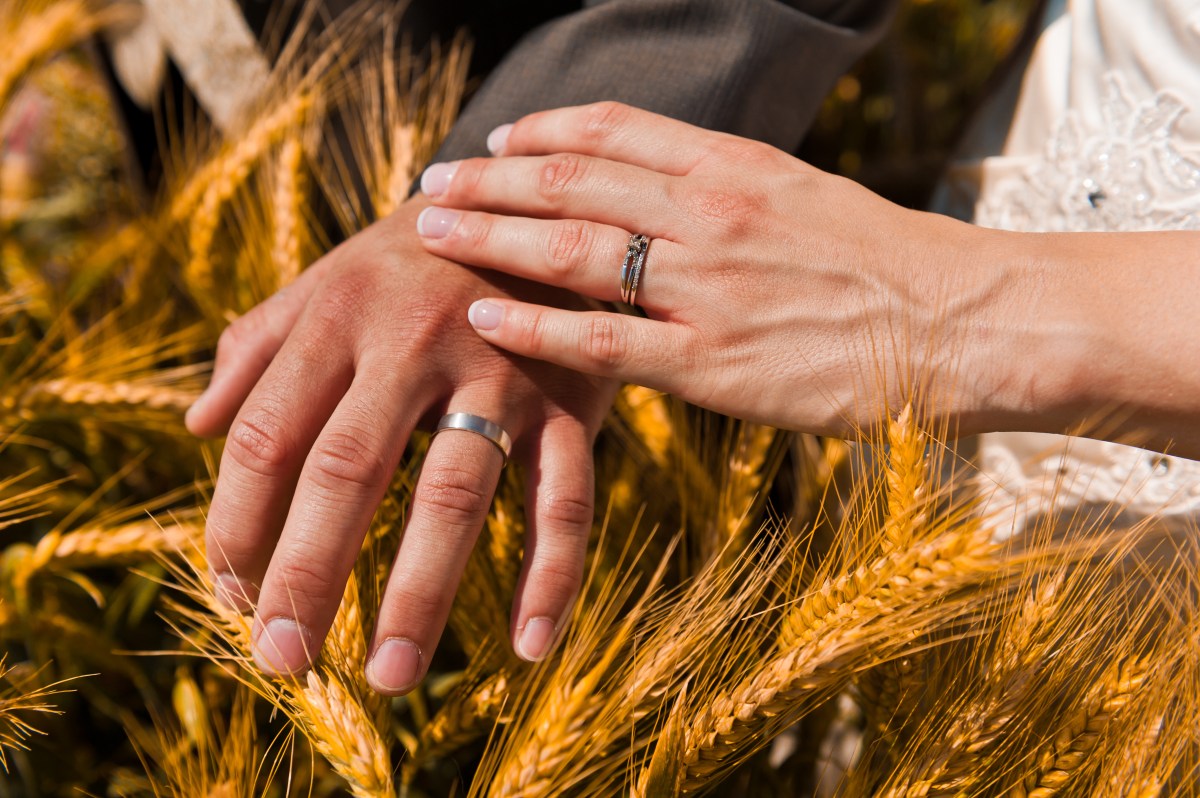
“Fields of Gold” is one of Sting’s most famous songs. It is a stunning and thoughtful track about the journey of commitment. The song first appeared on Sting’s 1993 solo album “Ten Summoner’s Tales.”
Sting wrote the track after he bought a house near a barley field. The sunsets and the colors of the field helped inspire the lyrics, along with Sting’s love for Trudie Styler, who he married in 1992.
“Fields of Gold” can be seen as a fulfilling romance from beginning to end. It is about courtship, marriage, and finally, death.
The romance of the couple in the song is so strong that even the sky and “its jealous sun” are envious of the relationship.
Before the male narrator dies, he tells his lover that she will never forget him and the time they shared. They will always walk and lie together in golden fields of sun drenched barley.
Here is my version of the song played with Eva Cassidy‘s guitar technique.
“The heart is always the place to go. Go home into your heart, where there is warmth, appreciation, gratitude and contentment.”
Kate Wolf left a legacy of over two hundred songs that she recorded and performed in live concert. I’ve played a number of those songs here and in online groups. I’ve tried to embody and share Kate’s love, beauty, compassion, pathos, and joy. Now, it seems my journey with Kate’s music is ending with a few songs from her last albums. Here’s an upbeat one titled “Stone In The Water.”
Bonus Track
Linda Ronstadt made this song famous. I’m playing Eva Cassidy’s version of “It Doesn’t Matter Anymore” close to the style she used to perform it. Paul Anka wrote the ballad for Buddy Holly, and Holly was the first to perform it in 1958. The song reached number 13 on the charts at the time.
Ronstadt and Cassidy, two great artists, are no longer with us. They both sang like angels and their legends have grown over time. Their music lives on and is enjoyed by a worldwide audience. This track is dedicated to the memory of Linda Ronstadt and Eva Cassidy.
I had never heard of Carrie Newcomer before a friend played one of her songs in an online gazing/meditation class. “The Gathering of Spirits” bounced around in my head until I finally had to learn it.
I bought Newcomer’s album of the same name, and I have to say the other songs on it are, for me, an acquired taste. However, I’m glad I was introduced to Carrie’s music and to this song in particular. She’s a unique individual and an unusually talented artist, as you’ll see by clicking on the link above. Here’s my version of “The Gathering of Spirits.” *
In case this blog is too short, here’s my version of another song by Kate Wolf titled “An Unfinished Life.”
*On the album, Alison Krause sings harmony on the song.
Born in San Francisco, Kate Wolf started her musical career in the band Wildwood Flower before recording ten records as a solo artist. Her songs have since been recorded by famous artists such as Nanci Griffith and Emmylou Harris. “Poet’s Heart,” recorded in 1985, is the last album Kate released before her untimely death at the age of forty-four. During her life, Wolf’s music was not widely known beyond the borders of her home state of California. Over the years, Kate has attracted a broader audience of millions who appreciate her beautiful voice, poetic song lyrics, and guitar/piano artistry. “Poet’s Heart” features several songs which have touched me deeply such as, “Slender Thread,” “Brother Warrior,” and the title song, “Poet’s Heart.”
A photographic interpretation of the Kate Wolf song “Muddy Roads.” Visit http://www.davidgittlin.net for the full post titled “Through Her Music.”
Lately, I’ve been posting on Facebook images of late 18th century impressionist paintings and 1930-40’s Art Deco cars and architecture. I’ve also been listening to and playing a lot of Kate Wolf’s music. I believe the unifying theme of these adventures is BEAUTY.
What I’m about to say may seem odd, self-inflated, or downright delusional, but what the hell. I’m going to say it anyway. It seems that I’m undergoing a dramatic shift in consciousness. I’m focusing on, feeling, and sensing the beauty and light within me and around me.
I’m choosing to focus on this beauty, not as some kind of self-improvement practice. It’s something I want to do. I don’t have to impose it on myself. You might say “the sun in my heart is rising,” finally, after all these years of struggling to arise out of the negativity in and around me. It’s not that the negativity has gone away. It’s just easier and more desirable to focus on something better.
It’s something that comes from inside and outside of me. It’s something that is beautiful, peaceful, and fulfilling. It’s something that beats the hell out of the over-controlled grind of daily life.
I started with the intention of sharing a selection of the beautiful images and music I mentioned earlier. I may have gotten a bit side-tracked along the way. So, without further delay:
Frank Lloyd Wright’s 1935 Falling Water House shown here at twilight.
This is a truly beautiful painting. “Daisies and Peonies in Blue Vase” by Paul Gauguin.
Painting by Claude Monet from his famous water-lilies series. Monet painted about 250 water-lily studies from his garden during the last thirty years of his life.
My version of “Poet’s Heart” written by Kate Wolf Copyright 1985
There is beauty within us. There is beauty everywhere in the world. All we have to do is to want to feel it and see it.
Even in the midst of darkness, this is the dawn of a new age. It may be difficult to believe it or see it, but it’s happening. Nothing can deny us our destiny in love. Not doubt. Not ignorance. Not fear.
Some of us are on the cutting edge of this new world. Kate Wolf was one of these visionaries. I’m a great admirer of her work and her music.
What makes Edward Hopper’s “Nighthawks” painting one of his most celebrated works? Created in 1942, Nighthawks is considered the incarnation of existential art, capturing the alienation and loneliness symptomatic of modern urban life. The following story is inspired by the painting.
I mount the time machine and dial the year nineteen-forty-two. I have a keen interest in the war years. Activities like storming the beaches of Normandy are not high on my priorities list. I stay far behind the front lines. I find the study of American culture during the war years fascinating. I stay away from heavily populated cities to remain inconspicuous. You might say I’m not truly adventurous, excluding, of course, time travel and my voracious appetite for knowledge. I’m a scientist, first and foremost. As soon as I’ve perfected my time-traveling technology, I intend to unveil it in a white paper report and work with a team to use my discoveries for the betterment of mankind.
I finish entering all of the pertinent data into the onboard computer and push the launch button. Seconds later, the machine deposits me in the small town of Independence, Ohio. On this trip, I find myself on a corner across the street from an all-night diner. My trans-spacial watch tells me it’s two-thirty in the morning. Materializing in small towns on deserted streets in the middle of the night is a proven method for avoiding stampeding crowds.
I’m a bit freaked out by the feeling of emptiness the town exudes. I console myself with the thought that I’ve arrived in the middle of the night and everything is closed except, it seems, the diner across the street.
Through the panoramic window, I see four people sitting at the counter inside. My curiosity peaks as I begin, once again, to study life in the past, this time eighty years ago. This morning will be different than the others in one important respect. It marks the first time I will interact with people and environments of the past. I feel that I’ve learned enough from my previous trips to take this momentous step. And, I can no longer resist the urge to relate to people instead of simply observing them.
As I cross the street, I check my reflection in the large window. I’m dressed appropriately for the era in a blue business suit and matching tie with black wingtip shoes and neatly barbered hair. I’ll blend right in. Swinging open the glass and chrome door, I enter the cafe and take a seat at the counter a measured two seats away from a man sitting by himself.
The small diner smells of stale cigarette smoke, fresh coffee, and the faint scent of body odor from the man two seats away. To my right, half the wall is fitted with small bins containing tempting muffins, cakes, and breads. Across the counter, a nice-looking middle-aged couple sit demurely drinking coffee. The man is wearing a gray suit with a matching hat, blue tie, and he’s smoking a chesterfield unfiltered cigarette. The pack lying by his hand on the counter tells me the cigarette brand. The man looks like a lawyer or a doctor. The woman is wearing a green silken cocktail dress. It sets off her blazing red hair nicely. By the looks of the two-carat diamond ring on her hand, I figure the couple is well-off and married. I suppose the couple is drinking coffee to sober up for the drive home after a festive dinner party.
The man behind the counter approaches me. He is undoubtedly either the owner, or someone related to him. This is an independent operation as so many of these places were before chain automats and eventually Starbucks put most of them out of business.
“Coffee?” the man behind the counter offers. Wearing a blazing white uniform, he’s a smallish man with wire-rimmed glasses who is going prematurely bald.
“Black,” I say.
“You must be new around here,” the man says.
“You could say that,” I reply.
Lifting his eyes from his coffee cup, the man across the counter stares at me. He tips his hat revealing bright blonde hair. Combined with his deep blue-grey eyes, he’s a dead ringer for Peter O’Toole in his signature role as Lawrence of Arabia.
“My name’s Kendall,” he says in a friendly tone.” I wonder if it’s his first or last name. I happen to hate my first name. Who names their kid Saul forty years after the war? It would be a good name for my grandfather. Not for me.
“And I’m Allison,” the woman next to him says.
I’m surprised by the couple’s friendliness. Maybe it’s the late hour and the intimate setting. Maybe people here are friendlier to strangers than they usually are in the other the small towns I’ve visited. Maybe–just maybe–this will be easier than I thought it would be.
“My name’s Saul,” I say to the couple. “Nice to meet you.” I turn to the man next to me, half-expecting him to introduce himself. It suddenly occurs to me that the guy hasn’t moved a muscle since I came through the door.
“Ignore him,” Kendall says. “He’s just part of the scenery.”
“I’m sorry for that unkind remark,” I say to the motionless man. He’s heavy set, dressed in a brownish green-striped suit, and looks every bit like a non-descript traveling salesman.
I turn back to the man named Kendall. “If that was a joke, I don’t think it’s funny. People have feelings. Didn’t your mother teach you that?”
The last thing I want to do is get into an argument with these people, but I can’t help saying something.
“You don’t have to worry about his feelings,” Kendall says.
“And what do you think?” I ask Allison. On closer examination, she looks uncannily like Julianne Moore in her role as Clarice Starling in the sequel to “The Silence of the Lambs.”
“Allison is new,” Kendall replies. “She’s still in training. She’s not supposed to talk much.”
“Wait a minute,” I say. “Who are you people?”
Kendall leans down and pulls a strapped leather briefcase from below the counter. He extracts a file, opens it, and begins reading.
“Let’s see. Saul Grossman, age thirty-two, engineer/designer employed by Raytheon Technologies, assigned to jet engine development, invented and now operates a time machine in his spare time. Does that about cover it, Saul?”
I am beyond shocked. Fear and anger compete to control me. Somehow, I manage not to panic. I don’t want to hear the answer to my next question, but I have to ask.
“How do you know so much about me?”
“You’ve been on our radar,” Kendall says. “Now that you’ve decided to interact with the past, it’s time for us to step in.”
I’m still in shock, but a ray of hope may be peaking through the gathering storm clouds. “Are you time lords, or some sort of benevolent time control agency from the future?”
“Sorry to disappoint, Saul. We’re your local branch office of the NSA. We made some adjustments to your time machine after reading your time journal in which you wrote, ‘I’m now confident that I can interact with the past to make the present better.'”
“So, you broke into my house without my knowledge or consent.”
“That’s about the size of it,” Kendall confirms.
I feel my intestines start to melt. “What sort of ‘adjustments’ are we talking about?”
“For starters, we’re not in the past. We’re in a computer simulation where the only thing that’s real is you.”
I try to imagine how this can be happening. Am I talking to naked human bodies floating in an electrochemical solution inside giant Pyrex glass tubs? Are they fitted with electrodes attached to their heads to facilitate thought-transference-voice-activation to their virtual avatars? Or is it a cutting-edge holographic computer program capable of interacting with a real-live me?
I reach into my pocket to push the button on my remote control extractor. I’m not going to stand still for this. Literally. I’ll be out of here and back in good old 2021 in no time–or a few seconds.
Nothing happens.
I try again. Still nothing.
“I forgot to mention we disabled your extractor,” Kendall says with a cheeky wink of an eye.
“So now what?”
“Now you stay here for the rest of your natural born existence, my friend.”
“You’re kidding. Right?
“Afraid not, Saul.”
“You can’t do this.”
“Would you rather be thrown in jail?”
“On what grounds?”
Kendall takes the last sip of his coffee. “We’ll think of something. It won’t be pretty.”
“I can’t believe this.”
“It’s an unfortunate situation, Saul. You’ve become a danger to yourself and the rest of us. You played with fire, and now you’re burned. The good news is we know how to use your technology better than you would have used it.”
Kendall grabs the briefcase and guides Allison to the front door. Before they leave, Kendall and Allison wave goodbye. “Have some fun,” Kendall says. “You’re an inventive guy.”
“Don’t leave. Please.”
“We’ll check back with you in another thirty years, if you’re still around,” Allison says with a cheerful smile.
Outside the door, I watch Kendall and Allison dissolve into ghostly vapors, then disperse into thin air.
Copyright 2021 by David Gittlin. All rights reserved.