John Prine began his professional career as a mailman in Illinois. He went on to become one of America’s most beloved singers and songwriters. If you are a fan of Folk and Country Music, then you know John Prine. His music was a blend of humorous lyrics about love, life, current events, and songs recounting melancholy tales from his life. Prine was active as a composer, recording artist, live performer, and occasional actor from the early 1970s until his death in 2020 from complications of COVID-19.
“I Remember Everything” was the last song John wrote. Published posthumously, it’s a simple yet moving song looking back on a life well-lived.
Prine may have had a premonition that his life was coming to an end. If that is the case, then “I Remember Everything” is John’s epitaph, which he characteristically wrote himself. Here’s my cover.
Bob Dylan wrote and recorded the original version of “Mr. Tambourine Man,” but The Byrds’ electrified folk-rock version shot it to #1 on both the US and UK charts. The song hadn’t been released when The Byrds learned it from a demo Dylan gave to their manager, Jim Dickson.
Dylan released Tambourine Man in March 1965 on his Bringing It All Back Home album.
What is “Mr. Tambourine Man” about? On the surface, this tambourine man is a wandering musician whose music has captured Dylan under its spell. The song is considered by many to be about drug experiences, with lines like “Take me for a trip upon your magic swirling ship” and “Take me disappearin’ through the smoke rings of my mind.” Phrases like these suggest a marijuana or LSD trip. Dylan is famously close-lipped about explaining his songs, but in his 1985 Biograph compilation album, he revealed that “Mr. Tambourine Man” is not about drugs. Instead, he said the song was inspired by a backup folk musician named Bruce Langhorne, who played a large tambourine in one of Dylan’s recording sessions.
To me, the song’s poetic images are like impressionist paintings. The melody is haunting and mesmerizing. The song stands alone as a true work of art. Here’s my version.
“Ah, but I was so much older then, I’m younger than that now.”
These lyrics and the refrain popped into my head a few mornings ago. This sort of thing has been happening to me frequently these days: Long-forgotten songs resurfacing. It may be a function of the aging process, or it might be the universe talking to me. I kind of hope it’s the latter.
In the 1970s, a group called the Bryds covered a few Bob Dylan songs. They made songs like Mr. Tambourine Man and this one popular. The Bryds’ cover of Mr.Tambourine Man went to number one on the US charts, and their cover of My Back Pages went to thirty. I may have never listened to My Back Pages had it not been for The Byrds. By the way, Roger McGuinn and The Byrds are credited with starting the Folk Rock Revolution. And they inspired Bob Dylan to go electric.
In 1964, Dylan released his fourth album, “Another Side of Life.” Around this time, he began to distance himself from his earlier songs. He claimed his earlier work was not about politics. Instead, it was about universal themes and not individual political issues. In “My Back Pages,” Dylan lambasts himself for his authoritarianism and arrogance.
Moving forward, Dylan’s music focused more on individual consciousness and personal freedom. He is remembered more for his music from 1965-1970 than his earlier work.
To me, the lyrics at the top infer that we tend to think we know it all at a young age. I know that I did. As we age, we gain more wisdom and realize that we know less than we thought we did. This understanding opens us to learning more when we admit that we know little in comparison to what is out there. To be open to learning without imposing pre-existing ideas is to become more pliable and, therefore, young.
Cat Stevens wrote and recorded quite a few hits at the Zenith of his career in the 1960s and 1970s. Stevens is an exceptionally talented artist. His songs began to climb the charts in his native England when he was only eighteen. There is a recurring theme in Stevens’ work about leaving home to go out into the world. In Stevens’ words:
“Wild World has to do with leaving, the sadness of leaving, and the anticipation of what lies beyond. There is a criticism sometimes of my music that it’s kind of naïve, but then again, that’s exactly why people like it. It goes back to the pure childish approach of seeing things almost for the first time.”
I’ve covered several of Stevens’ songs on this blog, including “On the Road to Find Out,”“Fill My Eyes,” and “The Wind.” I’m a huge fan. Stevens’ songs still inspire me some sixty years after their release. Here’s my cover of another popular CS song: “Wild World.”
After Steven Digman wrote “Anniversary Song,” he took it to Chris Biondo’s studio in Rockville, Maryland, to record it. At the time, Biondo was looking for material for Eva Cassidy to record. After Chris heard the song, he insisted on recording it with Eva. Digman had another singer in mind, but Biondo wouldn’t give up. After hearing Eva sing “Anniversary Song” on the phone, Digman agreed to let Cassidy record it. The rest, as they say, is history.
This is another song that popped into my head unexpectedly. At first, I decided not to blog about it. But the melody, like Chris Biondo, wouldn’t give up. I guess someone is trying to tell me something. Here’s my cover.
Graham Nash of Crosby, Stills, Nash, and Young wrote: “Teach Your Children.” The song appears on the group’s album, Deja Vue. The lyrics pertain to the difficult relationship Nash had with his father, who spent time in prison. Nash has talked about songwriting in these terms: “The idea is that you write something so personal that every single person on the planet can relate to it. Once it’s there, it unfolds outward, so that it applies to almost any situation.”
In another quote, Nash says, “When I wrote ‘Teach Your Children,’ we didn’t know what we were doing. It was like: ‘This sounds pretty fun. We can sing this! Let’s do it!’ And then, all of a sudden, people are singing it back to me forty years later.”
Graham Nash is a photographer as well as a great musician and songwriter. Soon after writing “Teach Your Children,” Nash visited an art gallery and saw two photographs hung side by side. The photographs clarified the meaning of the song for Nash. One photo, by Diane Arbus, is titled “Child with Toy Hand Grenade in Central Park.” The other is Arnold Newman’s portrait of German industrialist Alfried Krupp, the man who manufactured arms for World Wars I and II.
In a Songfacts interview, Nash told this story about the two photos: “I have never told any gallery owner how to hang my images. They know their space way better than me, and I’m always curious as to how they put images together. And in this particular show, the gallery put these two photos together. The photos made me realize that if we didn’t teach our children a better way of dealing with our fellow human beings, we were fucked. Humanity was in great danger.”
Now, this is me talking. I often feel that art comes from somewhere else. Let’s call it “The Great Beyond.” To me, a serious artist is a channeler of messages from The Beyond through the prism of his or her experiences and personality. These messages want to come through and be heard by a large audience. “Teach Your Children” is a good illustration of this idea. Here’s my cover.
“The time that’s left is yours to keep.” These words come at the end of the chorus of the song “See Here She Says” by Kate Wolf.
While I find all of the lyrics in this song beautiful, this sentence hit me in the center of my heart. I can picture a mother teaching a child about life. She is telling the child about the importance of dreams and to use his or her time wisely. Use it well, not only for yourself but for others.
Certainly, love, beauty, and a full range of human emotions come through Kate Wolf’s music. “See Here She Says” is a remarkable song because it speaks to children and adults alike with an ocean of love and understanding. Interestingly, the word “sea” appears at the beginning of the first verse.
Perhaps I can feel Kate’s heart even more now that she has passed into spirit.
“Summer Side of Life” is the lead-off song from a 1972 Gordon Lightfoot concert in London, England. The song kept rolling around in my head until I decided to learn it and post it here.
Ostensibly, the song is about a young man who returns from the Vietnam War and mourns a lost love and possibly his war experiences. It’s a song about before and after, and maybe two sides of life. After the first two verses, I find the lyrics to be somewhat impenetrable. So, I can’t say for sure what the song is about, but it speaks to me about the difference between youth and old age.
I’d love to have my youth back with my current perspective and the freedom to follow my bliss, as Joseph Campbell says. Wouldn’t it be lovely to have decades to develop ourselves and our abilities without the distraction of economic necessity? Ahhh…if it could only be so.
It’s been fun learning this song. I hope you enjoy it.
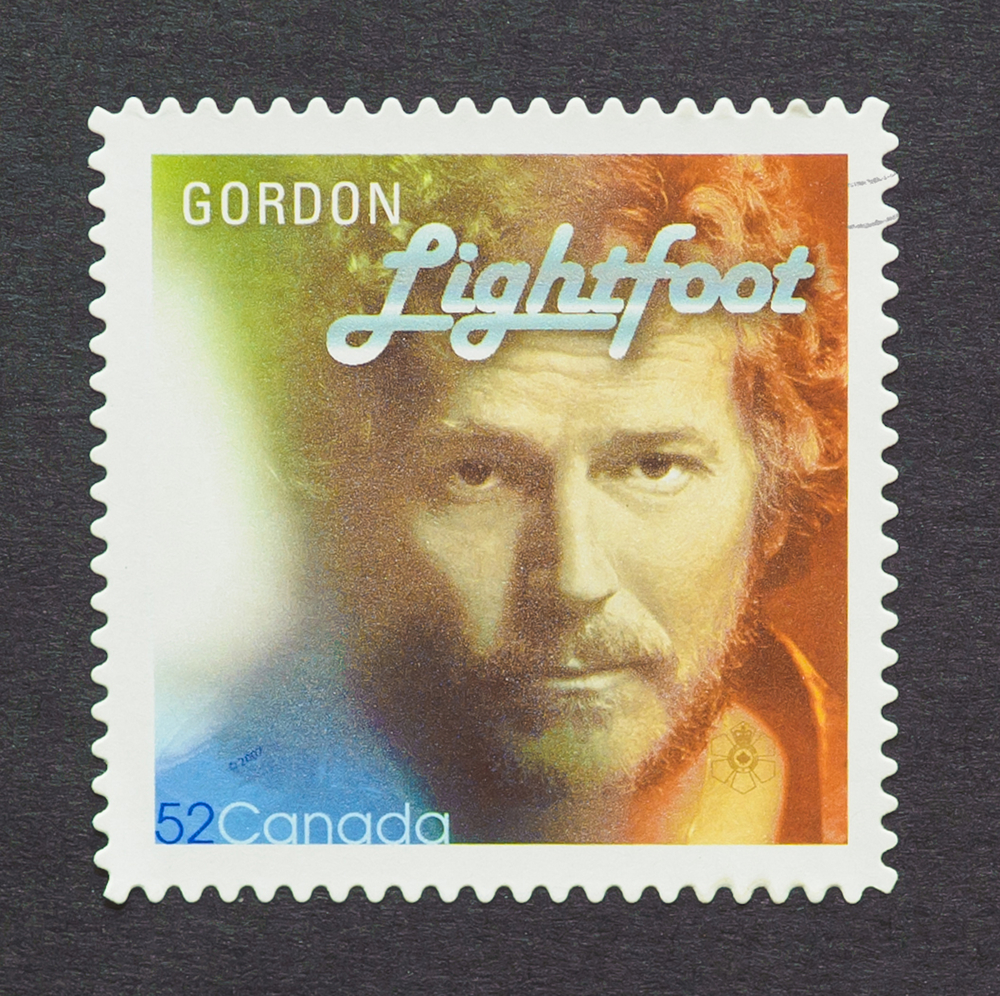
Did they really make a Canadian stamp imprinted with a portrait of GL as a young man?
In this life, change is constant. This is not news to most of us. However, some things never change. A good example is the music of the artist profiled in this post. In 1977, after years of contemplation and a near-death experience with tuberculosis, Cat Stevens converted to Islam and radically changed his lifestyle. He is now known as Jusuf Islam, but the beauty and truth of his music haven’t changed. Jusuf’s songs have endured and are still relevant almost fifty years after they were released. His unique guitar style and vocalizations have remained bright, new, and refreshing through the intervening decades.
“On The Road To Find Out” is a song about a young man who sets out on a journey to clear his mind and see what he can discover. The song parallels Stevens’ life experiences. After a seven-month recovery from tuberculosis, Stevens felt a deep emptiness in his life and a yearning for something more. Out of these ashes, “On the Road to Find Out” was born. The lyrics are not about traveling in a physical sense. They are about Stevens discovering who he was and the purpose, if any, of his existence. Stevens achieved fame and fortune in 1967 at the age of only eighteen when his first three singles hit the charts in his native England. Like many of his recording artist peers, Stevens examined his noteworthy accomplishments and found they had not brought him the peace of mind or happiness he envisioned.
Many of Stevens’ songs reflect his quest for existential answers and a deep sense of fulfillment. I can only hope he found it.
Here’s my cover of this song’s rich lyrics and beautiful melody.






 Heart Banter by David Gittlin