Categories
acoustic guitar artist profiles artists Arts & Entertainment Essays relationships songwriting

The Truth in ‘Lyin’ Eyes’: Money and Relationships


When the Eagles were a struggling group in Los Angeles, they noticed many beautiful women married to older, successful men. It posed the question: Were these women happy or unhappy? One night, while drinking in their favorite bar, they spotted a beautiful young woman. Alongside her, a fat, old, rich guy sat drinking. They were chatting, and apparently a couple. Glen Frey, the group’s leader, commented, “Look at her. She can’t hide those lying eyes.” The Eagles realized they had a great idea for a new song. They began to write the lyrics right then and there.

The song tells an in-depth story about women who have taken the easy way out by marrying for money alone. While the song is entirely fictional, it has an incontrovertible ring of truth. Maybe that’s why Lyin’ Eyes reached number 8 on the Country Chart. It is the only Eagles song to become a top 10 Country hit.

Here’s my cover.

Categories
acoustic guitar artists Arts & Entertainment folk guitar love relationships

Why “Always On My Mind” Became a Hit for Willie Nelson


Willie Nelson made “Always On My Mind” one of his signature songs. Upon hearing the song for the first time, Nelson knew that he wanted to add “Always On My Mind” to his repertoire. Several recording artists, including Elvis Presley, released the song unsuccessfully. When Nelson recorded it in 1982, the song became a smash hit. Nelson’s sensitive rendition made the song a top 5 hit and a Grammy nomination.

Wayne Carson wrote “Always” as an apology to his wife when he was working in a recording studio in Memphis and stayed ten days longer than he expected to. When Carson called his wife to tell her that he had to stay in Memphis longer, she let him have it. To make his wife feel better, Carson told her she was “always on his mind.”

“It just struck me like someone had hit me with a hammer,” Carson told the LA Times. “I told [my wife] real fast I had to hang up because I had to put that into a song.  ‘Always’ is about one long apology. I guess there are a lot of people in the world who are looking for a way to say [what the lyrics express] in a song.”

“Always On My Mind” popped into my head from out of nowhere. Coincidentally, I’ve been hearing it at the gym where I work out, but after the fact. I’ve decided that it’s a reminder from the cosmos to appreciate my loyal wife of thirty-six years. Here’s my cover played in Nelson’s style.

Categories
artists Arts & Entertainment folk guitar folk music Folk Song Covers

Tom Paxton: An Emergent Folk Music Icon


Tom Paxton released “The Last Thing On My Mind” in 1964 on his album, Ramblin’ Boy.” The inspiration for the song came from Dave Van Ronk and Bob Dylan’s versions of “He Was A Friend of Mine.” This lost love ballad became one of Paxton’s biggest hits. He is also known for his protest songs against the Vietnam War and other social injustices. (What Did You Learn In School Today?)

“The Last Thing On My Mind” was one of the first songs I learned some forty years ago when I started playing the guitar. This is the first time I’ve released my cover publicly. The themes of the song include friendship, loss, and the passage of time.

Here’s my cover.

Categories
acoustic guitar artists Arts & Entertainment relationships

John Fogerty’s Emotional Journey in ‘Have You Ever Seen The Rain’


John Fogerty wrote “Have You Ever Seen The Rain” about his brother, Tom Fogerty, who left Creedence Clearwater Revival in 1971 at the apex of the band’s popularity. The departure of his brother was a sad time for John.

Eventually, the hurt healed, and the meaning of the song changed. In Fogerty’s own words, “This song was originally written about a very sad thing that was going on in my life. But I refuse to be sad now. These days, this song reminds me of my little girl, Kelsy, and every time I sing it, I think about Kelsy and rainbows.

“Have You Ever Seen the Rain” is another song that emerged unexpectedly from my subconscious. The song bounced around in my head until I played it. Here’s my cover. 

Categories
acoustic guitar artists Arts & Entertainment music

Acoustic Guitar Cover of Bob Seeger’s “Against the Wind”


“Against the Wind” is regarded as one of Bob Seeger’s best songs. The lyrics are replete with the songwriter’s reflections on his youth, past relationships, and music career. The metaphor of running against the wind came from Seeger’s high school days, where he ran on the track team.

Seeger created his eleventh album, “Against the Wind,” intending to record hit songs. In other words, the artist wasn’t overly concerned with aesthetics. He wanted to make a commercially viable collection of songs, leaving it up to Capitol Records which ones to release as singles. Along with his Silver Bullet Band, Seeger certainly succeeded.

“Against the Wind” has been described as a bittersweet cross between country and rock music. The song holds an attraction for me as I look back on my life from the perspective of a 75-year-old. I’ve published eleven novels and recorded innumerable songs. Has any of it made a positive and significant impact on the world? Perhaps in a very small sense, the answer is “yes.” But the results have been far below my expectations.

I’m sure we are all, in one sense or another, running against the wind. There are things we turn away from that must be confronted. There are obstacles we must overcome if we are to move forward. Seeger ends this song with a determination to keep running against the wind no matter what it takes. I offer my cover in the same spirit.

Recorded with Audacity software–Absolutely the best free recording software out there.

Categories
artists Arts & Entertainment music songwriting

Acoustic Guitar Cover: Credence Clearwater Revival’s “Lookin’ Out My Back Door”


John Fogerty

John Fogerty wrote this song, in part, for his son, Josh. Josh was three years old at the time, and John could barely wait for his son to hear him sing the song on the radio, especially the part that goes: “Doot doot doo lookin’ out my back door.”

In the song’s chorus, a passing parade is mentioned. Fogerty says the lyric is inspired by a Dr. Seuss book he read as a child, “To Think I Saw It On Mulberry Street.”

Some people say the lyric “Won’t you take a ride on the flying spoon” is a reference to cocaine or heroin. Fogrety vehemently denies this. He discouraged drug use by any of his band members, saying drugs interfered with their music and their jobs.

Credence Clearwater Revival gained prominence in the late 1960’s. The band split up acrimoniously in 1972. John Fogerty is still performing as of this writing.

Here’s my cover of this fun song.

Categories
acoustic guitar artists Arts & Entertainment music

A Beautiful Ode to Life: “Silent Sunlight”


Cat Stevens ( Yusuf Islam) has never publicly said what this song is about, so we are left to offer our own interpretations.

When I read the lyrics, I get a picture of a farmer of indiscriminate age waking up at the crack of dawn and looking out through a window at his fields. At the very instant when the sun rises, there is barely sound. Our farmer reflects back on his youth and how it felt every day to awaken with a song in his heart and the dreams he envisioned to pursue.

The last refrain floated into my head from out of nowhere:

“There’ll be the evening,

In the end,

But ’till that time arrives,

You can rest your eyes,

And begin again.”

The lyrics are beautiful and express the child-like innocence found in many of Cat Stevens’ songs. I interpret this last refrain to mean: Take advantage of and be grateful for every moment you are alive.

Here’s my cover.

Categories
acoustic guitar artists Arts & Entertainment music

Acoustic Guitar & Vocal Cover of “Danny’s Song”


Most of the lyrics in “Danny’s Song” were inspired by a letter Kenny Loggins’ brother, Dan, wrote to him in 1968 after Dan’s son, Colin, was born. In the letter, Dan said he planned to marry the boy’s mom, Sheila, and they planned to move to Berkley, California, even though they had no money.

Kenny Loggins wrote the song in 1970 and released it as a single. It went nowhere. Later that year, Kenny teamed up with Jim Messina and released the song on their first album, “Sittin’ In.” Again the song went nowhere. If nothing else, “Danny’s Song” showcased Loggins’ talent for capturing a feeling for a moment in time.

It was not until Anne Murray covered the song and released it as a single in 1973 that it became a hit, reaching #1 in Canada and #7 on the charts in America. The song’s success put Loggins and Messina on the map.

Here’s my cover.

Categories
acoustic guitar artists Arts & Entertainment music

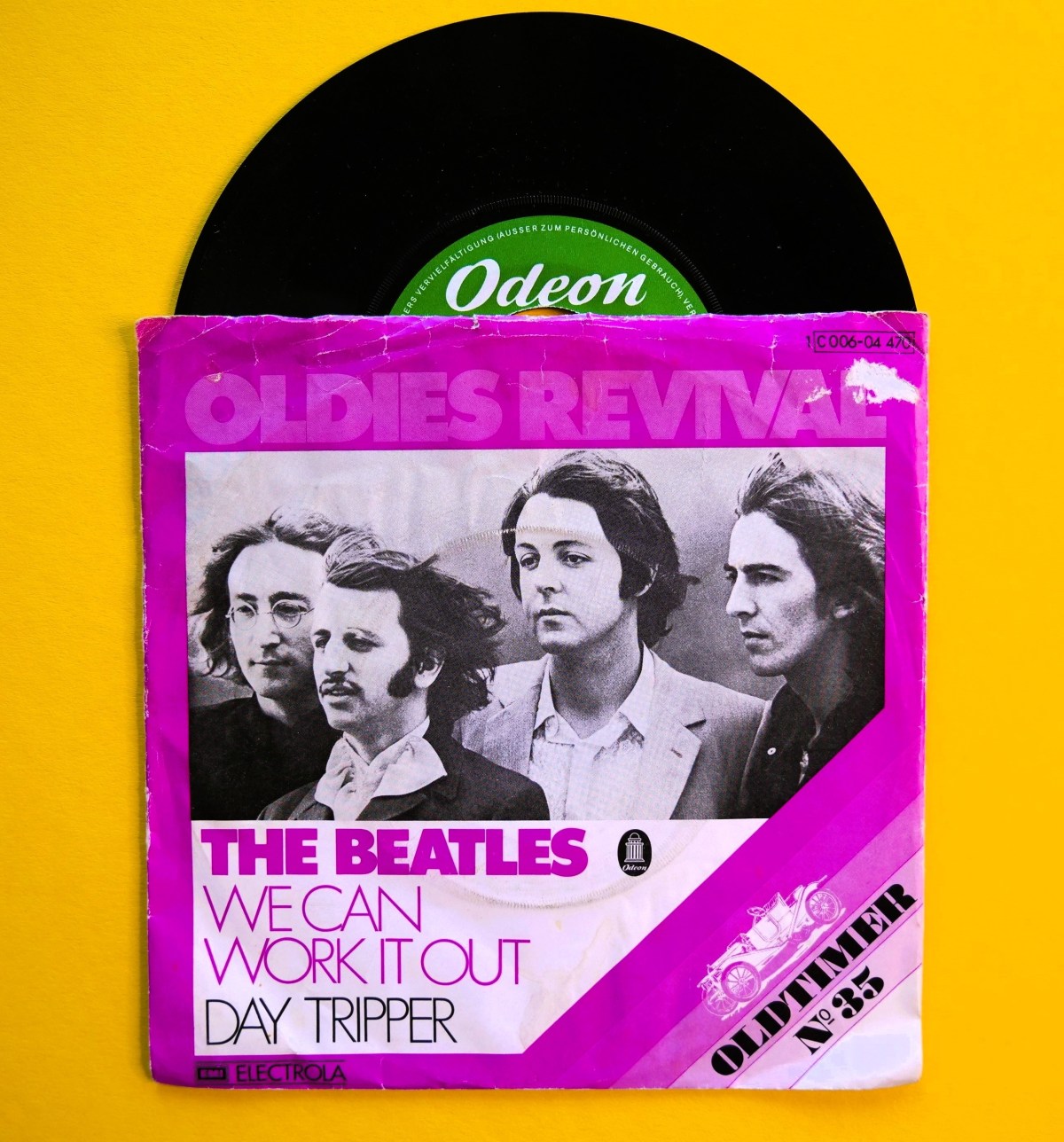
The Beatles: We Can Work It Out


Back in the days when recording artists released singles, “We Can Work It Out” made its debut in 1965. The Beatle’s manager, Brian Epstein, felt that the other song on the record, “Day Tripper,” was more commercial and so, should be the lead song. Typically, the lead song of a single is recorded on the top side (A side) and the other song (B side) goes beneath it. Since both songs became hits, the record turned out to be the first double “A” single ever recorded.

John Lennon and Paul McCartney wrote the song with Paul writing the optimistic verses and John writing the more pessimistic chorus, in this case, the bridge.

The song sprang from a disagreement Paul had with his then-girlfriend, actress Jane Asher. Jane and her mother, Margaret, had a powerful impact on Paul’s life. The couple stayed together for five years from 1963 to 1968.

Here’s my cover.

Categories
artists Arts & Entertainment inspiration music

Hard Headed Woman


If you’ve been following this blog, then you know I’m a huge fan of Cat Stevens. He produced some of the most iconic and unique music of the 1960s and ’70s. Shortly thereafter, Stevens’ sincere spiritual search led to his conversion to Islam, a surprise to many, including myself. For several decades after his transformation, Stevens, now known as Jusuf Islam, remained musically inert.

During his most productive years, Stevens gave over his immense musical talent to the study and preaching of Islam. Although Stevens says, in his own words, “I’m only trying to help,” I can’t help thinking that the world lost out on a treasure trove of inspiring, educational, and entertaining music

To be fair, I guess I’m just expressing my sour grapes. Everyone has the right to do whatever he or she wants with their life. Stevens believes his conversion to Islam “was meant to be.” It may very well be because Stevens has done a lot for the Arabic world. And he has stayed with his persuasion for almost fifty years. Kudos to Cat…er…Yusuf.

“Hard Headed Woman” celebrates an empowering and life-affirming love. The artist envisions an enriching and fulfilling relationship in which each partner contributes to the other’s growth and happiness. The song reminds us of the importance of finding someone who complements and strengthens us rather than a companion who fits a pre-determined, superficial mold.

Here’s my cover.