Categories
acoustic guitar Arts & Entertainment current events music Politics

The Political Impact of Paul Simon’s Music


Born to Jewish Hungarian parents in Brooklyn in 1941, Paul Simon grew up to be one of the foremost musicians of our time. He is best known for his albums with childhood friend Art Garfunkle, but I believe Simon’s solo work is where he really shines.

“American Tune” is a fine example. With its melody, guitar picking, lyrics, and overall artistry, the song comes together as a masterpiece. “American Tune” expresses the recording artist’s political disappointment in the early nineteen-seventies. The nineteen-sixties bloom of racial equality, love, and peace had already blossomed and faded.

While my favorite recording artists continued to produce heartfelt, meaningful, and exquisitely beautiful folk and folk rock music, America’s social and political evolution stalled. With the election of President Richard Nixon in 1972, the glowing hope and ideals of the prior decade receded into the background.

Paul Simon artfully captures the undercurrents of this period in this remarkable song. Despite its melancholy tone, I am deeply moved by the beauty of the words and music.

“American Tune” popped into my head unexpectedly and without warning. It literally came “from out of nowhere.” I think it did because we are about to take another evolutionary backward step under the Trump administration.

Please enjoy my cover of Paul Simon’s moving song.

Categories
acoustic guitar Arts & Entertainment inspiration music

The Uplifting Legacy of Nanci Griffith’s ‘Once in a Very Blue Moon’


Nanci Griffith introduced her third album with its title song, “Once in a Very Blue Moon,” on the Austin City Limits TV show in 1984. She sang to a live audience with her typically bold and beautiful voice, which continues to endear this singer/songwriter to millions of people around the world after her passing.

This poignant song could easily sound sad, but not the way Nanci performs it. With her crystal-clear voice, it actually sounds uplifting. A quality comes through Griffith’s songs. It sounds to me like “nothing will ever get me down.” I’m sure Ms. Griffith endured many hardships and obstacles in her life, but she always came out on top. I dedicate my cover to the memory of this inspiring woman.

Categories
acoustic guitar artists Arts & Entertainment music

Acoustic Guitar Cover of Bob Seeger’s “Against the Wind”


“Against the Wind” is regarded as one of Bob Seeger’s best songs. The lyrics are replete with the songwriter’s reflections on his youth, past relationships, and music career. The metaphor of running against the wind came from Seeger’s high school days, where he ran on the track team.

Seeger created his eleventh album, “Against the Wind,” intending to record hit songs. In other words, the artist wasn’t overly concerned with aesthetics. He wanted to make a commercially viable collection of songs, leaving it up to Capitol Records which ones to release as singles. Along with his Silver Bullet Band, Seeger certainly succeeded.

“Against the Wind” has been described as a bittersweet cross between country and rock music. The song holds an attraction for me as I look back on my life from the perspective of a 75-year-old. I’ve published eleven novels and recorded innumerable songs. Has any of it made a positive and significant impact on the world? Perhaps in a very small sense, the answer is “yes.” But the results have been far below my expectations.

I’m sure we are all, in one sense or another, running against the wind. There are things we turn away from that must be confronted. There are obstacles we must overcome if we are to move forward. Seeger ends this song with a determination to keep running against the wind no matter what it takes. I offer my cover in the same spirit.

Recorded with Audacity software–Absolutely the best free recording software out there.

Categories
artists Arts & Entertainment music songwriting

Acoustic Guitar Cover: Credence Clearwater Revival’s “Lookin’ Out My Back Door”


John Fogerty

John Fogerty wrote this song, in part, for his son, Josh. Josh was three years old at the time, and John could barely wait for his son to hear him sing the song on the radio, especially the part that goes: “Doot doot doo lookin’ out my back door.”

In the song’s chorus, a passing parade is mentioned. Fogerty says the lyric is inspired by a Dr. Seuss book he read as a child, “To Think I Saw It On Mulberry Street.”

Some people say the lyric “Won’t you take a ride on the flying spoon” is a reference to cocaine or heroin. Fogrety vehemently denies this. He discouraged drug use by any of his band members, saying drugs interfered with their music and their jobs.

Credence Clearwater Revival gained prominence in the late 1960’s. The band split up acrimoniously in 1972. John Fogerty is still performing as of this writing.

Here’s my cover of this fun song.

Categories
acoustic guitar artists Arts & Entertainment music

A Beautiful Ode to Life: “Silent Sunlight”


Cat Stevens ( Yusuf Islam) has never publicly said what this song is about, so we are left to offer our own interpretations.

When I read the lyrics, I get a picture of a farmer of indiscriminate age waking up at the crack of dawn and looking out through a window at his fields. At the very instant when the sun rises, there is barely sound. Our farmer reflects back on his youth and how it felt every day to awaken with a song in his heart and the dreams he envisioned to pursue.

The last refrain floated into my head from out of nowhere:

“There’ll be the evening,

In the end,

But ’till that time arrives,

You can rest your eyes,

And begin again.”

The lyrics are beautiful and express the child-like innocence found in many of Cat Stevens’ songs. I interpret this last refrain to mean: Take advantage of and be grateful for every moment you are alive.

Here’s my cover.

Categories
acoustic guitar artists Arts & Entertainment music

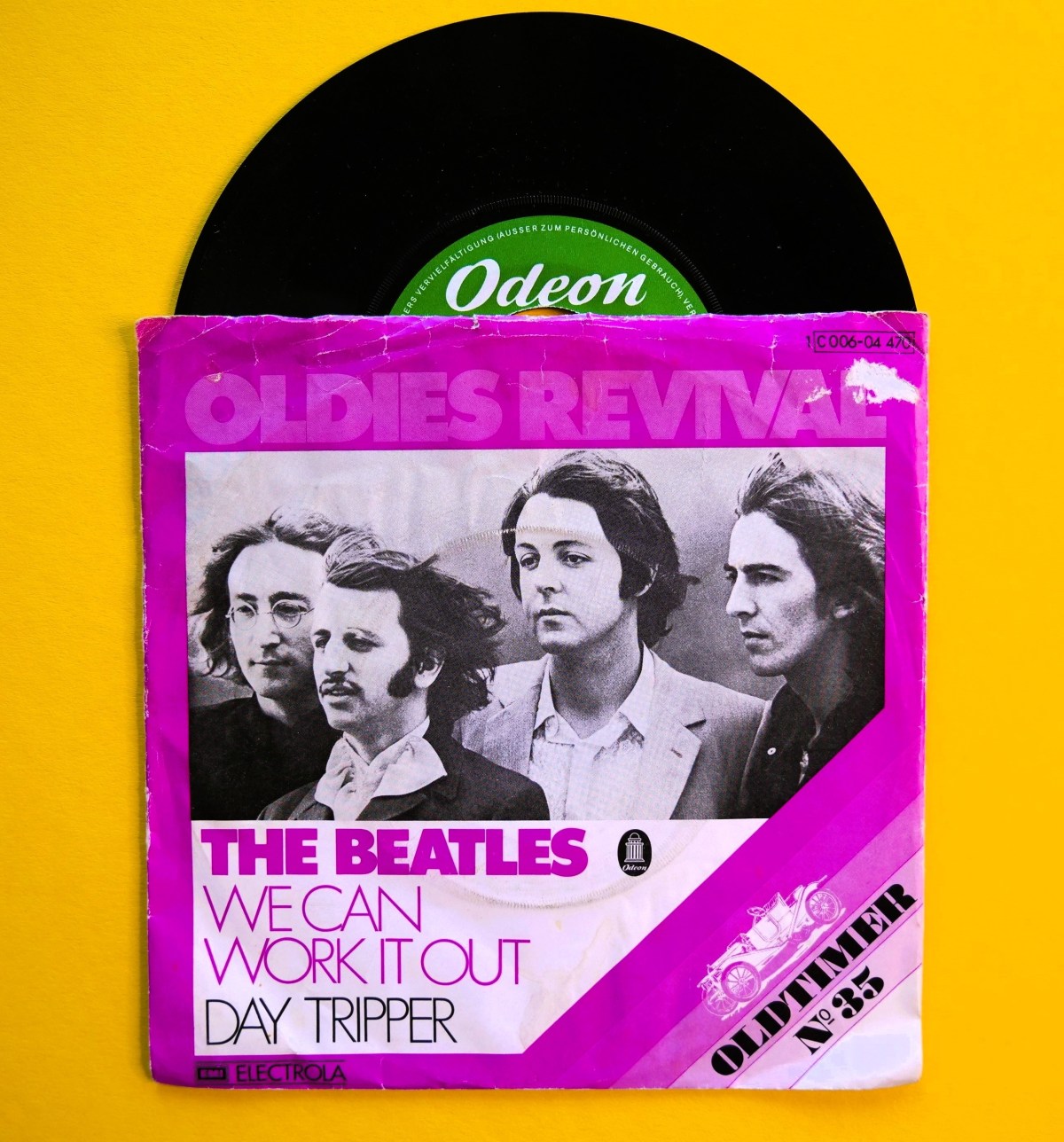
The Beatles: We Can Work It Out


Back in the days when recording artists released singles, “We Can Work It Out” made its debut in 1965. The Beatle’s manager, Brian Epstein, felt that the other song on the record, “Day Tripper,” was more commercial and so, should be the lead song. Typically, the lead song of a single is recorded on the top side (A side) and the other song (B side) goes beneath it. Since both songs became hits, the record turned out to be the first double “A” single ever recorded.

John Lennon and Paul McCartney wrote the song with Paul writing the optimistic verses and John writing the more pessimistic chorus, in this case, the bridge.

The song sprang from a disagreement Paul had with his then-girlfriend, actress Jane Asher. Jane and her mother, Margaret, had a powerful impact on Paul’s life. The couple stayed together for five years from 1963 to 1968.

Here’s my cover.

Categories
Arts & Entertainment folk music humor music

All The Best


This John Prine song has been lauded as, “One of the best breakup songs ever written.” Here’s my cover of Prine’s “All The Best.”

Categories
artists Arts & Entertainment folk music humor music

John Prine: I Remember Everything


John Prine began his professional career as a mailman in Illinois. He went on to become one of America’s most beloved singers and songwriters. If you are a fan of Folk and Country Music, then you know John Prine. His music was a blend of humorous lyrics about love, life, current events, and songs recounting melancholy tales from his life. Prine was active as a composer, recording artist, live performer, and occasional actor from the early 1970s until his death in 2020 from complications of COVID-19.

“I Remember Everything” was the last song John wrote. Published posthumously, it’s a simple yet moving song looking back on a life well-lived.

Prine may have had a premonition that his life was coming to an end. If that is the case, then “I Remember Everything” is John’s epitaph, which he characteristically wrote himself. Here’s my cover.

Categories
acoustic guitar artists Arts & Entertainment folk guitar folk music

Dylan Cover: Mr. Tambourine Man


Bob Dylan wrote and recorded the original version of “Mr. Tambourine Man,” but The Byrds’ electrified folk-rock version shot it to #1 on both the US and UK charts. The song hadn’t been released when The Byrds learned it from a demo Dylan gave to their manager, Jim Dickson.

Dylan released Tambourine Man in March 1965 on his Bringing It All Back Home album.

What is “Mr. Tambourine Man” about? On the surface, this tambourine man is a wandering musician whose music has captured Dylan under its spell. The song is considered by many to be about drug experiences, with lines like “Take me for a trip upon your magic swirling ship” and “Take me disappearin’ through the smoke rings of my mind.” Phrases like these suggest a marijuana or LSD trip. Dylan is famously close-lipped about explaining his songs, but in his 1985 Biograph compilation album, he revealed that “Mr. Tambourine Man” is not about drugs. Instead, he said the song was inspired by a backup folk musician named Bruce Langhorne, who played a large tambourine in one of Dylan’s recording sessions.

To me, the song’s poetic images are like impressionist paintings. The melody is haunting and mesmerizing. The song stands alone as a true work of art. Here’s my version.

Categories
artists Arts & Entertainment folk music music

Dylan Cover: My Back Pages


“Ah, but I was so much older then, I’m younger than that now.”

These lyrics and the refrain popped into my head a few mornings ago. This sort of thing has been happening to me frequently these days: Long-forgotten songs resurfacing. It may be a function of the aging process, or it might be the universe talking to me. I kind of hope it’s the latter.

In the 1970s, a group called the Bryds covered a few Bob Dylan songs. They made songs like Mr. Tambourine Man and this one popular. The Bryds’ cover of Mr.Tambourine Man went to number one on the US charts, and their cover of My Back Pages went to thirty. I may have never listened to My Back Pages had it not been for The Byrds. By the way, Roger McGuinn and The Byrds are credited with starting the Folk Rock Revolution. And they inspired Bob Dylan to go electric.

In 1964, Dylan released his fourth album, “Another Side of Life.” Around this time, he began to distance himself from his earlier songs. He claimed his earlier work was not about politics. Instead, it was about universal themes and not individual political issues. In “My Back Pages,” Dylan lambasts himself for his authoritarianism and arrogance.

Moving forward, Dylan’s music focused more on individual consciousness and personal freedom. He is remembered more for his music from 1965-1970 than his earlier work.

To me, the lyrics at the top infer that we tend to think we know it all at a young age. I know that I did. As we age, we gain more wisdom and realize that we know less than we thought we did. This understanding opens us to learning more when we admit that we know little in comparison to what is out there. To be open to learning without imposing pre-existing ideas is to become more pliable and, therefore, young.

Here’s my cover of this powerful song.