Categories
acoustic guitar Arts & Entertainment country music love profiles relationships songwriting

Inspired by Emmylou Harris: ‘Heaven Only Knows’


Here’s another song, written by Paul Kennerly and made famous by Emmylou Harris, called “Heaven Only Knows.” The song was released on Emmylou’s 1989 album, “Bluebird.” The song reached #16 on the Hot Country Music Chart.

Since I’m a newcomer to the Country Music Scene, I’d never heard of Paul Kennerly before. He’s an Englishman who has written 30 published Country Music songs. (I guess there are stranger things that abound in our world). I don’t recall Kennerly’s name being mentioned in connection with any of the songs I’ve covered here. Be that as it may, he has written two powerful songs that Emmylou Harris has brought to my attention. I covered the other song, “Born to Run,” in my previous blog.

“Heaven Only Knows,” as performed by Emmylou and her band, features a driving beat, compelling lyrics, and the recording artist’s beautiful, singular voice.

Here’s my cover.

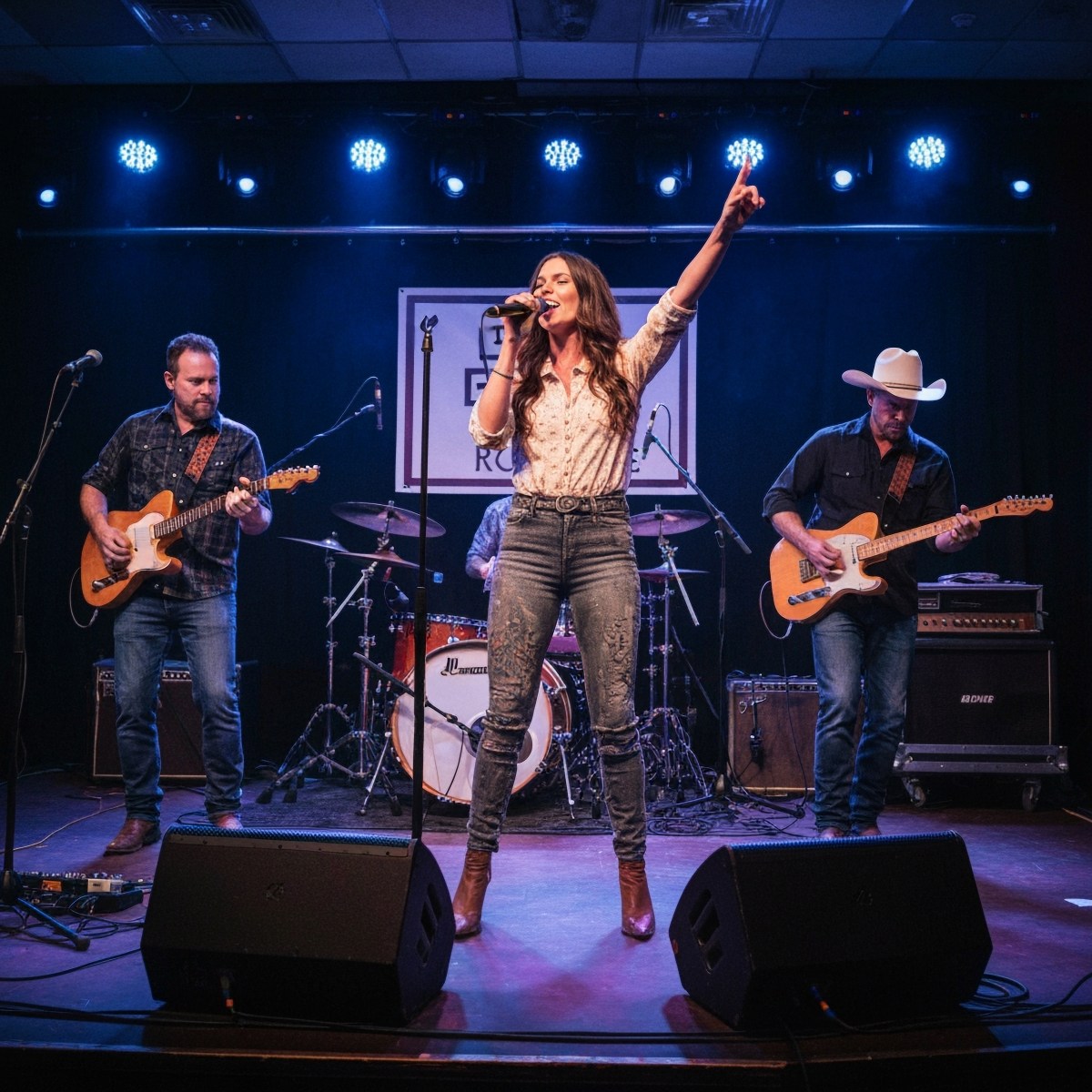
AI Image of Paul Kennerly Performing Live

Categories
acoustic guitar artist profiles artists Arts & Entertainment Essays relationships songwriting

The Truth in ‘Lyin’ Eyes’: Money and Relationships


When the Eagles were a struggling group in Los Angeles, they noticed many beautiful women married to older, successful men. It posed the question: Were these women happy or unhappy? One night, while drinking in their favorite bar, they spotted a beautiful young woman. Alongside her, a fat, old, rich guy sat drinking. They were chatting, and apparently a couple. Glen Frey, the group’s leader, commented, “Look at her. She can’t hide those lying eyes.” The Eagles realized they had a great idea for a new song. They began to write the lyrics right then and there.

The song tells an in-depth story about women who have taken the easy way out by marrying for money alone. While the song is entirely fictional, it has an incontrovertible ring of truth. Maybe that’s why Lyin’ Eyes reached number 8 on the Country Chart. It is the only Eagles song to become a top 10 Country hit.

Here’s my cover.

Categories
acoustic guitar Arts & Entertainment life love music songwriting

Tequila Sunrise: A Cowboy’s Life in Music


“Glenn Frey and Don Henley wrote this song together, and Frey sang lead. Along with “Desperado,” it was one of two songs they came up with in the first week that they started writing together. The songs formed the basis of the Eagles’ second album, with Frey and Henley comparing the life of a cowboy to that of a musician. “Tequila Sunrise” shows the transient nature of each lifestyle, as the singer falls for a woman who just wants to use him and move on. The theme didn’t immediately connect with the buying public, but the songs and the album stood the test of time.” *

Here’s my cover.

*Excerpted from Songfacts®

Categories
acoustic guitar Arts & Entertainment inspiration music

The Uplifting Legacy of Nanci Griffith’s ‘Once in a Very Blue Moon’


Nanci Griffith introduced her third album with its title song, “Once in a Very Blue Moon,” on the Austin City Limits TV show in 1984. She sang to a live audience with her typically bold and beautiful voice, which continues to endear this singer/songwriter to millions of people around the world after her passing.

This poignant song could easily sound sad, but not the way Nanci performs it. With her crystal-clear voice, it actually sounds uplifting. A quality comes through Griffith’s songs. It sounds to me like “nothing will ever get me down.” I’m sure Ms. Griffith endured many hardships and obstacles in her life, but she always came out on top. I dedicate my cover to the memory of this inspiring woman.

Categories
acoustic guitar artists Arts & Entertainment music

Acoustic Guitar Cover of Bob Seeger’s “Against the Wind”


“Against the Wind” is regarded as one of Bob Seeger’s best songs. The lyrics are replete with the songwriter’s reflections on his youth, past relationships, and music career. The metaphor of running against the wind came from Seeger’s high school days, where he ran on the track team.

Seeger created his eleventh album, “Against the Wind,” intending to record hit songs. In other words, the artist wasn’t overly concerned with aesthetics. He wanted to make a commercially viable collection of songs, leaving it up to Capitol Records which ones to release as singles. Along with his Silver Bullet Band, Seeger certainly succeeded.

“Against the Wind” has been described as a bittersweet cross between country and rock music. The song holds an attraction for me as I look back on my life from the perspective of a 75-year-old. I’ve published eleven novels and recorded innumerable songs. Has any of it made a positive and significant impact on the world? Perhaps in a very small sense, the answer is “yes.” But the results have been far below my expectations.

I’m sure we are all, in one sense or another, running against the wind. There are things we turn away from that must be confronted. There are obstacles we must overcome if we are to move forward. Seeger ends this song with a determination to keep running against the wind no matter what it takes. I offer my cover in the same spirit.

Recorded with Audacity software–Absolutely the best free recording software out there.

Categories
artists Arts & Entertainment music songwriting

Acoustic Guitar Cover: Credence Clearwater Revival’s “Lookin’ Out My Back Door”


John Fogerty

John Fogerty wrote this song, in part, for his son, Josh. Josh was three years old at the time, and John could barely wait for his son to hear him sing the song on the radio, especially the part that goes: “Doot doot doo lookin’ out my back door.”

In the song’s chorus, a passing parade is mentioned. Fogerty says the lyric is inspired by a Dr. Seuss book he read as a child, “To Think I Saw It On Mulberry Street.”

Some people say the lyric “Won’t you take a ride on the flying spoon” is a reference to cocaine or heroin. Fogrety vehemently denies this. He discouraged drug use by any of his band members, saying drugs interfered with their music and their jobs.

Credence Clearwater Revival gained prominence in the late 1960’s. The band split up acrimoniously in 1972. John Fogerty is still performing as of this writing.

Here’s my cover of this fun song.

Categories
Arts & Entertainment humor inspiration Interviews music

The Gift


Jim Brickman at the Los Angeles Gracie Awards in 2013

Jim Brickman collaborated with Tom Douglas to write “The Gift.” Jim wrote the melody and Tom wrote the lyrics. Listening to many of Jim’s love songs, I can’t help but think that the man has a heart the size of Kansas.

I found an entertaining video on YouTube describing the story behind the making of The Gift. In the video, Jim reveals a healthy sense of humor about himself, and Tom tells the story with a healthy dose of humor. Here’s an edited version of the story’s opening. For the full version, click here.

Jim: “The Gift is the first song I wrote with Tom. It just felt right from the beginning. I have a recollection of our first meeting, but it’s not very clear. I’d like Tom to give his version of the story.”

Tom: “Mine’s not gonna be very flattering.”

Jim: “That’s alright. They know me.”

Tom: “So, I get a call from my agent saying I have America’s foremost Romantic songwriter and pianist who wants you to do a song with him. Needless to say, I was more than a little intimidated. I’d just moved to Nashville with my family, and I was nervous about everything. So, I walk in to meet Jim for the first time, and he’s matter-of-fact. ‘Hi. Good to meet you.’ That sort of thing. Then he starts in with, ‘I have this song with a title, The Gift. Here’s the goal: I want it to be spiritual, but not religious, seasonal, but not Christmas, and, I want it to be a love song.’

Tom (continued): “So, I’m thinking to myself, I made a terrible mistake leaving my hometown of Dallas. I was kinda like stunned, and Jim goes, ‘Here’s the melody. I’d like the syllables of the words to match the music.’ “And I’m thinking, really? Anything else? So, he goes ahead and plays the melody and I record it. Then he says, ‘Oh. One last thing: I need it by tomorrow.’

And so on. Let’s get to the music. Here’s my version.

Categories
profiles

A Tribute to Kate Wolf


Who is Kate Wolf? If you’re like most people, you probably have no idea. I’m a huge folk music fan, and I’d never heard of Kate until last year, but I’m happy to have discovered her. Better late than never.  Her music pierces my heart, and the simple beauty of her voice, melodies, and guitar-playing transport me to transcendent realms.

There’s a story that a fan at a live concert once complimented Kate on her earrings.  Without hesitation, she removed the earrings and handed them to the fan.  I believe the beauty of Kate’s music emanated from the beautiful being that she surely was.

Kate Wolf came to prominence during a ten year period from 1975 to 1985.  Tragically, Leukemia brought Kate’s life and singer/songwriting career to a premature end at the age of forty-four.  Despite her foreshortened life span, Kate managed, in her gentle way, to become a major influence on the folk scene with songs like, “Give Yourself to Love,” “Across the Great Divide,” “Green Eyes,” “September Song,” and many more.  In all, she produced seven albums including a “live” in-concert album recorded at a music festival in Mendocino, California.

The appeal of Wolf’s music is the same today as it was when she released her first album on her Owl Records label more than 30 years ago. Her music is plainspoken with powerful natural imagery woven into poignant portrayals of the longings, joys, and sorrows of the heart that transcend romantic stereotypes.

Singing in a plain, pure voice, Wolf never indulged in vocal ornamentation for the sake of effect, and she avoided saccharine sentimentality with her natural sweetness.

As an acoustic guitar-based folk artist, she distinguished herself from such forebears as Bob Dylan, Joni Mitchell and James Taylor, and from her more self-consciously naturalist and mystical contemporaries in “women’s music.”

Now, when cynicism and irony seem to be second nature to pop music, Wolf’s directness rings truer than ever.

“Kate was unique,” says Berkeley-based guitarist Nina Gerber, who was inspired to become a professional musician after seeing Wolf perform in a pizza parlor in Sevastopol, a small town north of San Francisco.  Gerber became Wolf’s key accompanist from 1978 to 1986. Gerber produced the memorial album, Treasures Left Behind, and she has helped organize and produce all four Kate Wolf Memorial Music Festivals.

“She had her own style,” Gerber says. “There was nobody to compare her to. Nowadays, you listen to somebody and they either sound like Shawn [Colvin] or Nanci [Griffith] or Emmylou [Harris] or whomever.

“Kate really took on the environment she was in, so when she wrote about it, it wasn’t contrived. She didn’t go out of her way to try to be flowery and poetic. She pretty much said things the way they were.”

Yet, while Wolf’s songs seem inimitably personal when she sings them, they lend themselves surprisingly well to interpretation.  As a prime example, Nanci Griffith, an unpretentious young woman who once described her music as “rockabilly” and eventually gained an international audience, lends a soul-searing depth and beauty to her interpretations of wolf’s songs.

When Wolf sang of a woman who “rises like the dolphin,” or an “owl calling softly as the night was falling,” it felt true. She brought the listener into her unpretentious realm while prodding him or her to see the natural world anew — always with love as the bottom line.

Wolf, born Kathryn Louise Allen in San Francisco on January 27, 1942, cultivated her approach after moving to Sonoma County in the early 1970’s. She sang songs like “Across The Great Divide,” “Safe At Anchor,” “The Wind Blows Wild,” “Poet’s Heart” and “Give Yourself To Love” in a pure voice, as unaffected, comforting and honest as you want to hear from your lover in the middle of the night. At the height of her popularity, Kate appeared at The Austin City Limits Music Festival and Garrison Keillor’s A Prairie Home Companion.

“I live for a sense of a feeling of purposefulness in this world, you know, that I could stop my life at any point and feel that my life has been worthwhile; that the people I’ve loved and my children have all reached a point where their lives are now going to come to fruit. And as far as something I live by, it’s to try to be as alive as possible and feel free to make my mistakes and try to be as honest as I can with myself.”

Kate Wolf, 1942 to 1986