
This John Prine song has been lauded as, “One of the best breakup songs ever written.” Here’s my cover of Prine’s “All The Best.”
This John Prine song has been lauded as, “One of the best breakup songs ever written.” Here’s my cover of Prine’s “All The Best.”

“Day Is Done” is a simple song about a clandestine relationship. Since very little has been written about the song, it is difficult to pinpoint its exact meaning. It could be about two married adults having an illicit affair. The lyrics and tone, however, indicate a relationship between two adolescents forbidden by parents or society.
The drawings on the album cover of “Lost Dogs and Mixed Blessings,” where the song is one of the tracks, tend to support the theory of a prohibited young love.
In “Day is Done,” Prine has written a charming little song with universal implications. Many of his songs deal with the intricacies of human relationships and are laced with Prine’s subtle sense of humor. Lost Dogs and Mixed Blessings was John’s fourteenth album. Released in 1995, it is another example of the artist’s exploration of the human condition.
From humble beginnings, John Prine came a long way in his fifty-year career. He won Grammy Awards and was posthumously inducted into the Country and Folk Music Hall of Fame. What struck me, however, is this early recollection of his career. It is taken directly from Prine’s official website:
“Prine still remembers the first three songs he performed on any stage: Sam Stone, Hello in There, and Paradise. With humility, he recalls, “I sang those three songs and people just sat there and looked at me. I thought, ‘Wow, those are really bad.’ They wouldn’t even applaud.”
Things changed dramatically when a young journalist named Roger Ebert dropped into a Chicago folk club for a beer while John was on stage. Ebert wrote a glowing review of Prine’s performance in the Chicago Sun-Times which essentially launched John’s career.
Here’s my cover of “Day Is Done.”

John Prine began his professional career as a mailman in Illinois. He went on to become one of America’s most beloved singers and songwriters. If you are a fan of Folk and Country Music, then you know John Prine. His music was a blend of humorous lyrics about love, life, current events, and songs recounting melancholy tales from his life. Prine was active as a composer, recording artist, live performer, and occasional actor from the early 1970s until his death in 2020 from complications of COVID-19.
“I Remember Everything” was the last song John wrote. Published posthumously, it’s a simple yet moving song looking back on a life well-lived.
Prine may have had a premonition that his life was coming to an end. If that is the case, then “I Remember Everything” is John’s epitaph, which he characteristically wrote himself. Here’s my cover.

Bob Dylan wrote and recorded the original version of “Mr. Tambourine Man,” but The Byrds’ electrified folk-rock version shot it to #1 on both the US and UK charts. The song hadn’t been released when The Byrds learned it from a demo Dylan gave to their manager, Jim Dickson.
Dylan released Tambourine Man in March 1965 on his Bringing It All Back Home album.
What is “Mr. Tambourine Man” about? On the surface, this tambourine man is a wandering musician whose music has captured Dylan under its spell. The song is considered by many to be about drug experiences, with lines like “Take me for a trip upon your magic swirling ship” and “Take me disappearin’ through the smoke rings of my mind.” Phrases like these suggest a marijuana or LSD trip. Dylan is famously close-lipped about explaining his songs, but in his 1985 Biograph compilation album, he revealed that “Mr. Tambourine Man” is not about drugs. Instead, he said the song was inspired by a backup folk musician named Bruce Langhorne, who played a large tambourine in one of Dylan’s recording sessions.
To me, the song’s poetic images are like impressionist paintings. The melody is haunting and mesmerizing. The song stands alone as a true work of art. Here’s my version.

“Ah, but I was so much older then, I’m younger than that now.”
These lyrics and the refrain popped into my head a few mornings ago. This sort of thing has been happening to me frequently these days: Long-forgotten songs resurfacing. It may be a function of the aging process, or it might be the universe talking to me. I kind of hope it’s the latter.
In the 1970s, a group called the Bryds covered a few Bob Dylan songs. They made songs like Mr. Tambourine Man and this one popular. The Bryds’ cover of Mr.Tambourine Man went to number one on the US charts, and their cover of My Back Pages went to thirty. I may have never listened to My Back Pages had it not been for The Byrds. By the way, Roger McGuinn and The Byrds are credited with starting the Folk Rock Revolution. And they inspired Bob Dylan to go electric.
In 1964, Dylan released his fourth album, “Another Side of Life.” Around this time, he began to distance himself from his earlier songs. He claimed his earlier work was not about politics. Instead, it was about universal themes and not individual political issues. In “My Back Pages,” Dylan lambasts himself for his authoritarianism and arrogance.
Moving forward, Dylan’s music focused more on individual consciousness and personal freedom. He is remembered more for his music from 1965-1970 than his earlier work.
To me, the lyrics at the top infer that we tend to think we know it all at a young age. I know that I did. As we age, we gain more wisdom and realize that we know less than we thought we did. This understanding opens us to learning more when we admit that we know little in comparison to what is out there. To be open to learning without imposing pre-existing ideas is to become more pliable and, therefore, young.
Here’s my cover of this powerful song.
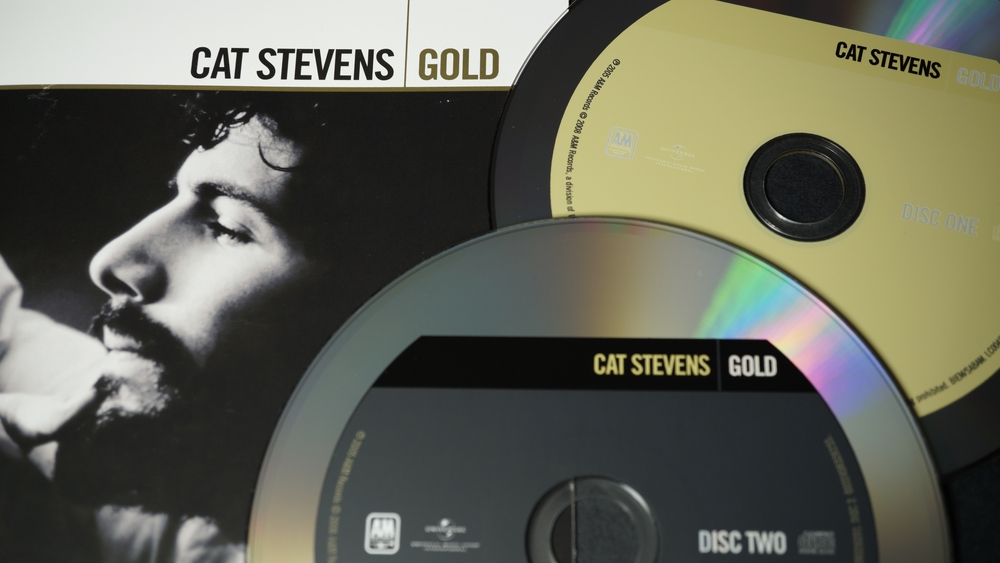
Cat Stevens wrote and recorded quite a few hits at the Zenith of his career in the 1960s and 1970s. Stevens is an exceptionally talented artist. His songs began to climb the charts in his native England when he was only eighteen. There is a recurring theme in Stevens’ work about leaving home to go out into the world. In Stevens’ words:
“Wild World has to do with leaving, the sadness of leaving, and the anticipation of what lies beyond. There is a criticism sometimes of my music that it’s kind of naïve, but then again, that’s exactly why people like it. It goes back to the pure childish approach of seeing things almost for the first time.”
I’ve covered several of Stevens’ songs on this blog, including “On the Road to Find Out,” “Fill My Eyes,” and “The Wind.” I’m a huge fan. Stevens’ songs still inspire me some sixty years after their release. Here’s my cover of another popular CS song: “Wild World.”

Steve Gillette released his first album in 1967 titled simply “Steve Gillette.” Top-heavy with folk ballads and original songs, I thought the album was a strong debut. Gillette had already established himself as a noteworthy songwriter when Ian and Sylvia, a top Canadian folk duo, included “Darcy Farrow,” a song Gillette co-wrote, on their 1966 album “Early Morning Rain.”
I still own Gillette’s debut album and listen to it occasionally. Despite all of this fanfare, Steve Gillette never became a household name. Some say Gillette’s obscure status is the result of his emergence towards the end of the folk music boom. I don’t buy the idea. For reasons unknown, some people never make it to stardom, no matter how much they want it. Gillette wanted it, but his music failed to resonate with audiences broadly enough to make him a bonafide star. He made several more albums and eventually married Cindy Magnuson. To this day, the duo continues to tour relentlessly and make a modest living with their music.
There are those who did make it big in the sixties, like two of my folk/pop favorites: Jackson Browne and Gordon Lightfoot. Still, Gillette has left us with a number of original and memorable songs. “Back On The Street Again” is one of them. Here’s my cover.

“Brown-eyed Girl” was originally called “Brown-Skinned Girl.” The song is about an interracial relationship. Morrison changed the name to make it more acceptable to radio stations at the time (1967). Some stations banned it anyway for the line, “Making love in the green grass.” Why some gatekeepers took issue with the line in the free-loving sixties is beyond me. I guess there is no accounting for taste.
From his roots in Northern Ireland, Van Morrison began his musical career at the age of thirteen. He played the saxophone, harmonica, and guitar in several bands until he formed his own group called “Them.”
“Brown-Eyed Girl” launched Morrison’s solo career due to the song’s overwhelming popularity. Ironically, Morrison never truly cared for the song. He considered it “too commercial.” And the psychedelic cover of Morrison’s first solo album appalled him. I think it’s safe to say Van Morrison never came anywhere near the mainstream of music and pop culture.
Most of Morrison’s work consists of rhythm and blues and occasional jazz pieces. The man may be unpredictable, but his songwriting has certainly been prolific. He has written over three hundred songs in his fifty-year career.
Commercial or not, this is a fun song to play. Here’s my cover.
Available Now On Amazon and Major Online Retailers

“Time is of the Essence”
When a file containing the plans to manufacture highly advanced, nearly human Androids is stolen, brilliant investigator Derrick Faulk and his alluring partner, Aurora Zolotov, are called in to arrest the perpetrator and recover the file. Currently, the government is using the Androids in a top-secret experiment. If the AndroBiotica file falls into the wrong hands, the results will be catastrophic. As the clues dwindle, the situation becomes more desperate, and the investigation takes the agents in an unforeseeable direction.
The AndroBiotica File is an enthralling look into the future of what AI and robotics hold in store for two dynamic individuals and society as a whole.
GOLD MEDAL WINNER IN THE GLOBAL BOOK AWARDS FOR SCIENCE FICTION: CRIME AND MYSTERY
SILVER MEDAL WINNER IN THE GLOBAL BOOK AWARDS FOR SCIENCE FICTION: ROMANCE

After Steven Digman wrote “Anniversary Song,” he took it to Chris Biondo’s studio in Rockville, Maryland, to record it. At the time, Biondo was looking for material for Eva Cassidy to record. After Chris heard the song, he insisted on recording it with Eva. Digman had another singer in mind, but Biondo wouldn’t give up. After hearing Eva sing “Anniversary Song” on the phone, Digman agreed to let Cassidy record it. The rest, as they say, is history.
This is another song that popped into my head unexpectedly. At first, I decided not to blog about it. But the melody, like Chris Biondo, wouldn’t give up. I guess someone is trying to tell me something. Here’s my cover.
 Heart Banter by David Gittlin